The Election Commission of India’s data shows people are again mostly ignoring the NOTA option in the 2026 state elections, keeping it under 1% in almost all states. Assam is the only one above 1% at 1.29%, and this continues to show NOTA is becoming less popular while people are more inclined to choose someone.
For political parties, this means people who are unhappy aren’t all uniting behind NOTA to the point of changing the election. Voters can still use NOTA, but it’s not often the deciding factor, and it’s more about who wins in each area than a complete rejection of all the people running.
2026 snapshot and why it matters
The results from five states confirm that NOTA doesn’t get a lot of support, even though it was meant to give a voice to voters who disagree with everyone. This is similar to what’s been happening in recent national elections; the percentage of votes going to NOTA has decreased.
This is important for how campaigns are planned. Because NOTA isn’t likely to ‘spoil’ an election (meaning take votes away from a winning candidate), parties will probably focus on very specific messages to individual groups of voters. Most people are choosing between the candidates who are listed, not rejecting them all.
State-wise picture: highs, lows and the middle
Assam is unique. With 1.29%, it’s the only state in these elections to go over the 1% mark, which shows a slightly stronger willingness to reject all candidates on the ballot.
Tamil Nadu had only 0.41%, meaning very few people used the NOTA option. And even with a lot of competition between politicians in Kerala, only 0.58% used NOTA, showing it’s not being used much.
Puducherry had 0.73% and West Bengal 0.81%. The small differences between these states suggest that while there are differences between regions, they aren’t massive.
A longer slide since 2013
This trend isn’t just about these state elections. The Election Commission has been tracking a consistent decrease in the number of votes for NOTA in national elections for the Parliament (Lok Sabha). In fact, the 2024 Lok Sabha election had the lowest percentage of votes for NOTA since it was first included on the electronic voting machines in 2013.
NOTA first appeared in a general election in 2014. The fact that it’s been going down in popularity since then means that over time, more people are deciding to choose a candidate instead of simply saying they don’t approve of anyone. The 2026 results fit with this change.
How NOTA functions on polling day
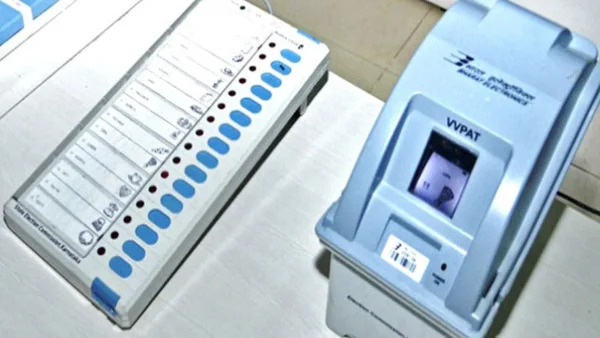
NOTA was added to the system in 2013 because the Supreme Court said people had a right to vote secretly and to be able to show they didn’t support any of the candidates. It’s the last button on electronic voting machines and has a picture of a ballot paper with a black cross through it.
Before 2013, something called Rule 49-O allowed people to reject all candidates, but they had to say who they were at the polling place. NOTA meant you didn’t have to reveal your identity. However, even with NOTA, if the most votes go to NOTA, the election isn’t done again.
Here are the officially clarified boundaries of the option:
– Introduced in 2013 by Supreme Court directive
– Preserves secrecy unlike Rule 49-O disclosures
– Does not trigger re-elections at any vote share
– Appears last on EVM with crossed ballot symbol
Why the decline, and who is affected?
The Election Commission's information shows people are steadily losing interest in NOTA. This simply means that elections are more and more being decided by people choosing between the candidates, and fewer people are voting as a protest.
This affects people in different ways. Candidates are helped by having a clearer idea of who supports them, because NOTA doesn’t take as many votes away. Voters still have a way to symbolically show their dissatisfaction, but because of the rules, it won’t actually change the winner in their area.
What to watch next
With Assam at 1.29% and the other states between 0.41% and 0.81%, the big question is whether these differences will get bigger in future elections or continue to shrink. At the moment, the numbers are in line with the country-wide decline that the Election Commission has documented.
This country-wide trend suggests people will continue to be more inclined to select a candidate than to reject everyone. Unless the rules are changed, NOTA will continue to be a way of measuring how unhappy people are, but it won’t be something that decides the outcome of the election.