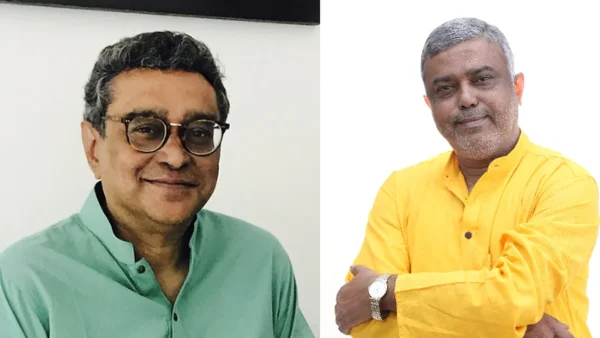
South Kolkata’s city voters, Dasgupta hopes, can change his fortunes in the 2026 West Bengal election. Dasgupta, who has received the Padma Bhushan and is a BJP leader, has chosen Rashbehari, a respected area with lots of middle-class voters, to challenge Debashish Kumar (who already holds the seat for the TMC) in a very important election in an urban area.
Why Rashbehari matters now
Rashbehari isn’t just about numbers of voters. It’s home to a large number of ‘Bhadralok’ (a term for a respected, educated class of people) and is a living record of Kolkata’s history, so how things are run and people’s sense of who they are are the main things voters will think about.
Dasgupta is making the election about how trustworthy the council is. He says what’s happening now is ‘stagnant populism’ (where leaders say what people want to hear but don’t really change things) and he offers a 'cultural and economic renaissance‘ (a new start for culture and the economy) with changes aimed at people who are annoyed with the everyday problems of the city.
A city-first campaign with heritage at its core
While campaigning, Dasgupta has been walking through apartment buildings and small streets, even going door-to-door in the Lake Road area. He’s trying to get support by talking about improving the city and being proud of where you live, instead of using the traditional ways of speaking to people in villages.
He says he will create a special ‘Kolkata Heritage Council’ to protect buildings from being replaced by too much new development. At the same time, he says the local council needs to be more accountable and South Kolkata needs a better, modern drainage system, connecting how things look with basic services.
Here are the central claims shaping his pitch to urban voters:
– Restore heritage while upgrading core services
– Improve accountability in municipal bodies
– Prevent unregulated real estate expansion
From opinion-shaper to ballot-box test
Dasgupta is a long-time journalist and used to be a member of the Rajya Sabha (the upper house of Parliament). He’s been a leading voice for centre-right ideas for a long time. He was given a place in the Rajya Sabha in t 2016 as someone important in literature and received the Padma Bhushan in 2015 for his work in literature and education.
He became a political figure in the 1990s by speaking out about the Ram Janmabhoomi movement and supporting changes linked to the Mandal Commission. He has written ‘Awakening Bharat Mata’, ‘The India That Is Bharat’ and ‘The Ayodhya Dispute’.
Promises tailored to city voters
The BJP candidate is making his policies fit with what people feel in an area that is very protective of its history and culture. By linking preserving the past to improving how things are run, he’s asking professionals and middle-class people to think of culture and public services as part of the same plan.
He says Rashbehari can be a model for how big cities should be changed, and suggests Kolkata can become more modern without forgetting its past. He’s trying to connect people’s fondness for the past with their frustration about potholes, flooding and things not being kept in good condition.
A strategic pivot after a narrow 2021 defeat
Dasgupta left the Rajya Sabha to run in the 2021 Assembly election in Tarakeswar, but lost to Ramendu Sinharay of the TMC by 7,484 votes. He was then given his place back in the Rajya Sabha for the rest of his original time, and this caused some criticism.
Since that loss, he’s been working with groups in Bengal’s civil society and has now moved from the rural area of Hooghly to the urban area of South Kolkata. This change shows he believes his ideas are better received in a more sophisticated area where people focus on policies.
Money, biography, and message discipline
In the documents he filed for the 2026 election, he said he has total wealth of around 6.45 Crore rupees. This includes a lot of valuable, old books and a house in South Delhi. He was born in Calcutta on October 3, 1955, went to St Stephen’s College in Delhi and St Antony’s College, Oxford, and got a PhD in the history of South Asia.
Dasgupta says his experience as a public intellectual and someone who thinks about ideas makes him suitable for solving the problems of a city. He’s giving voters in Rashbehari a careful, culture-aware solution to problems instead of making a lot of promises.
The contest ahead and what to watch
Debashish Kumar, who is already the MLA (Member of the Legislative Assembly) for the TMC and a very experienced organizer at a local level, is standing in his way. For the BJP, this seat is a test of whether they can get a lot of support in the city and finally succeed in South Kolkata.
What happens next will depend on how many people vote in the middle-class areas and how well people respond to the idea of improving the city. If he wins, Dasgupta says he will quickly start work on the heritage council and changes to the local council, and hopes to make Rashbehari a model for how cities are run in West Bengal.