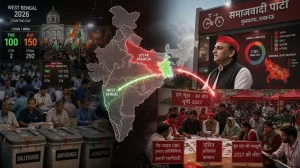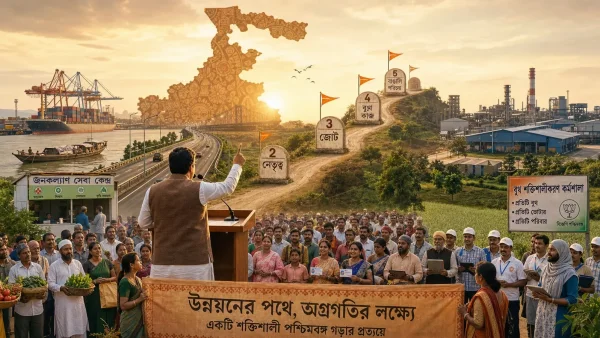
A lot of people are now thinking the BJP could actually hold a majority in West Bengal for a long fifteen years, just like they have in Gujarat. However, it’s going to be very difficult. To stay in power for that long, the party needs to change in five ways regarding how it’s led, how it helps people, and how it’s organized, and it has to do this while dealing with strong opposing parties and voters whose opinions change quickly.
The long game in Bengal politics
West Bengal has gone back and forth between different political ideas, from being ruled by left-wing parties to the All India Trinamool Congress. Voters have punished parties when they haven’t done a good job. So, for a party to be in charge for fifteen years, they have to be good at governing, the other parties have to be weaker, and they need to understand what the public is thinking at each election.
The way people feel about politics in West Bengal is very specific and full of emotion. Saying the same thing nationwide doesn’t usually work unless it’s connected to local issues. The BJP needs to be seen as trustworthy because of what’s happening in people’s everyday lives in Bengal, not just what’s going on nationally.
Gujarat lessons, Bengal realities
The BJP in Gujarat has a strong organization with lots of people working at all levels, consistent leadership, a focus on development, and very well run teams at each voting location. These things are important, but Bengal isn’t the same. The groups of people who live there, the history of politics, and the networks of support for parties are all quite different.
Simply doing things the same way as in Gujarat won’t work; the BJP needs to adapt. Their plans need to be completely reworked for the complicated areas and what people expect in Bengal.
Five moves BJP must prioritise
To convert ambition into staying power, the party would need to recalibrate on multiple fronts. These priorities recur in discussions around long-term dominance and carry direct implications for voters, cadres, and opponents:
– Deliver visible development and welfare with measurable outcomes
– Project strong local leadership and a steady chief ministerial face
– Broaden the social coalition beyond core supporters
– Build disciplined booth structures with trained cadres
– Frame a Bengal-first narrative rooted in culture and identity
“Development” can’t just be something they say. Voters will want to see real improvements in roads and other facilities, industry, ports, jobs, how well social programs work, and the level of safety and order. Actually performing well is what allows a party to continue to be in power, not just what they promise.
And importantly, leadership is key. People need to trust the leaders and for them to be from the area, with strong leaders at the district level supporting them. This will turn national popularity into confidence in the state, and at each election.
Why booth-level swings matter
Elections are generally won by the work done at the voting locations, not just by speeches. Having people covering each voting location, training workers, and getting information about voters can change the outcome. Even a small 3 to 5% change in votes at each location can make a big difference.
Established local political groups have for a long time used very detailed organization. The BJP needs to be equally disciplined to be able to repeat their success.
Reframing outreach and identity
To stay in power for a long time, the BJP needs to have the support of a wide variety of people. In Bengal, this means getting more support from people in rural areas, minority groups, women who use welfare programs, and young people who are now eligible to vote. They need to get support from more than just their current strongholds.
What people believe about their identity is also important. How people in Bengal see themselves and their culture affects who they will trust in politics. Supporting the Bengali language and culture and relating policies to Bengal specifically can lessen accusations of being “outsiders” and make the party seem to be a part of local pride.
Stakes for opposition and citizens
For the All India Trinamool Congress, their challenge is to keep control of their political strength in the region while fighting against a national party with much more reach. Because they are still strong, they will make for a very tough competition, and any fifteen-year plan for the BJP will be something they have to earn, not something they’ll automatically get.
For ordinary people, the important things are things that directly affect their lives: jobs, safety, infrastructure, and welfare programs that work well. If a party promises to be in charge for fifteen years, they have to show improvements each year that people can see in their homes, at the market, and during their commute.
What people expect in Bengal is always changing. Voters have shown they will reward good results and punish inactivity. Any government will be under pressure to show progress during each of its terms, not just when an election is coming.
Risks, resistance, and the road ahead
There are also things making it difficult. A strong opposing party in the region will always put pressure on them. The economy, how many people are out of work, and problems in the countryside can quickly change the discussion. In Bengal, disappointment spreads quickly and gets worse quickly.
One win isn’t enough to guarantee staying in power; it has to be earned through being steady and consistent. Plans must change as voters’ expectations change. This means learning from each election, improving welfare programs, and continuing to be visible with development projects.
The way things are in Gujarat can give the BJP ideas, but it’s not a strict plan to follow. If the BJP can combine leadership, organization, getting the support of many groups, good governance, and respect for identity with the realities of Bengal, then being in power for a long time is possible. If they don’t, the constantly changing political situation in the state will stop any attempt to stay in charge for a long period.
What happens next depends on how well things are done. The five important priorities are clear, but the results will depend on actually doing things on the ground, getting support from all communities, and having a message that clearly feels like it’s from Bengal, and for Bengal.