Every election season brings familiar images—massive political rallies, long convoys, giant stages, thousands of supporters, and roads packed with vehicles. But after the crowds disperse, another question often remains: Who pays when public infrastructure is damaged?
The answer, in many cases, is the taxpayer.
It has led to a growing public debate over whether the true cost of political events extends far beyond campaign spending and into the maintenance of public infrastructure.
The Taxpayer’s Journey
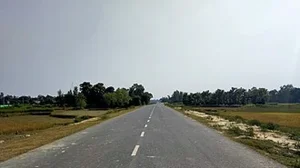
Consider a typical public road.
First, it is built using public money collected through taxes.
Then, it may be used for large political rallies, processions, or public meetings involving heavy vehicles, temporary stages, barricades, and crowds.
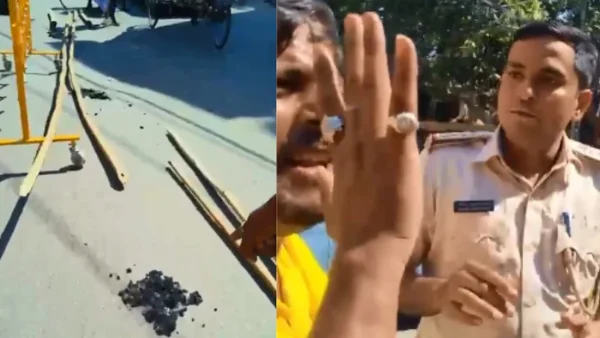
If the road surface is damaged, local authorities often undertake repairs using public funds.
For many citizens, this creates the perception of paying for the same infrastructure multiple times:
Once to build it.
Again to restore it after heavy public events.
And repeatedly through future maintenance.
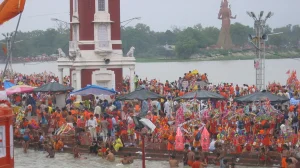
Whether the damage is caused by political rallies, religious gatherings, cultural festivals, or other mass events, the repair bill frequently falls on the public exchequer.
Roads Are Public Assets
Roads are among the most expensive public assets maintained by governments.
They are designed to support:
Daily commuters.
School buses.
Ambulances.
Freight transport.
Emergency services.
Economic activity.
When roads are repeatedly subjected to unusually heavy loads or temporary structures, maintenance costs can rise.
In urban areas, road closures for major events can also result in traffic congestion, fuel wastage, and lost productivity—costs that are difficult to quantify but are felt by ordinary citizens.
Should Event Organizers Bear the Cost?
This question is increasingly being asked.
In many countries, organizers of large public events may be required to:
Obtain permits.
Pay security deposits.
Restore venues after use.
Cover cleanup expenses.
Compensate authorities for damage caused during events.
Some policy experts argue that a similar principle could be applied more consistently to political events, ensuring that taxpayers are not automatically responsible for repair costs if public property is damaged.
Supporters of this idea say it would encourage greater accountability and more careful planning.
It’s Bigger Than Politics
The issue is not limited to election rallies.
Large-scale religious gatherings, commercial events, concerts, protests, and festivals can also place significant strain on public infrastructure.
The broader policy question is simple:
Should the cost of restoring damaged public property always be borne by taxpayers, or should organizers contribute when damage can be directly attributed to an event?
Finding the right balance is not straightforward. Public assemblies are an important part of democratic life, cultural expression, and civic participation. At the same time, maintaining public infrastructure is expensive, and repeated repairs place additional pressure on government budgets.
The Hidden Cost of Democracy
Political rallies are a visible feature of democratic politics. They allow parties to mobilize supporters, communicate policies, and engage with voters.
Yet their indirect costs are rarely discussed.
Beyond campaign advertisements and event logistics, there are hidden public expenses:
Traffic management.
Police deployment.
Sanitation and waste removal.
Temporary infrastructure.
Road maintenance and repairs.
These expenditures are ultimately funded through public resources.
The Bigger Question
No democracy can function without political participation. Public spaces and roads inevitably play a role in that process.
However, as cities grow and infrastructure becomes more expensive to build and maintain, citizens are increasingly asking whether there should be stronger mechanisms to protect public assets and recover costs where appropriate.
For taxpayers, the debate is less about politics and more about accountability. If public money builds the roads, many believe those roads should be protected from avoidable damage—and where damage does occur, responsibility should be clear.
In the end, roads are meant to connect people, commerce, and communities. Ensuring that they remain safe, durable, and well-maintained is not just an engineering challenge—it is a question of governance, fiscal responsibility, and respect for public resources.