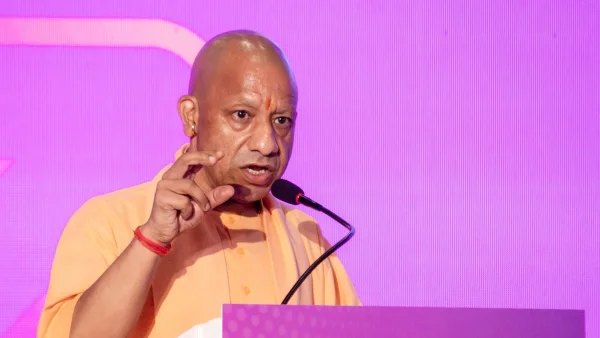
Politics in Uttar Pradesh rarely remains out of the national spotlight. As India’s most populous state and one that sends 80 MPs to the Lok Sabha, every political development in Uttar Pradesh attracts nationwide attention. With the 2027 Uttar Pradesh Assembly election still some time away, a viral post on X (formerly Twitter) has already triggered fresh debate over the Bharatiya Janata Party’s (BJP) leadership strategy.
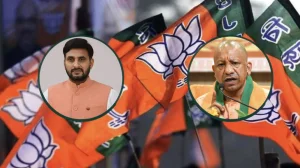
The controversy began after an X post from the account With Congress claimed that Uttar Pradesh BJP President Pankaj Chaudhary had said Chief Minister Yogi Adityanath would not be the BJP’s Chief Ministerial face in the next Assembly election.
The post rapidly spread across social media platforms, with supporters and critics of the BJP offering sharply different interpretations.
At the time of writing, however, there is no independent confirmation from the BJP or credible news organizations verifying that Pankaj Chaudhary made the statement. Readers should therefore treat the claim as unverified unless supported by official communication or reliable reporting.
The Viral Tweet and Why It Went Viral
The viral post stated:
“योगी आदित्यनाथ अगले चुनावमें मुख्यमंत्री काचेहरा नहीं होंगे – पंकज चौधरी प्रदेश अध्यक्षभाजपा (यूपी)”
The accompanying caption also claimed:
“भाजपा यूपी हाररही है”
These statements immediately became political talking points because they touched on two sensitive questions:
Will BJP continue to project Yogi Adityanath as its Chief Ministerial face? Is the party facing growing political challenges in Uttar Pradesh? Within hours, the tweet was shared widely by opposition supporters, political commentators, YouTube creators, and news discussion forums.
At the same time, BJP supporters questioned the authenticity of the quote and demanded that the complete speech or official statement be released before drawing conclusions.
The incident once again highlighted how quickly political narratives can spread through social media, often much faster than official clarifications.
Why Yogi Adityanath Is Central to BJP’s Politics
To understand why the viral claim attracted so much attention, it is important to understand Yogi Adityanath’s political importance.
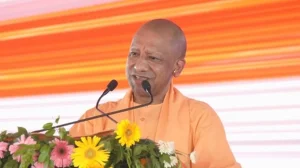
Since becoming Chief Minister in March 2017, Yogi Adityanath has emerged as one of BJP’s most recognizable leaders.
His tenure has been associated with:
Infrastructure development Expressway projects
Religious tourism initiatives
Law-and-order campaigns
Industrial investment summits
Welfare schemes
He also became the first Chief Minister in nearly four decades to lead the BJP back to power consecutively in Uttar Pradesh after the 2022 Assembly election.
Because of this political stature, any suggestion that BJP might replace him naturally attracts widespread discussion.
BJP’s Electoral Performance in Uttar Pradesh
The BJP’s rise in Uttar Pradesh over the past decade has been one of the defining developments in Indian politics.
2014 Lok Sabha Election
The BJP secured a landslide victory in Uttar Pradesh, winning 71 out of 80 seats on its own, with its ally Apna Dal winning two more. This result laid the foundation for the party’s expansion in the state.
2017 Assembly Election
The BJP achieved another major victory by winning over 300 seats in the Uttar Pradesh Assembly. Following the election, Yogi Adityanath was chosen as Chief Minister.
The decision surprised many observers, as several other senior BJP leaders were also being discussed for the role.
2019 Lok Sabha Election
Despite a strong alliance between the Samajwadi Party (SP) and Bahujan Samaj Party (BSP), the BJP again performed strongly in Uttar Pradesh, retaining a majority of parliamentary seats.
2022 Assembly Election
The BJP returned to power under Yogi Adityanath’s leadership, becoming the first party in decades to secure consecutive terms in Uttar Pradesh.
This victory strengthened Yogi Adityanath’s position within the party and reinforced his image as one of BJP’s key electoral leaders.
2024 Lok Sabha Election
The BJP-led NDA remained the largest alliance nationally, but in Uttar Pradesh the BJP won fewer seats than it had in 2019, while the Samajwadi Party improved its performance. Political analysts have pointed to a mix of local issues, alliance dynamics, and constituency-specific factors when discussing this outcome.
Previous Leadership Speculation
This is not the first time speculation has surrounded BJP’s leadership in Uttar Pradesh.
Over the years, media reports and political commentators have frequently discussed:
Possible differences between the state leadership and the central leadership.
Cabinet reshuffles.
Organizational appointments.
Candidate selection.
Election strategy.
After every major election, rumors have occasionally circulated suggesting changes in leadership.
However, despite recurring speculation, the BJP has consistently projected Yogi Adityanath as its principal leader in Uttar Pradesh.
No official announcement has indicated that the party intends to replace him as its Chief Ministerial face.
Why Leadership Questions Matter
Leadership is one of the most important elements of any election campaign.
Political parties often build their campaigns around recognizable faces who can mobilize workers, attract media attention, and connect with voters.
For the BJP in Uttar Pradesh, Yogi Adityanath has played that role for several years.
Any discussion—whether verified or speculative—about changing such a prominent leader naturally becomes a significant political story.
However, political observers caution that leadership decisions in major parties are usually announced through official channels rather than through isolated social media posts.
What Happens Next?
At present, three possibilities exist:
The BJP or Pankaj Chaudhary may issue an official clarification.Additional evidence could emerge that either supports or contradicts the viral claim.The controversy could fade if no credible confirmation is produced.Until then, political observers recommend treating the viral post as part of the broader election narrative rather than as evidence of a confirmed leadership change. Yogi Adityanath’s Governance, BJP's Challenges in Uttar Pradesh, and the Politics Behind the Viral Claim
Yogi Adityanath’s Political Journey: From Gorakhpur MP to Chief Minister
Before becoming the Chief Minister of Uttar Pradesh in 2017, Yogi Adityanath had already established himself as a prominent political figure. A five-time Member of Parliament from Gorakhpur, he built a strong political base through his association with the Gorakhnath Math and his active role in regional politics.
When the BJP won a decisive mandate in the 2017 Uttar Pradesh Assembly election, the party selected Yogi Adityanath as Chief Minister. The decision surprised many political observers because several senior BJP leaders were also considered potential candidates. Since then, Yogi has become one of the BJP’s most recognizable leaders and has frequently campaigned for the party in state and national elections.
BJP’s Governance Record: Achievements Highlighted by the Party
The BJP has consistently highlighted several achievements under Yogi Adityanath’s leadership.
Infrastructure Development
The state government has promoted the construction of expressways, airports, metro projects, and improved road connectivity. Projects such as the Purvanchal Expressway, Bundelkhand Expressway, and Ganga Expressway have been presented by the government as examples of infrastructure-led development.
Investment and Industrial Growth
The government has organized Global Investors Summits aimed at attracting domestic and international investment. According to the state government, investment proposals worth several lakh crore rupees have been signed, although the extent to which proposals translate into completed projects continues to be closely monitored.
Religious Tourism
The BJP has also emphasized the development of religious tourism, including projects in Ayodhya, Kashi (Varanasi), Mathura, and other pilgrimage destinations. The inauguration of the Ram Mandir in Ayodhya has been a major political and cultural milestone frequently highlighted by BJP leaders.
Welfare Schemes
The government points to implementation of central and state welfare programs such as housing, sanitation, free ration distribution, electricity connections, and healthcare initiatives as examples of its governance model.
Major Controversies During Yogi Adityanath’s Tenure
Like every major political leader, Yogi Adityanath’s tenure has also been marked by controversies.
Bulldozer Policy
Perhaps the most debated issue has been the state’s use of demolition drives against properties linked to individuals accused of crimes.
BJP’s Position:
The government argues that demolitions are carried out against illegal constructions following legal procedures and are intended to deter organized crime.
Opposition’s View:
Opposition parties and several rights organizations have alleged that the demolitions have at times been arbitrary or disproportionately targeted certain communities. Some cases have also been challenged in courts.
Law and Order
The BJP often cites improvements in law and order, including action against organized crime, as one of its major achievements.
However, opposition parties have argued that concerns remain regarding crimes against women, communal tensions, and alleged misuse of police powers. These issues continue to be debated in political campaigns and legislative discussions.
Recruitment Examinations
Paper leaks and recruitment examination cancellations have periodically become political issues in Uttar Pradesh.
Opposition leaders have accused the government of failing to protect the integrity of recruitment processes.
The government has responded by introducing stricter laws against paper leaks and promising stronger action against those responsible.
Unemployment
Employment remains one of the most significant political issues in Uttar Pradesh.
The opposition frequently argues that job creation has not kept pace with the aspirations of the state’s large youth population.
The BJP counters by highlighting investments, infrastructure projects, industrial policies, and entrepreneurship initiatives that it says are creating employment opportunities over time.
Is BJP Facing Anti-Incumbency?
Anti-incumbency refers to the tendency of some voters to seek political change after a government has been in office for multiple terms.
Political analysts often examine several factors while assessing anti-incumbency:
Inflation
Employment opportunities
Rural distress
Local governance
Public services
Corruption allegations
Candidate selection
Local leadership
Because BJP has governed Uttar Pradesh since 2017, political observers expect anti-incumbency to become one of several themes in the 2027 campaign. However, anti-incumbency does not automatically determine election outcomes; parties can and do win successive terms depending on voter priorities and campaign performance.
The Viral Claim and Political Narratives
The viral social media post discussed in Part 1 quickly became part of a broader political narrative.
Supporters of opposition parties argued online that, if the claim were true, it could indicate internal uncertainty within the BJP.
Many BJP supporters rejected the claim outright, describing it as misleading or fabricated and calling for the release of a full video or official statement before accepting it.
At the time of writing, there is no independent verification that the attributed statement was made. This highlights the importance of distinguishing between viral social media content and officially confirmed information.
Social Media Reactions
The debate on social media has reflected India’s polarized political environment.
BJP Supporters
Many BJP supporters responded by:
Calling the tweet fake or misleading.Asking users not to rely on cropped clips or screenshots.Demanding an official clarification.Arguing that similar rumors often circulate before elections.
Opposition Supporters
Many opposition supporters argued that the viral post reflected growing political pressure on the BJP ahead of the 2027 election.
Some suggested that questions about leadership could become an important campaign issue if such speculation continued.
These reactions represent opinions expressed by users online and should not be interpreted as evidence of broader public sentiment.
Could Leadership Change Become an Election Issue?
Leadership speculation is common before major elections, especially in politically significant states like Uttar Pradesh.
However, major political parties generally announce leadership decisions through formal organizational processes and official communication.
Until any official announcement is made, discussions about future Chief Ministerial candidates remain speculative rather than established fact. Will the Viral Controversy Affect BJP’s Prospects? Political Analysis Ahead of the 2027 Uttar Pradesh Election
The Bigger Picture: Is One Viral Tweet Enough to Change an Election?
The controversy surrounding the viral X (formerly Twitter) post has once again highlighted the growing influence of social media in Indian politics. A single post, particularly one involving a prominent political leader, can generate thousands of comments, media discussions, YouTube debates, and WhatsApp forwards within hours.
However, political analysts generally caution against equating online discussions with electoral outcomes. Social media can influence public debate, but elections in a state as large and politically diverse as Uttar Pradesh are shaped by a much wider range of factors.
These include:
Governance and public servicesEmployment opportunitiesWelfare schemesAgricultural issuesLaw and orderLocal candidatesCaste and community dynamicsParty organizationAlliances and campaign strategyFor this reason, one viral claim—particularly one that remains unverified—should not be viewed as evidence that a political party is gaining or losing electoral support.
What Challenges Does BJP Face in Uttar Pradesh?
Every government that seeks re-election faces scrutiny from voters, and the BJP is no exception.
Political observers often identify several issues that are likely to shape the political debate before the 2027 Assembly election.
Employment
Employment continues to be one of the most discussed issues in Uttar Pradesh. Opposition parties argue that more job opportunities are needed, especially for young people entering the workforce.
The BJP points to industrial investment, infrastructure projects, and entrepreneurship initiatives as part of its strategy to generate employment.
Inflation and Cost of Living
Like many governments, the BJP has faced criticism over rising prices and the cost of living. Opposition leaders frequently raise these concerns during political campaigns.
The BJP, meanwhile, emphasizes welfare schemes, subsidized food distribution, and other measures aimed at supporting lower-income households.
Recruitment Examinations
Paper leaks and delays in recruitment processes have become recurring political issues. Students and job aspirants have expressed concerns about examination integrity.
The government has responded by introducing stricter laws against paper leaks and promising action against those responsible.
Rural and Agricultural Concerns
Farmers’ income, irrigation, procurement, and agricultural support remain important issues across Uttar Pradesh. Different political parties have proposed varying approaches to address these concerns.
BJP’s Strengths Going into the Next Election
While opposition parties have highlighted several challenges, the BJP also enters the next election with significant organizational strengths.
Strong Party Organization
The BJP has one of the largest and most structured political organizations in the country, with an extensive network of workers and local leaders across Uttar Pradesh.
Welfare Programs
The party is expected to continue highlighting central and state welfare initiatives, including housing, sanitation, free food grain distribution, electricity connections, and healthcare programs.
Infrastructure Projects
Expressways, airports, metro systems, and investment initiatives are likely to remain central themes in the BJP’s campaign.
Leadership Recognition
Yogi Adityanath continues to be one of the BJP’s most recognizable leaders in Uttar Pradesh. As of the time of writing, there has been no official announcement indicating any change in his leadership role.
Could There Be a New CM Face?
The viral post prompted online speculation about whether the BJP might project a different Chief Ministerial candidate in the future.
However, it is important to distinguish between political speculation and official decisions.
Major political parties typically announce leadership changes through formal party channels. As of now, the BJP has not announced any change to its Chief Ministerial leadership in Uttar Pradesh.
Media reports and political discussions may mention various senior leaders when analyzing future possibilities, but such discussions should not be interpreted as evidence of an impending leadership change.
Opposition Strategy Ahead of 2027
Opposition parties are expected to focus on several issues during the campaign, including:
EmploymentInflationFarmers’ concernsRecruitment examinationsLocal governanceSocial justiceCost of livingThey are also likely to scrutinize the BJP government’s performance and present alternative policy proposals.
The BJP, in turn, is expected to defend its record by emphasizing development projects, welfare schemes, investment, and governance.
Can Social Media Influence Elections?
Social media has become an important arena for political communication. Parties, supporters, journalists, and citizens all use platforms such as X, Facebook, Instagram, and YouTube to discuss political developments.
At the same time, viral content can spread much faster than official clarifications. This is why readers should verify political claims through reliable news organizations or official statements before treating them as factual.
The viral post discussed in this series illustrates how quickly political narratives can develop online, even when the underlying claim has not been independently verified.
Lessons for Voters
The episode also serves as a reminder of the importance of media literacy.
Before sharing or relying on political claims, voters should consider:
Has the statement been confirmed by official sources?
Is the full video or speech available?
Have multiple credible news organizations independently verified the claim?
Is the content presented in its original context?
Careful evaluation of political information helps reduce the spread of misinformation and supports informed public debate.
Conclusion
The viral claim regarding Yogi Adityanath’s future as the BJP's Chief Ministerial face has generated widespread discussion on social media and among political observers. However, the central claim remains unverified at the time of writing.
The debate nevertheless highlights broader questions about leadership, governance, campaign strategy, and the growing role of social media in shaping political narratives.
As Uttar Pradesh moves closer to the 2027 Assembly election, the political conversation is likely to focus less on viral posts and more on issues that directly affect voters: employment, economic opportunities, welfare programs, infrastructure, education, law and order, and local governance.
Ultimately, the outcome of the election will be determined by the choices of voters—not by any single social media post or unverified claim. Until official announcements are made, discussions about changes in the BJP’s Chief Ministerial leadership remain speculative rather than established fact.