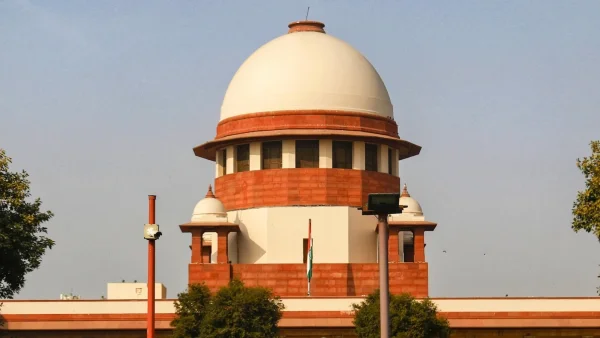
How all institutions teaching children younger than 14 are managed might be decided on May 11th. The lawsuit, a public interest litigation, wants both regular and religious schools to be regulated, and it’s making the safety of students and how well schools are held accountable a major topic of discussion nationally.
What the PIL asks for
Lawyer Ashwini Kumar Upadhyay (with help from Ashwani Dubey) filed the petition, and is asking the government to officially register, approve, watch over and check on all places where children up to age 14 are taught.
The petition argues the government has a greater duty to look after young children, linking it to Articles 21A, 39(f), 45 and 51-A(k) of the constitution.
The petition says that children are the most important part of the country’s future, and because of their age, are easily taken advantage of. Without rules, they could be manipulated, and the petition says this is even a national security issue because it’s about protecting the country’s future citizens.
Why schools and parents are watching
If the Supreme Court says schools need to be watched more closely, people who run schools will have to prove they’ve been approved, that their lessons meet standards, and that children are protected. Parents will be able to see much more clearly who is teaching their children and what is being done to keep them safe.
Upadhyay says he found many unregistered and unapproved schools when he visited areas near the Uttar Pradesh border. He claims these types of schools are increasing in border areas because no one is properly checking on them or regulating them.
For families in poorer areas, having basic checks done consistently could stop temporary, unreliable schools from operating. And for legitimate schools, having a standard set of rules could make it more obvious what they absolutely must do and how often they will be inspected.
The constitutional debate raised
A large part of the lawsuit questions how much power Article 30 really has. The petition says Article 30 doesn’t give religious minorities any extra rights beyond those everyone already has under Article 19(1)(g).
It’s asking the court to say specifically that Article 30 is just another way of saying Article 19(1)(g) and doesn’t give minorities anything more in terms of rights, advantages or special treatment.
This way of looking at it puts the focus on the need for all children to be safe, instead of on the right of certain groups to manage things, and wants all schools to be under the same rules.
Who will hear the case and when
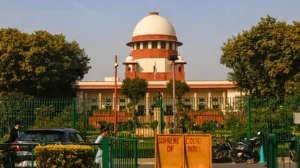
Justices Dipankar Datta and Satish Chandra Sharma will likely hear the case on May 11th. The hearing will decide if the court will ask for responses, and what the court will do next.
The petition is based on Article 32 of the constitution, and asks the court to give directions for registering, approving, watching over, and checking on all schools giving either regular or religious teaching to children under 14.
What the court says early on could show how states will change their regulations to match the parts of the constitution mentioned in the petition.
What could change on the ground
This case should remind school leaders and those in charge of schools to look at their paperwork, registration, and how the school is run. And for parents, especially in the areas Mr. Upadhyay mentioned, it’s a good time to ask about checking things out and getting information.
If the court agrees with the plea’s thrust, institutions may face steps such as:
– Mandatory registration across categories
– Recognition tied to minimum child-safety norms
– Routine supervision by designated authorities
– Monitoring of curricula and teacher credentials
What comes next
The next important step is the May 11th hearing in front of the justices. All involved in public, private and faith-based schools will want to find out what the standard rules will be and how they will be enforced.
No matter what happens, the petition has made one thing clear: every child under 14 should be learning in a school the government knows about, that follows the rules, and is open with the families who are trusting it with their children.