Nearly 18 lakh students and the universities they’re applying to are getting ready because the CBSE Class 12 results will be available shortly on cbse.gov.in. Universities can begin the application process quickly, and students should have their login information available now to avoid problems on results day.
Result timeline, official stance, and why it matters
CBSE says the Class 12 results are on track for the third week of May 2026. Sanyam Bhardwaj, the Controller of Examinations, says the grading is going smoothly and asks students to be patient for the official announcement.
Rumors about the exact date have turned out to be incorrect. A teacher at a DAV school thinks the grading isn’t finished, so the results aren’t coming out this week. CBSE hasn’t given a specific date or time, so only trust information from CBSE itself.
In the past, results have come out in mid-May. In 2025, they were released on May 13th, and 88.39% of students passed. The board is likely to do things a similar way this year, but they’ll officially tell you the exact time.
Exam window recap
The Class 12 exams were from February 17th to April 10th, 2026, all in one sitting from 10:30 am to 1:30 pm at all locations. The results should be out shortly as grading continues.
Where to check, direct link, and managing heavy traffic
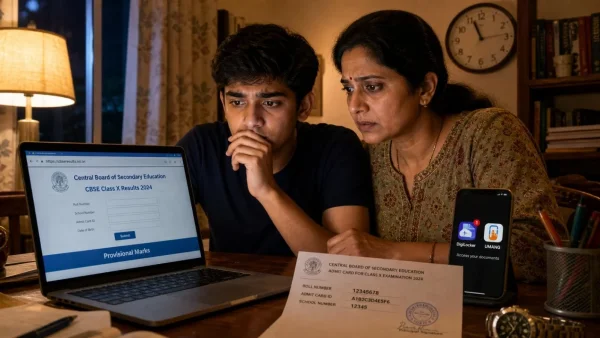
When the results are released, the direct link will be on cbse.gov.in and results.cbse.nic.in. You can also use your login information at results.cbse.nic.in and cbse.nic.in to see your scores.
Lots of people looking at the results at once can slow down the servers. To handle this, CBSE has made several places to access the results, including DigiLocker and UMANG. They’ll also have a phone service (IVRS) and text message service, so even with a weak internet connection you can get your marks.
It’s still easy to get to the results on your phone. You can open the official websites or use the DigiLocker or UMANG apps. Having a good internet connection will stop the page from timing out when lots of people are using it.
To make things easier, open several of the official websites before the results are out. In the past, results.cbse.nic.in sometimes loaded more quickly than the main website, but how fast each one is changes.
How to check online without errors
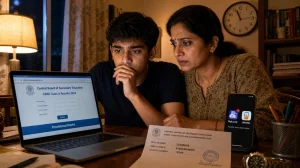
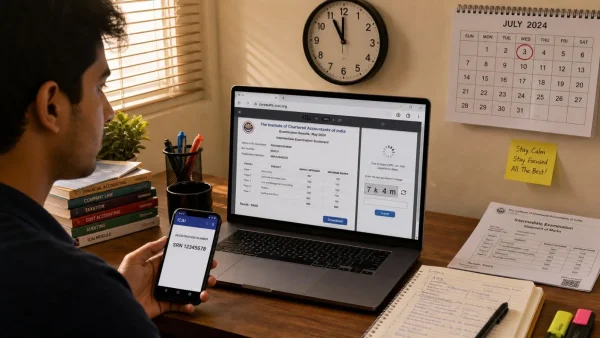
Before you enter your information, double-check your roll number, school number, admit card number and birthdate. Even a small mistake will stop you from getting to your results. Have all your details ready to save time once the link is active.
Here are the basic steps to view scores online:
– Visit the official CBSE results portal:
– Select the Class 12 Result 2026 link
– Enter all requested credentials accurately
– Submit and wait for the scorecard to load
– Download and save the provisional marksheet
Getting the digital marksheet via DigiLocker
CBSE will give you a digital marksheet through DigiLocker. This digital version is officially signed by CBSE and can be used for college applications and other official purposes. You’ll get the original paper copy from your school later.
You might need an APAAR ID on DigiLocker. The CBSE website doesn’t require it to see your results, but the APAAR ID helps you securely get your official documents from DigiLocker.
Follow these steps to access documents on DigiLocker:
– Go to digilocker.gov.in or open the app
– Log in with mobile number or Aadhaar
– Register and verify via OTP if new
– Link CBSE details or APAAR ID
– Open Issued Documents to download
If DigiLocker is slow or you can’t log in, wait a little while and try again, or use another official website. Logging in before everyone else tries to get in can reduce the delays with getting a one-time password (OTP) and being verified.
After downloading: verify details, plan next steps
After you’ve downloaded your marksheet, check your name, roll number, each subject’s score, and your overall result. If anything is wrong, tell your school immediately. Keep several copies of the provisional marksheet for when you apply to colleges and for other required paperwork.
If you’re not happy with your marks, you can ask CBSE to check them, get a copy of your answer sheet, and then ask for it to be re-evaluated. You can only have theory papers re-evaluated, and it costs Rs log per question. After the re-evaluation, the new mark is final.
Those who didn’t pass one or two subjects will probably have a chance to take ‘compartment’ exams in August. More details about the dates and process will be announced when the main results are out.
IVRS and SMS for wider access
CBSE is arranging an IVRS (Interactive Voice Response System) with phone companies for a short time. You can dial the number they announce, follow the instructions, and put in your roll and school codes to hear your marks for each subject. They will also have a text message service to help those with unreliable internet.
Special arrangements: West Asia students and assessment rules
For Class 12 students in West Asia where the exams were interrupted by problems in the region, CBSE has created a different way of assessing them. Students are grouped depending on how much of the exam they completed – all, some, or none – and also includes those needing to take compartment exams.
Your final marks will be a combination of the marks from the exams you were able to take and your school’s assessments. Both the theory and practical (or internal assessment) parts of the subject will be included. Theory is worth 80, 70, 60, 50 or 30 marks, depending on the subject, and the rest comes from practical or internal assessment.
These changes are designed to get results out quickly and fairly to students who were affected. The schools in that area are working with CBSE to make sure the correct information is used to calculate the final scores.
Admissions outlook, stream-wise release, and what colleges expect
CBSE will publish the results for Science, Commerce, and Arts all on the same day. They also usually publish the overall pass percentage, and a breakdown by gender and region, to help colleges plan their admissions and counseling.
In 2025, students in the Humanities stream had the highest pass percentage of all the streams. As the 2026 process comes to an end, colleges will be watching for changes in each subject as they decide on their entry requirements and what documents they’ll need.
Colleges will be able to verify digital marksheets from the very first day, which makes verification faster. And you can start your college applications before you get your official certificate from your school.
As the announcement nears, the key takeaways are clear:
– Expect the result in the third week of May 2026
– Use cbse.gov.in and results.cbse.nic.in for direct links
– Keep roll, school, admit card ID, and date of birth ready
– Use DigiLocker and UMANG for rapid document access
– Rely only on official updates from CBSE
With the release date getting closer, being prepared is the best way to avoid stress at the last minute and begin your college applications on time.