War movies in general often walk a fine line between paying respect and being full of overused ideas. When Farhan Akhtar said his new film, 120 Bahadur, was like a follow-up to “Lakshya,” people had high hopes. But after watching 120 Bahadur, you start to wonder if we expected too much.
A Tale of Valor Lacking Depth
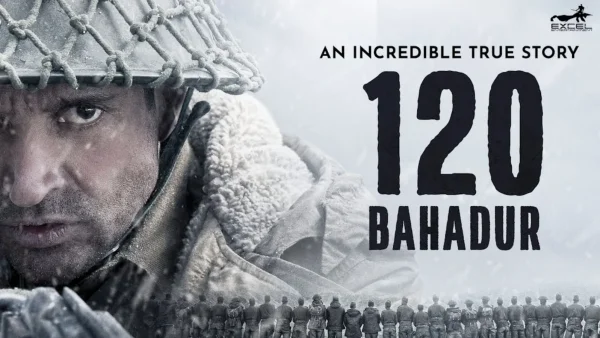
120 Bahadur tells the story of the bravery of Major Shaitan Singh Bhati and his 120 men of Charlie Company in the 1962 India-China war. It wants to honor these courageous soldiers, but it feels more like a history book come to life, and doesn’t have the depth that would have made it really stick with you.
The story begins with Amitabh Bachchan talking in a remembering way, trying to create a sad mood by saying China betrayed us when we thought we were friends. But this opening soon becomes what you’d expect: old black and white news footage and many familiar things from historical dramas.
Characters Without a Cause
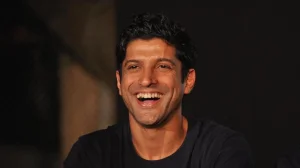
Farhan Akhtar’s acting as Major Shaitan Singh Bhati is probably the best part of 120 Bahadur. He shows a calm, strong will and seems to really be a commander leading his men even though they have almost no chance of winning. But even he isn’t a very complex character, beyond being smarter than the enemy. The script doesn’t tell us much about who these soldiers are as people, only what their uniforms are, so they’re just shapes in the middle of the war.
The soldiers are shown as a pretty dull group, and their closeness doesn’t seem real. Their conversations don’t feel true, and it’s hard to feel anything for what they are going through. This lack of getting to know the characters also applies to the Chinese side; the Chinese officer is a completely stereotypical bad guy and his actions seem to be there to easily get you to be patriotic, instead of being a believable enemy.
A Familiar Formula
The movie’s structure relies a lot on clichés that aren’t surprising anymore. From soldiers singing around a campfire to predictable deaths after touching conversations with their families, 120 Bahadur feels like it’s just going through a list of standard things in war movies. The fighting scenes, which have different styles – shooting and fighting with hands – all start to run together and don’t have enough emotional impact to hold your attention.
The movie doesn’t exactly push a particular side or divide people about China being the enemy, but 120 Bahadur doesn’t offer a new way of looking at the history. It’s very clear the film wants to show love for your country and respect for those who defend it. But without a really interesting story or emotional connection, that message isn’t as strong.
Technical Merits Undermined by Narrative Weakness
Even though the story itself has problems, 120 Bahadur is technically pretty good. Director Rajneesh Ghai does a good job of showing how chaotic a battle is with how he uses the camera and the details of the setting make it feel real. The music in the background adds to the tension and mood of many scenes, though the songs themselves aren’t very good.
However, these technical things can’t make up for a weak story. Sparsh Walia is very good as Sepoy Ram Chandra Yadav – he’s the emotional center of the movie and we experience a lot of it through him – but even his acting can’t save the movie from feeling generally uninspired.
Final Thoughts
120 Bahadur both honors and misses a chance. It honors because it’s sincere in wanting to recognize real heroes; it misses a chance because it doesn’t go beyond the typical things you see in this kind of movie or give any new thoughts on being brave in history.
If you’re looking for a story that really gets to you with characters that are fully developed and exciting action, like Farhan Akhtar’s “Lakshya”, this film won’t meet your expectations, given how promising it first seemed.
In short, while you can admire the film’s attempt to honor the sacrifices of heroes who aren’t often talked about during a difficult time in war, you’ll probably find it doesn’t have enough power when it actually shows those stories on the screen. It’s more than just another retelling of past glories in a war movie, with very little real depth or originality, beyond just showing heroes on the surface.