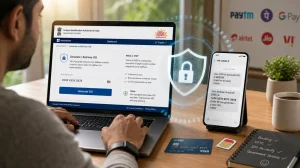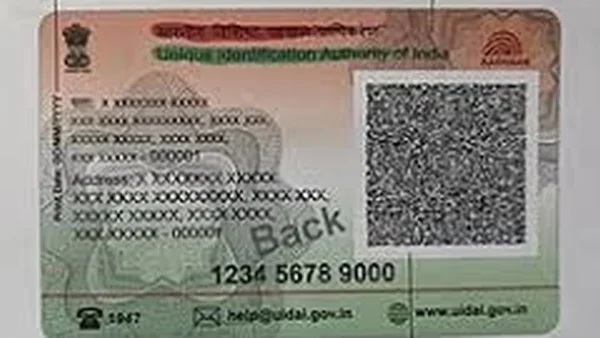
The government acted quickly to say these spreading claims about the new Aadhaar card design are false. MeitY and PIB specifically said they have no plans to alter how the Aadhaar card looks.
This is important because Aadhaar is used to confirm people’s identities in everyday life for a huge number of people. Because over 1.4 billion people have Aadhaar, even a rumor can cause confusion at places where you use it, and at kiosks. The government’s explanation is to make sure things continue to run smoothly and people know what to expect.
What the government said
MeitY called the reports incorrect, misleading, and designed to cause unnecessary confusion. They asked everyone to only believe official information from UIDAI and PIB.
PIB confirmed on X (formerly Twitter) that the talk of a redesign is untrue. Their statement was very direct: “This is NOT CORRECT. There is no plan for any such changes,” and they told people and the news media to disregard and not share unverified posts.
What triggered the rumours
Posts on social media and in some news stories said Aadhaar would be simplified to a photo and a QR code. These posts said this change was to stop identity theft and data leaks, but the government denies that.
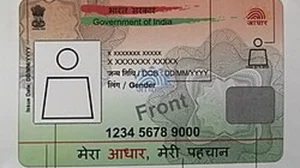
In fact, a normal Aadhaar card currently has your photo, your name, your address, and your birthdate. It also has your Aadhaar number and a QR code to verify your details. No official redesign that matches what has been going around has been announced.
UIDAI’s recent clarification on date of birth
Also, UIDAI has clearly explained what Aadhaar is and isn’t, in terms of proof of identity. It’s widely accepted as proof of who you are when used with authentication, but it is not official proof of your birthdate.
The Aadhaar Act of 2016 doesn’t say anything about being able to use Aadhaar as proof of birthdate. UIDAI added that your Aadhaar number can prove your identity if it’s checked against the system, but the number by itself isn’t proof of when you were born.
What should Aadhaar users do now
So, the main thing to do is ignore the redesign talk and get information from trusted sources. UIDAI’s official social media accounts and statements from PIB are where to look for any changes to what Aadhaar does or how it is used.
Here is the official guidance distilled from the statements:
– Ignore unverified reports and viral posts
– Follow UIDAI’s verified social media handles
– Check press releases issued via PIB
– Use Aadhaar as proof of identity with authentication
– Do not treat Aadhaar as proof of date of birth
No change to physical design announced
Aadhaar is still a twelve-digit unique identification number issued by UIDAI. Security features and digital options like the mAadhaar app and the QR code for e-Aadhaar have improved, but there hasn’t been any official announcement of the changes described in the recent reports.
The government having to get involved shows how often incorrect information about identification goes around online. Rumors about Aadhaar happen often and, as the authorities said, need to be quickly checked against the facts and you should rely on official communications.
For now, nothing has changed. Your Aadhaar card still has your photo, personal information, Aadhaar number, and a QR code for verifying your identity. The government has indicated that any changes in the future will be announced by UIDAI and PIB, not through guesses on social media.