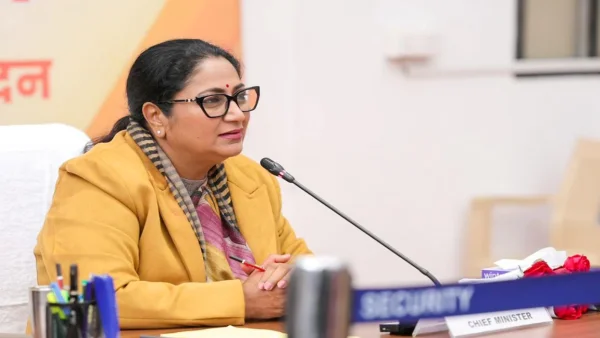
Delhi has completely changed to a digital system for traffic tickets where there’s a specific time you have to deal with them, and it fixes the old issues where people could put off or get away with not paying. Chief Minister Rekha Gupta announced this big change, and it means you must pay on time, you can’t go straight to court, and you’ll be penalized severely if you are a repeat offender. Owners of vehicles need to be fast and make sure their information is up to date.
What changes for Delhi vehicle owners
With this new system, tickets will be taken care of in a set way online and there are firm deadlines. Police, or people the police allow, can give tickets in person or online, and cameras that watch traffic will automatically create e-challans linked to the registered owner of the vehicle.
If the government has your cell phone number, you’ll get an e-challan within three days, and a paper notice will arrive in the mail within fifteen days. Every ticket will be recorded in order on an online site so everything is completely open to view.
Officials are telling people to make sure their phone numbers and addresses are current on their driver’s licenses and vehicle registration forms. That way you’ll get alerts on time and won’t miss any important dates.
Here are core changes owners should note:
– Challans go to the registered vehicle owner
– Alerts may arrive via SMS, email, or mobile
– All payments will use electronic modes
– Records stay visible on an online portal
Deadlines you cannot miss
Once a ticket is issued, the clock starts. You have 45 days to pay the fine, or fight it online, sending in any proof you have. If you don’t do either of those things in 45 days, the ticket is considered to be accepted by you.
After it’s accepted automatically, you have 30 days to pay. If your attempt to fight the ticket fails, you have 30 days to pay, or you can go to court after paying half the ticket amount.
For clarity, these are the key timelines:
– E-challan sent within three days
– Physical notice within 15 days
– Challenge or pay within 45 days
– Decision uploaded within 30 days
– Post-acceptance payment window: 30 days
How to challenge a challan now
You aren’t allowed to go to court right away. According to the Chief Minister’s Office, you first have to use the online complaint system and give a person who handles complaints proof of your side of things.
This person has to put their decision online within 30 days of you sending it to them. If the decision isn’t in your favour, pay within 30 days, or go to court after paying half the ticket amount.
Penalties for repeat violations
Gupta said the Delhi government will be using changes made by the national government to the Central Motor Vehicles Rules of 1989, which will make the process stricter, more transparent, and rely more on technology. If someone commits five or more traffic violations in a year, they will be considered a serious lawbreaker.
In these situations, their driver’s license could be suspended or cancelled. The point is very clear: constantly breaking the traffic laws can mean losing your driving privileges.
Non-payment consequences and enforcement
Now, ignoring a ticket will have a chain of consequences. After the deadlines pass, the system will send you a daily electronic reminder. Continuing to not pay can lead to the vehicle being marked on the portal as one that can’t be sold, which will stop you from doing important things with it.
These stops to important services include things relating to your vehicle, like paying taxes, renewing your license, and transferring the registration. And if necessary and a court orders it, the police or people authorized by them can take your vehicle if it was involved in a violation.
What this means for road users
The main idea is that people are accountable. Because e-challans are created automatically, there are set times to respond, and you have to use a digital way to argue about a ticket, you won’t be able to avoid getting a ticket.
For people in cars, the best way to protect themselves is to be careful and follow the rules, keep their contact information current, and respond quickly if they get a notification. The system now encourages quick responses and punishes delays.