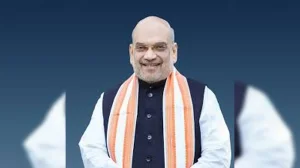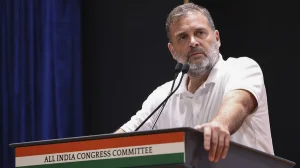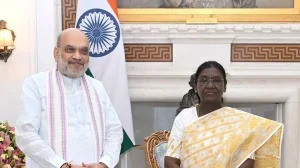
Union Home Minister Amit Shah stepped up the political battle about trade, saying Rahul Gandhi was telling untruths about free trade agreements and promising that farmers, the milk industry, and people who fish are entirely safe. Speaking in Gandhinagar, Shah went with these promises a digital move to change how food is given out and stop waste.
Shah’s attack and promise
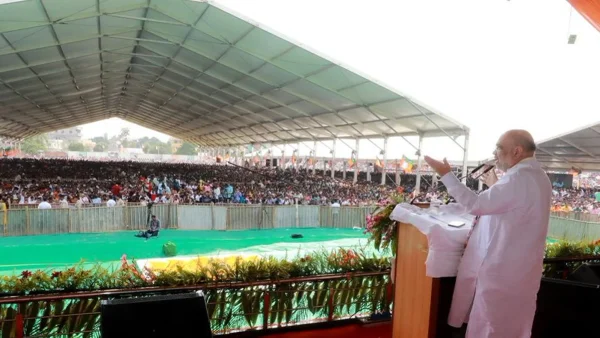
When speaking to people after starting a new public food distribution test, Shah stated that the idea that trade deals with America, Britain, and the EU would damage Indian farming was wrong. He explained that the government had safeguarded key areas in all talks – and that the milk industry was something they would not go past. He said that things bad for farming, which were signed in past years, had been put right shortly after 2014.
Making the problem a test of who could be believed, Shah asked Rahul Gandhi to have a public debate, saying that the facts on buying, money from the budget, and being able to sell abroad proved the government’s record. Shah also said the agreements were made to open up new chances to sell goods abroad for farmers and fishermen, while still keeping protections in the country. The Bharatiya Janata Party, he made clear, would not give up the interests of farmers in any deal to open up the market.
Trade talks and protection of areas
India is working on or finishing several paths: getting access to the market with the United States, a free trade agreement with the European Union, and continuing talks with the United Kingdom. People working for the government have pointed to lower taxes on some Indian goods in the US and movement towards a full EU agreement.
Those who support the talks say that, if done well, FTAs can lower problems for farm goods like rice, spices, things from the sea, and food that has been worked on. They also say that markets in advanced economies can take in goods of higher value from Indian groups that work together and very small to medium businesses.
At the same time, the government says that important farm lines are protected by lists of what is not included, limits on taxes at a certain amount, or long times for taxes to go down, to give suppliers in the country time to get used to things. The milk industry – often said to be especially at risk – is shown as being fully protected, with people negotiating being careful about milk powder, cheese, and other things that could cause a large rise in goods coming in.
How FTAs usually deal with farming
In most trade agreements today, farming is a mix of things left out and rules. Countries use lists of things they won’t allow to keep away from delicate items, use limits on taxes at a certain amount to put a top on amounts that come in without tax, and do tax decreases over many years to give suppliers in the country time to get used to things.
Rules about health of food, what is left in food, and health of animals control food safety. These rules are as important as taxes because a shipment that does not pass tests will not enter a foreign market. Rules of where things come from make sure that only goods with enough value added in the country get better access. Rules to keep things safe act as a way to let off steam.
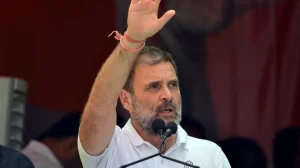
If goods coming in go over a limit, taxes can quickly come back for a short time. For selling fish abroad, getting better taxes is good, but being in line with how things can be traced and kept going is needed to keep being able to get into the market. Political going back and forth and how farmers feel Rahul Gandhi has warned that recent trade understandings could give foreign players a long-term place in Indian farming and damage being a nation on your own.
He put a series of questions online, asking for openness about what goods were covered, protections, and how the milk industry was being dealt with. Some ministers said against this that his claims were leading people the wrong way, adding that main farm goods were still protected and that no GM food was being let in under the agreement plans.
The government’s message is that being afraid of big cuts in farming is not based on fact. Meanwhile, farmer groups want the full legal texts to be made public before they are officially agreed to. People are still asking for definite lists of things dairy, cooking oils, and some cereals won’t be subject to in trade agreements, safety measures against sudden increases in imports, and a clearer picture of what non-tariff measures will be. At the same time, they are still wanting MSP – Minimum Support Price – operations to be reliable, and crop insurance to get better.
Using CBDC to improve food safety; a digital PDS
In Gandhinagar, Shah started India’s first Public Distribution System using a digital currency from the Central Bank – and showed off a pilot program for Grain ATMs. This is meant to make the final stage of delivery digital, cut down on losses, and make certain that people who are supposed to get help, get it without people in the middle taking some for themselves.
The system using the CBDC is to keep a record of all sales on a secure record, so that audits can be done in real time from the warehouse to the shop where rations are given out. Shah stated that the pilot program would make sure that wheat, rice, beans, oil, salt and sugar are handed out honestly, and that it could be made available across the country. Grain ATMs – available all the time – will sell one-kilogram packages of items like toor dal, chana, salt, and sugar from automatic machines.
The government intends to do the same pilots in Chandigarh, Puducherry, and Dadra and Nagar Haveli, and to make it more widespread depending on how well the pilots do. Shah tied this effort to the earlier Direct Benefit Transfer changes, which he said cut down on losses on a large scale. He gave numbers on how many households get free food grains and repeated that the digital supply chain will help protect the rights of poor people in areas that are far away and are trying to improve.
Figures the government gave, and what they mean
Shah compared ten years under the UPA government to the last ten years under the current government, saying that buying at MSP had increased many times. He also said the budget for farmers had gone from about 26,000 crore rupees to over 1.29 lakh crore rupees – showing a stronger focus on agriculture in government policy.
He pointed to PM-KISAN, which gives 6,000 rupees a year straight to farmers who qualify, and argued that this steady help reduces the need for expensive loans. He also mentioned that poverty had gone down, and that housing, cooking gas, toilets, piped water, food grains, and health insurance were now available to most people. If this mix of MSP buying, income support, and help for those who need it is used in all areas, it can make farms stronger as trade agreements open up markets.
The final result will depend on how prices change, how well things can be moved, whether things meet the standards of other countries, and how well safety nets work when people need them. A key test will be how well the dairy industry does under any new agreements. Groups of farmers and small producers want to be certain that lists of things excluded and amounts allowed will firmly protect milk and things made from milk. Those who make policy say those protections are already part of what they are asking for in talks.
What to look for next
The release of final lists of tariffs, things excluded, and safety rules in the agreements with the US, UK, and EU – paying close attention to dairy, cooking oils, and important grains.
– Details of the rules about where things come from, how things are shown to meet standards, and how disputes are settled – all of which decide how protections actually work.
– What causes safety measures to be used if imports go up a lot, and how fast officials can put back on duties to keep markets stable. – How much is bought at MSP in the coming seasons, along with how much money is given out through PM-KISAN, and how many farmers sign up for crop insurance – as signs of help for rural areas.
– How well the CBDC-PDS pilots do, including how often the Grain ATMs are working, how often there are errors in checking who people are, and how satisfied the people getting help are.
– When the program will be expanded to each state, as well as security measures for computers and ways to deal with complaints, to make certain people trust a completely digital system. Shah is clear: trade deals will make more chances to sell to other countries, and won’t hurt Indian farming and the dairy industry is safe.
– The opposition says that promises aren’t enough without the texts of the agreements being available to the public. As talks move from general points to legal language, the details will decide which story wins out.