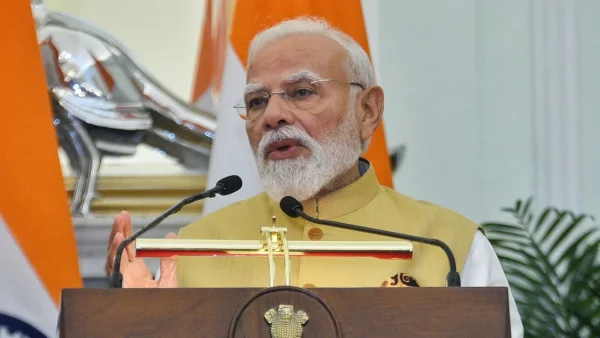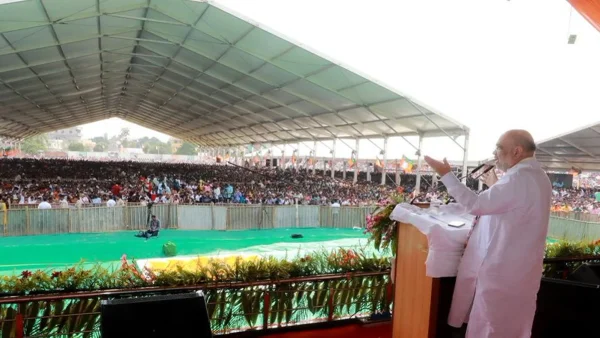
Home Minister C. Shah, in Raipur, Chhattisgarh, put the Centre’s anti-Maoist approach as having good and positive results while solemnly claiming that Central India will soon be finally rid of Naxalism. These assertions were made after he coordinated a special security review session in Chhattisgarh where, in order to sustain sustained efforts on insurgency through infrastructure development, rehabilitation measures, and force actions, a mix of security operations.
Highlights of the Raipur Security review
Present at the gathering were the state and central top leadership to review the anti-Naxal operations and discuss the advancement. Chhattisgarh’s state elected leadership and senior officials from the intelligence, and security force were reviewed on operational plans, resource allocation, and inter-state coordination across the insurgency-affected districts.
In their attempt to curb violence by the Naxals and give peace, the most venerated political leadership accompanied operational and strategic movement by the central security apparatus. Senior leadership from the central security forces and police state attended, reflecting a whole-of-government approach. The presence of directors general and national investigative leadership underlined the operational intensity of the review, focusing on both kinetic action and non-kinetic disruption of insurgent networks.
Core elements of the counter-insurgency strategy
Officials described the security-centricity of the approach while it involves developmental and administrative means. The package emphasized targeted operations against leadership, expansion of road and communication infrastructure, disruption of fund channels, and incentives for surrendered cadres to re-enter mainstream life.
Rehabilitation and surrender policies formed a key thread. Authorities report active work in resettlement, vocational training and social integration for those who give up arms, aiming to falter behind security gains with durable options/cures that would prevent relapse into violence.
Operational results and current numbers
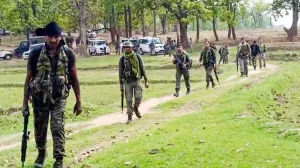
Since January 2024, the Chhattisgarh police have reported massive apprehensions, surrenders and neartotal liquidations taking place in the state. Detailed police figures show more than 500 insurgents have been neutralized in encounters, including several top commanders, to-date, with nearly 1,900 housed under arrest; in the same period, more than 2,500 insurgents laid down their arsenal and were offered rehabilitation at local camps.
Officials claim that this has been achieved through sustained anti-insurgent operations complemented by well-developed intelligence and targeted financial disruption. Removal of top-level cadres has led to widespread confusion in the field about their association with the Movement (the Naxalites) and what comes next. This is while the mass surrender could then be interpreted as a result of the combined leverage of such adversity and the applicability of rehabilitation.
Bastar region: shifting dynamics in a long confrontation between conflict actors
Though it has been long considered the most steadfast stronghold of Mauist activities, the Bastar region lies striding seven districts and forming borders with Maharashtra, Telangana, Andhra Pradesh and Odisha. The Maoist offerings have taken a severe hit following assiduous operations and some infrastructural developments across these regions, which were hitherto considered to be their safe haven and logistical backyards.
The nature of terrian and other phenomena on the ground suit to set up the most grim challenge to security and governance. This emphasized the need for stronger presence, better roads, and the supply of services that must underpin gains already made and denial of any chance to recuperate.
Challenges ahead and what lies beyond March 31
An insurgency entrenched in the ethos of any particular region requires more than just tactical triumphs. This is done through the continuation of intelligence-led operations and enhancing inter-state cooperation. This would also go to infuse such rehabilitation schemes as are attractive enough for potential surrender groups not to return to claim the cause of violence.
The March 31 deadline is seen, on the one hand, in political and operational terms. Officials see the deadline’s arrival principally as a spur to more immediate action, but analysts caution about continued governance, the opportunity of economic benefit and community trust across the affected areas, which are core to long-term stability.
Implications on Grant Policy and Public Security
So far as the current transformation is concerned, the weakening of the LTG cadres possibly signals a withdrawal of the security forces back toward consolidation and development support. While paying tribute to the effective military operations, the policy makers shall have to translate these into actual improvement programs in the regime in order to lead to a truly lasting peace.
This summer and beyond will demonstrate how successfully authorities build upon their battlefield victories to create peace which is of a lasting nature. Only joint action, accountable rehabilitation, and steadily increased investment in infrastructure and livelihood will establish if the deadline turns into a continuously achievable gain against LWE in the affected regions.