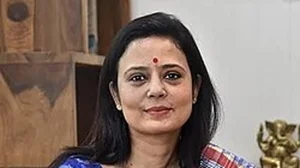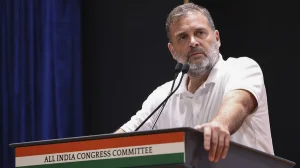
Rahul Gandhi — the President of the Indian National Congress on the opposition benches — objected to the decibel level of a member of the lower house of the Indian Parliament belonging to the Punjab Chowkidar front and the Minister of State in the Council of Ministers Ravneet Singh Bittu. He directly intervened in the matter and confronted the member of the opposition.
Activitied at the Gate of the Makar Dwar were advised as followed:
Bittu stated that it all took place when he was about to step inside the new house. Rahul Gandhi was staging a ‘Dharna’ along with a few congress MPs who were suspended and many of them were Punjabis. According to Bittu, Gandhi pointed towards herself and said, ‘Look at the epitome of a traitor coming in front of me’. ‘Just pay attention to this person’s face.’
Bittu termed the response of Gandhi as a battery wrap along with an offer of shaking their hand as, “Hey brother, my traitor friend. You also don’t worry, you will be shot by me and wait a minute you will come back.” Bittu insisted that he did not give up resignation himself and legislature in 2014 mid-term and served him self for three terms as Congress MP before joining BJP.
Accusations of violence and detention
[The Honorable]
Minister accused Gandhi of being out of control and of losing his sense of propriety; Bittu alleged that both leaders of the Congress party, K. C. Venugopal and Sukhjinder Randhawa the Member of Parliament for Gurdaspur district jailed one of his hands each. “I did not see him in such a brutal condition in my entire life and in such a harsh condition. Ever,” said Bittu to the press.
Bittu mentioned the episode as inappropriate and not within the decorum of parliamentary practice. He pointed out that Gandhi’s extremely rude behavior where he was insistent on shaking hands was indeed that of a ‘shahanshah’. This was also why Bitty ascribed the help of the Prime Minister and other members of the BJP to the incident.
Communicational-subjective means of inspection, witch-hunting and back-biting
Although the incident was full of dramas, however, Bittu took shot at not just Congress leadership but also at the party itself. He directed his comments at Congress leaders who moved to another party and then gotten a leadership position like Amarinder Singh and Navjot Singh Sidhu, providing an example of how intra-party competition influences party positioning.
Bittu aimed at some local Congress leaders while also criticizing those who lashed out at him for those incidents, dropping names such as Amrinder Singh Raja Warring, Sukhjinder Singh Randhawa, and Charanjit Singh Channi. He referred to the results of a number of recent by-election: these speak for the electoral performance of these politicians.
Specific content of Bittu’s speech, the use of special and symbolic constructions in it
The Minister was not pleased that his grandfather had been the Punjab Chief Minister and had been assassinated and that the Bharat Ratna had not been awarded to him by any government till date. Bringing the point home, he went on to explain the partiality in this award and how it was given to the former prime ministers who came from the same party, in particular with central with the assistance of which he is seeking to realign himself as a politically active persona.
Bittu insisted that he has left the Congress and shifted to the BJP and helped it in win the 2024 General elections. He is now a minister and a Rajya Sabha member managing specific sectors within the ministry – railways and food processing. Yet an analysis of his recent activities would only reveal a sad tale of personal revenge, suppressed sadder than the serious intentions in the rhetorics.
Parliamentary decorum and broader implications
Lastly, the issue of violent behavior in parliament and what it represents is front and center for those who are regular spectators of the same. More importantly, such interactions between heavyweights and within the audience serves as a postmodern approach in showcasing how political agendas are shouted from the rooftops within the vicinity of the hallowed halls of any institution.
Observers are divided when events want to raise the issue of etiquette, self-control, and the responsibility of the leader of the party for protests and political activity in the society. It may also be important for the upcoming electoral battles at both social and political levels of analysis, where personal stories and political confrontations shape some campaign tactics.
The story, even if exaggerated, is still the portrayal of one side of the story. Regardless of how credible the clarifications or rebuttals provided in the appended documents may be, the situation augments that there are such fiercesome contestation in politics and it is pertinent to conduct oneself appropriately in the democratic arena.