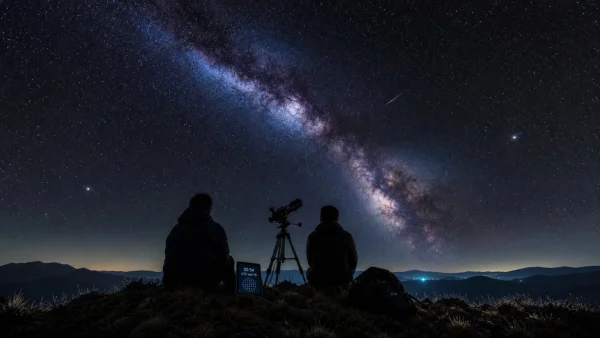
Make a note for 15 June. The Super New Moon comes in at 02:54 UTC on that date, and with it, a night as dark as they come. You won’t be able to see the Moon, but that’s the point. We’ve put together the timeline, the hard science and the astrology for this unassuming but significant event.
Why the dark is better for skywatching
A Full Moon has a way of washing out the sky. A New Moon is the antithesis of that. No moonlight means the more elusive things in the firmament have a chance to be seen, making this a top-tier time to look up.
The disc may be out of sight, but the rest of the view is better for it. That’s why astronomers like to work with a New Moon; you get less glare and more contrast on the dimmer side of things.
When the Moon is out of the picture, you’ll have an easier time with:
– Patches of the Milky Way
– Star clusters, whether they are tight or not
– The steady glow of the planets
– Meteor showers that aren’t overpowered by the Moon
– Some of the more far-off nebulae and galaxies
So what is ‘super’ about it?
It’s called a Super New Moon because the new phase is happening close to perigee, where the Moon is at its closest in its orbit. Richard Nolle, an astrologer, came up with the word back in 1979, though you won’t find it in any official astronomy book.
In a New Moon, the Moon is right between us and the Sun. The side we can see is in shadow, so the disc is a no-show, even if it is a bit closer than usual.
You can have a Supermoon with either a full or a new moon near perigee. The full one is the one that puts on a show, looking bigger and brighter. This one is invisible, but it’s still something to mark on the calendar.
On phases and the June reset
Unless you’re in for a lunar eclipse, the Sun is lighting up half the Moon most of the time. It’s our vantage point that changes and gives us the different phases as the month goes by.
With a New Moon, the lit side is turned away and the Moon is gone. Then, in about a fortnight, you have the Full Moon. In 2026, we start with the Super New Moon, which makes for a nice, dark canvas.
Lunar schedule for June 2026 (UTC)
Time and Date has the figures for the Super New Moon and the rest of the month’s rhythm. Here are the times to work with for the best viewing window:
– June 15, 2026 Super New Moon 02:54 UTC
– June 29, 2026 Full Moon 23:56 UTC
– June 21, 2026 First Quarter Moon 21:55 UTC
– June 8, 2026 Third Quarter Moon 10:00 UTC
It might not be a bright spot in the sky, but the timing of it makes for some of the most accommodating nights in the middle of the month.
The astrology: a Gemini kind of thing
To an astrologer, a new moon is the start of something. This one is in Gemini, which is the sign of the talker, the thinker, the traveller – anyone who has a good conversation to be had.
If you are into that sort of thing, then the June reset is your cue to have a word, put some plans in order, or put forward an idea or two, in the spirit of an airy, open-minded sign.
Making the night count
There is no better time in the month to be out with your eyes on the sky than during a New Moon. The few days on either side of the 15th in June should be particularly black.
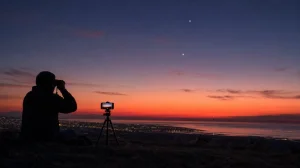
Get out of the city if you can. With nothing but a moonless background, you can follow the line of the Milky Way or just put in some quiet time looking up. The whole point of the Super New Moon is that the best part of the evening is when you can’t see the Moon at all.
Let’s be real. 02:54 UTC on June 15 is when it happens. You won’t see anything, but the circumstances are worth it. Be prepared for the dark, let your vision in, and be patient. The payoff is in the places the Moon isn’t.