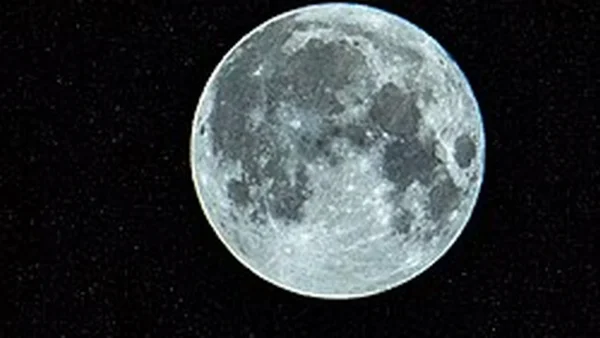
A brilliant Moon will greet 2026 as the Wolf Supermoon lights the sky on January 3. It is the first full Moon of the year and will be one of the brightest lunar sights of 2026. People who watch the sky all over India will be able to easily see a Moon that is a little larger and much brighter, with no need for a telescope.
When to watch in India
The Moon will be completely full at about 10:03 GMT on January 3 – that’s 3:33 pm IST. But at that exact time, the Moon will be below the horizon for most of India, so you will not see it at its peak. Instead, watch at moonrise on January 2 and 3, when the Moon comes up over the eastern horizon at roughly 5:45-6:00 pm IST, depending on where you are.
Why this supermoon is special
A supermoon is when a full Moon falls at the same time as perigee, the point where the Moon is nearest to Earth. On January 3, the Moon will be about 362,000 km away. This can make the Moon look about 6-14% bigger and 13-30% brighter than when it is at apogee – furthest from Earth.
What the ‘triple boost’ means
Astronomers call this Wolf Supermoon a ‘triple boost’ as three things happen at once: the Moon is full, it is close to perigee, and Earth is close to perihelion – its nearest point to the Sun. The last of these makes more sunlight reach and reflect off the Moon’s surface, making it even brighter, though the difference in size might not be easy to see.
The name ‘Wolf Moon’ and old stories
January’s full Moon is usually called the Wolf Moon, a name from the old stories of the Northern Hemisphere. The name comes from the winter nights and the howling of wolves in these older tales. The name is more about culture than science, but it adds a lovely touch to this clear, cold-night show.
Where to look and what to expect
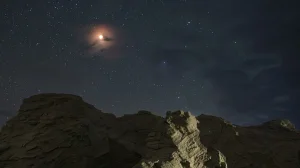
You will get the best views at moonrise, when the Moon is low and may look warmly golden or orange because of the way the air scatters the light. Jupiter will also be shining near the Moon, making a beautiful pair in the evening sky for a few hours after the Moon rises. The Moon will stay visible all night and set in the west at sunrise.
How to get the most from watching
You don’t need any special tools: just go outside after sunset with a clear view of the eastern sky. Things in the foreground – trees, buildings, roofs – can make the Moon illusion stronger, making it look bigger to your eyes. If you are in a darker place, away from bright lights, you will see more difference in shade and more detail on the Moon’s surface.
Tips for taking photos of the Wolf Supermoon
You can take good photos with a simple camera or smartphone. Use a tripod to avoid shaking, and use zoom or a telephoto lens to get the Moon’s details in the frame. Keep the ISO low and use a moderate shutter speed; try different exposures to avoid too much light. Take pictures of the Moon near the horizon to get dramatic foregrounds and richer colour.
A high point in a year of supermoons
This Wolf Supermoon starts off a set of three supermoons in 2026, and is one of the year’s best lunar events. It is a moment that anyone, from a casual sky watcher to a serious observer, can enjoy – you don’t need a telescope, though one can add detail to what you see. Going outside to watch the Wolf Supermoon is a simple, satisfying way to start the year. Whether you are interested in the science, want to take photos, or just want a quiet moment under the sky, this lunar show will be bright, peaceful, and something you won’t want to miss across India.