You could say the country’s bid to be a developed nation by 2047 is made or broken in the villages. With that in mind, Birla has put a fine point on how Viksit Bharat is inextricably linked to the way we farm, the tech we use and the industries in the hinterlands. In his reckoning, our stability and security are only as good as our ability to put some innovation into the fields.
Why farms are at the heart of Viksit Bharat@2047
Birla won’t have you think of this in terms of GDP figures alone. For him, it is a civilisational matter, one that underpins our culture and the way we make a living. A truly developed India, he says, is one where the countryside is doing well, growth is for everyone and we can count on our nutrition – and all of that comes down to having better farms and more self-sufficient villages.
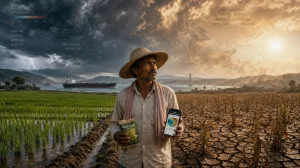
Then there is the matter of an unpredictable climate and a world market in flux. The onus is on us to put some steel in the spine of our agriculture with science and R&D, Birla says, so we can be more productive and make a profit without running roughshod over the environment.
A no-nonsense approach: tech and tradition
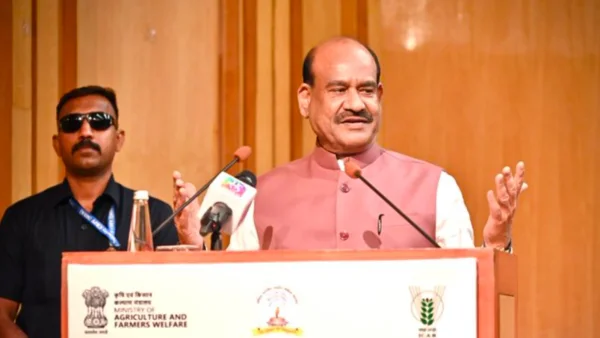
At the National Conference on Sustainable Agriculture for Viksit Bharat@2047 in New Delhi, Birla made the case for a kind of marriage between the old and the new. He sees a move toward precision farming where you let the numbers do the talking to reduce waste and put up your yields.
Be it drones, AI or some good old data analytics, these tools can make for much more calculated decisions than the broad strokes of the past. It is as much about being able to stand your ground against a bad season or a market hiccup as it is about being efficient.
Labs, fields and the people in between
The universities, the researchers and the scientists are where the next chapter is written, according to Birla. But their work is only as good as its reach to the small and marginal farmer. You can’t have that kind of spread without some enterprise to back up the extension work.
He is also making the case for a quick build-out of agro-industries, food processing and the like. Let’s add value where we can and put some jobs in the district so that the families who do the hard work of farming can get a fairer share of the rewards.
Putting some guardrails on progress
You can’t have long-term prosperity without being responsible for it. Birla was on about water and micro-irrigation as a way to stave off the drain on our resources. And if you want to produce more for less, you have to look after the soil, use the right seed and be judicious with fertiliser.
Add in some crop varieties that can handle the weather and you have the full story. He gave credit to ICAR and the rest of the scientific fraternity for coming up with ways to hold the line on yields while treading lightly on nature.
In a nutshell, here is what Birla has put forward as the way ahead:
– Put modern tech to work alongside what we already know
– Let data drive the shift to precision agriculture
– Make room for drones, AI and the digital side of things
– See more agro and food processing businesses, and startups, take root
– Be good to the water and the soil; plant seeds that can take it
– Get on board with micro-irrigation and sensible use of inputs
It takes a village (and some young blood)
Birla put the onus on the youth and women to be the face of change in the countryside. When you have the teachers, the policy makers and the farmers in the field all on the same page, you’ll see grassroots ideas catch on in no time.
He sees a self-reliant model as a social contract as well as an economic one. It is up to us – from the citizen to the academy – to put the pieces in place and scale up what is working.
Where we go from here
You have the Akhil Bharatiya Rashtriya Shaikshik Mahasangh, ICAR and the Ministry of Agriculture putting on this conference to get the key players in a room and figure out the next move. Birla would have you see it as a show of the country’s collective brainpower.
He is sure that the two days of talk will do a lot for how we teach and practice our trade. The end result is simple enough: to put some heft behind the lives of our farmers and put India on a faster track to 2047.