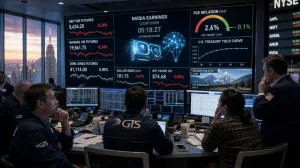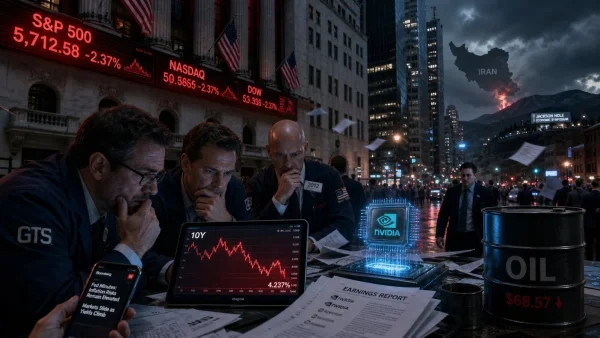
Major markets saw equities open with little movement as traders put up a guard against two things: a high-stakes earnings reckoning for Nvidia and fresh word on US sanctions for Iran. Oil has given back some ground after its jump last week and US futures have been drifting, all signs of a nervousness among investors.
Beneath the stillness there are some large questions to be answered. The verdict on stretched valuations and tech leadership will come with Nvidia’s Wednesday numbers; meanwhile, any headlines out of Iran have the potential to rattle sentiment and commodities. Analysts have their expectations set high, with quarterly revenue projected to nearly double to $92 billion and full-year guidance in the $103 to $105 billion range.
Asia markets steady as risk events stack up
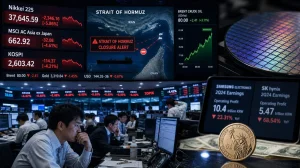
After a rocky week it was a subdued session. The Nikkei was running flat having lost close to 4% in the prior seven days, while South Korean stock fell 0.8% and Taiwan 0.5%. MSCI’s index of Asia-Pacific shares excluding Japan was down 0.2%.
Across Europe the EURO STOXX 50, DAX and FTSE were little changed in futures. Wall Street showed similar restraint with S&P 500 and Nasdaq futures edging lower, a hesitation before the day’s policy and earnings catalysts.
Oil took a softening as the Iran briefing loomed. Brent was 1.0% off at $93.43 despite a 6.6% run-up last week, and US crude settled at $86.14 a barrel. It is a wait-and-see approach as Washington gets ready to lay out its sanctions and with an eye on shipping risks in the Strait of Hormuz.
Policy signals take centre stage
When Kevin Warsh takes to the podium in Jackson Hole on Friday, investors will be looking for some sense of where US rates are headed. But one should not expect much in the way of new guidance from JPMorgan’s Bruce Kasman. He points to Warsh’s disinclination to signal and the likelihood he will stick to the balance sheet policy put forward in the July minutes.
The market is being circumspect. Rate pricing has a 40% probability attached to a Fed hike on September 16 and has fully accounted for a move by year end. Those odds may well change once the US data comes in, with core inflation expected to hold at 3.3% in July.
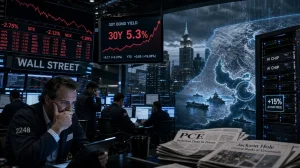
Then there is the bond market to contend with. Treasury Secretary Scott Bessent said last week he would at least double bond buybacks to put pressure on yields, but the effect has been minimal. The 30-year is at 5.2760%, not far from the 5.3371% peak of 19 years ago, which does not do equity multiples any favours.
Currency and commodity moves sharpen the backdrop
Trade friction is back in the spotlight in North America. Following the collapse of talks with the US and a promise of retaliatory levies from Prime Minister Mark Carney, the dollar was up 0.1% on the Canadian to 1.3784.
Canada has made clear the tariffs will apply to steel, dairy, appliances, agricultural gear, pulp and paper and electronics, as well as some previously targeted wares. It is a more combative posture that threatens to put a damper on investment and disrupt supply chains.
Elsewhere the greenback was under pressure. It shed 0.8% over the week versus a basket of peers to put the index at 96.832. After a 0.9% gain in the week, the euro is steady at $1.1675 and the dollar has gone flat at 159.00 yen, with investors putting hedges in place against fiscal and policy unknowns.
There is no shortage of interest in hard assets given the unease over US debt and the unpredictability of policy. Gold has put in a solid 0.4% to 4,623 an ounce, up over 14% for the month. Should it keep these gains through August, it will be the largest monthly advance on record.
Nvidia’s numbers may well reset the tech sector
The whole of the sector is waiting to see what happens. It is not easy to live up to stratospheric expectations and a miss would be felt across growth stocks that have been propped up by strong earnings even as discount rates have come up.
A weaker showing from Nvidia could prompt a rotation as one rethinks how much earnings can run ahead of tightening financial conditions. But if the company hits the $92 billion revenue mark and points to full-year earnings in the $103-105 billion range, the argument for premium multiples is made.
Longer-term yields are already putting the squeeze on valuations by making debt more attractive and driving up the discount on future profits. This is a particular burden on rate-sensitive areas of the market, like those parts of the Asian tech supply chain dependent on global chip demand.
Geopolitics and shipping lanes under the microscope
Bessent is set to go into detail on Iran sanctions later Monday. Tehran has made no move to cede the Strait of Hormuz, so that choke point for crude remains in play. The slight pullback in Brent beforehand looks more like hedging than any kind of surrender.
That is the tenor of the broader market: caution. With European futures little changed and US offerings edging down, there is a sense that investors want to hold their options until the week’s risks from earnings and policy have passed.
What is on the watch list this week
Any number of things could turn the tide. We will be looking at:
– The US briefing on Iran and what it means for energy
– How Nvidia handles its results and guidance on Wednesday
– Inflation data and any repricing of the rate path
– Warsh at Jackson Hole on Friday
Portfolio implications
The cross currents are plain to see. If oil builds on last week’s 6.6% jump in Brent, it muddies the inflation debate heading into the September 16 meeting. At the same time, yields near recent highs are compressing equity values and making cash and bonds more appealing.
Then there are the currency moves. The dollar’s strength to 1.3784 against the Canadian dollar is a reflection of tariff and growth concerns in North America. The fact that the euro and yen are where they are says the market is hedging, not taking on risk.
For those in equities, it is a matter of being disciplined on balance sheet and earnings quality while rate volatility continues. Commodity traders have their eyes on the Iran file and any word out of Hormuz. And for multi-asset allocators, the move in gold to 4,623 is a clear bid for something scarce in the current policy fog.
With Asia shares flat, the next few days should tell us if we are in for a defensive period or just a breather before more risk appetite returns. It will come down to how Nvidia and the sanctions play out against core inflation that was still 3.3% in July.