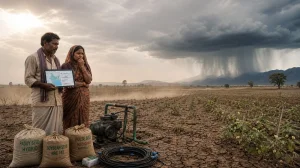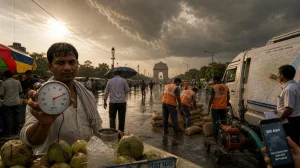
It is shaping up to be the weakest monsoon in nearly 20 years, a situation that could have repercussions for everything from rural demand to farm production. Two officials at the weather department put the seasonal rainfall at some 15% under the long-term average as El Nino builds through September – the lowest figure since 2009.
Why this monsoon matters for the economy
Food production and the incomes of those in rural areas are underpinned by the monsoon, which provides roughly 70% of what the country gets in an year. A 15% miss, or 85% of normal, would do much to constrict supplies and drive up prices, the officials say. It is also almost twice the 8% deficit the agency had in its first projection.
Policymakers are no strangers to the hard choices such years present. During previous El Nino episodes, poor rains have been known to cause severe droughts and the loss of crops, leaving authorities with little option but to curb grain exports. When you see food prices and rural incomes moving in opposite directions, the risk calculus changes.
September is the pivot month
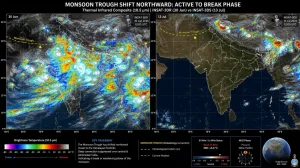
The outcome of the season will be determined in September. An official with the India Meteorological Department says the impact of El Nino is only going to get more pronounced, pointing to a double-digit deficit next month. Most of the country can expect below-average rain then, barring the eastern states.
There is even talk of an early retreat from northwestern India. If nothing new develops in the way of a weather system, the monsoon could pull back a few days before it should. In a typical year, the withdrawal from the northwest is underway by 17 September and done across the country by mid-October.
Crop exposure and supply risks
Summer-sown cotton, soybean, corn and pulses are now maturing and could see their yields dented by lackluster September rains. What is more, soil moisture for the coming cycle would be run down, to the detriment of winter staples like wheat and rapeseed.
A squeeze on supply comes at an awkward moment for the consumer. Should the staple crops fail to perform, one can expect food inflation to become a risk and rural purchasing power to wane. That is the sort of late-season trajectory that has both market participants and officials paying close attention.
El Nino’s strengthening grip
The pattern is being driven by uncharacteristically warm sea surface temperatures in the equatorial Pacific and is set to intensify in September, according to the officials. El Nino has a way of throwing global weather out of kilter and suppressing rainfall in parts of South and Southeast Asia.
History bears this out; most El Nino years in India see the monsoon come in below average. This season is following the same script, with the deficit deepening and summer crops feeling the strain.
Where the season stands now
Rainfall has been 13% under the average since 1 June. July gave a 1% surplus for a short while, but August saw the monsoon falter again with numbers 15% below par. June was particularly poor, opening with a 35.4% shortfall.
By the time the June-September window is over, the total is likely to be 85% of normal, making for the weakest result since 2009. The weather agency should have its formal outlook for September ready by month’s end.
The key figures officials have in mind this season are:
– A 15% below average for seasonal rainfall
– 85% of normal in all for June-September
– The original call was for an 8% deficit
– June ran 35.4% behind; July was 1% ahead
What to watch next
– Signs of an early exit from the northwest
– How the rain holds up in September away from the east
– Guidance on yields for cotton, pulses, corn and soybean
One does not need to be told the stakes: another soft month would cement the 2009 parallel and add to the strain on farms and food prices. For now, everyone is looking to the skies in September and the forecast due from the agency at the end of the month.