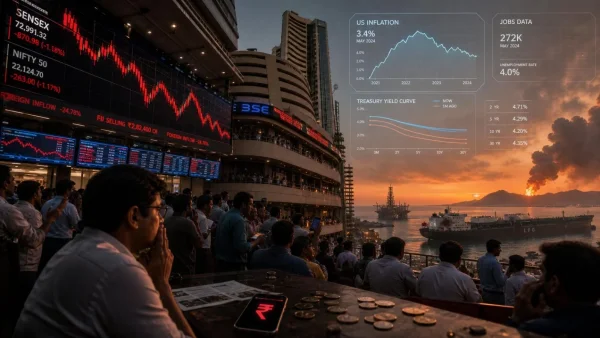
Analysts are flagging three things that will likely set the tone for a jittery start: the situation in West Asia, the price of crude and the forthcoming US inflation numbers. Traders will be on alert as global risk appetite and the movement of foreign capital have the potential to add to any volatility.
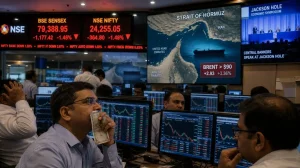
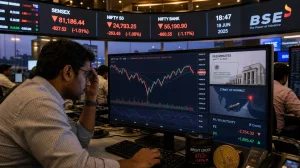
Such caution is not without cause after last week’s weak close. The 30-share BSE Sensex gave up 749.08 points (0.96 per cent) and the 50-share NSE Nifty was down 277.95 points, or 1.14 per cent. In fact, the Nifty-50 has put in four straight weeks of declines, its longest run in five months.
Why the oil spike matters
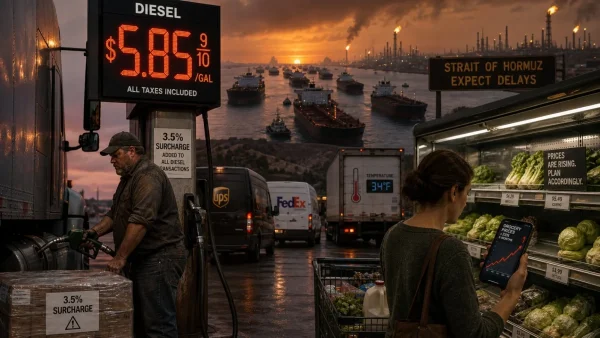
The jump in crude has forced a re-pricing of risk. “Brent crude was up more than 8 per cent last week and WTI over 9 per cent,” said Ponmudi R, CEO of Enrich Money, citing renewed hostilities between the US and Iran and unease over the Strait of Hormuz.
Then there is the matter of inflation. Ajit Mishra, SVP of Research at Religare Broking, views elevated oil as a wildcard for growth. He says one has to keep a close watch on what is happening around the Strait of Hormuz given what it means for India’s external balance, corporate profits and inflation.
US inflation data in focus
With US employment figures coming in stronger than called for, eyes are on the next reading from inflation and its policy ramifications. Mishra expects investors to pay close attention to how the jobs surprise will colour expectations for the Federal Reserve in September.
One cannot separate rate expectations from the inflation story. Hariselvan Radhakrishnan, founder and CEO of HST Wealth, sees Treasury yields and interest-rate expectations tied to it. On top of that, he notes the unresolved Middle East conflict and high oil will be an overhang on sentiment for some time.
Flows, rupee and domestic liquidity
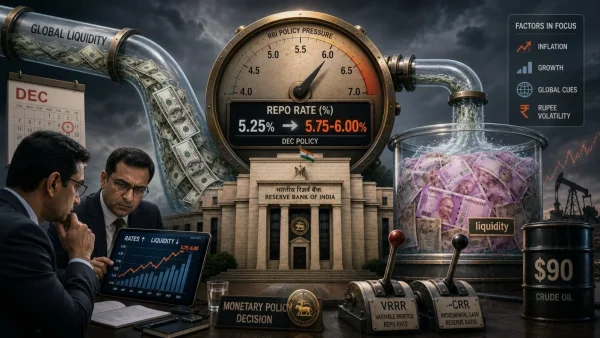
Domestic watchlists are getting broader as markets size up geopolitical and monetary policy developments from abroad. For Mishra, the key variables are still the rupee, crude oil, domestic liquidity and the flow of foreign institutional money.
Global equities head into the week with their usual headwinds and not much in the way of visibility. According to Ponmudi, the outlook will be determined by the evolving picture in West Asia, crude prices and what is expected from US monetary policy.
What investors will watch
These are the markers most likely to influence the market this week:
– Headlines out of West Asia and the risk premium at the Strait of Hormuz
– Where Brent and WTI go in the wake of last week’s surge
– The US inflation print and the Fed’s September course
– Any shift in Treasury yields and rate expectations
– The rupee, domestic liquidity and foreign investor activity
Analysts’ near-term take
Volatility is the base case now. Ponmudi noted the pressure on Indian equities last week, with the Nifty-50’s losing streak a product of the sharp oil move and risk sentiment being put on edge by the US-Iran row.
Mishra sees that kind of sensitivity to macro and geopolitics holding until new information comes along. “This week should remain highly sensitive to global monetary policy and crude oil,” he said, adding that the impact of the US employment data on the Fed’s September decision will be under the microscope.
In the end, the market’s next move comes down to two things pulling in different directions: whether the US inflation data allays rate concerns and if the West Asia tension eases to put a lid on the oil risk premium. Until we see that, positioning is going to be cautious and reactive.