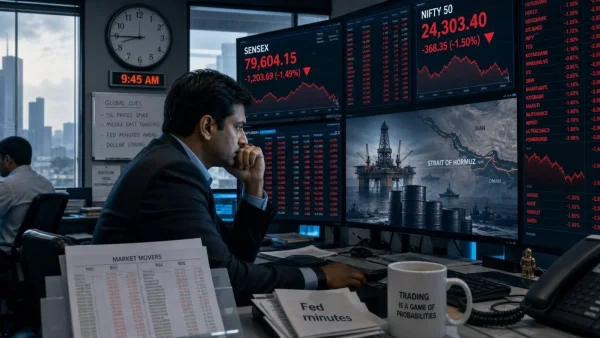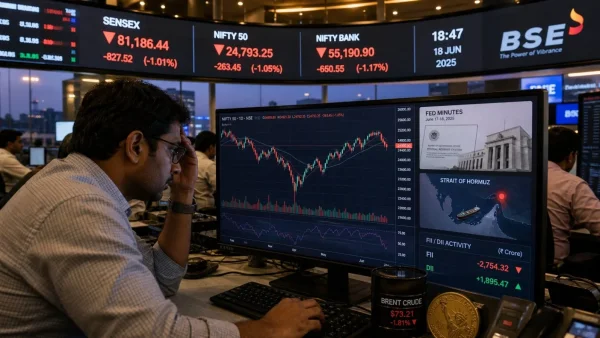
The risk mood is fragile enough to put the major indices to the test. As the pivot is made from earnings to the wider geopolitical and policy landscape, it is positioning and not optimism that will likely determine where the market goes. Oil prices are on edge over Hormuz and the US Federal Reserve has its minutes coming up 19 August 2026.
Why this week matters for Sensex and Nifty
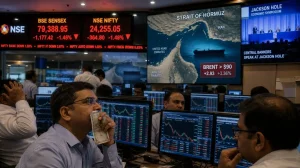
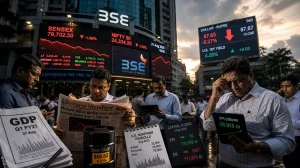
The two-week winning streak was brought to an end last week by a decline that spoke of waning risk appetite. The BSE Sensex gave up 489.92 points (0.62%) and the NSE Nifty was down 204.65 points or 0.83%.
In the view of analysts, firmer crude and some renewed geopolitical jitters were behind the pullback. For oil-importing economies that is a recipe for tighter financial conditions and a crimp on foreign flows.
Fed minutes and foreign flows take centre stage
Given a light domestic calendar, one must look to global monetary cues for direction. All eyes will be on the Federal Reserve’s July meeting minutes when they are released on 19 August 2026 to see what they say about the rate path and liquidity.
Ajit Mishra of Religare Broking is of the opinion that the Fed’s tone will be the arbiter of sentiment in emerging markets. Should the minutes be read as hawkish, it could put pressure on risk assets and dent overseas inflows, with Indian equities seeing more volatility for it.
After the earnings season, the activity of foreign institutions is a swing factor. Ponmudi R of Enrich Money notes that investors are making the trajectory of those fund flows their near-term concern for momentum.
Hormuz flashpoints and Brent crude risk
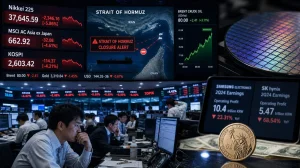
For traders, the US-Iran standoff and what is happening around the Strait of Hormuz are front and centre. The strategic importance of the route for oil shipments means an escalation can have an immediate bearing on Brent and currency moves.
Mishra sees the path of Brent and any news from Hormuz as critical in the near term. Pabitro Mukherjee at Bajaj Broking would concur, pointing to crude swings and headlines from Washington and Tehran as the variables to have on one’s radar.
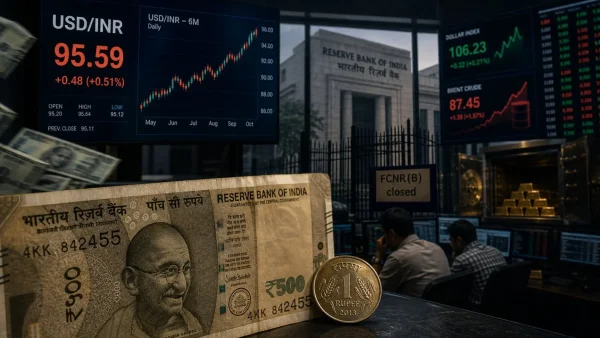
Then there is the matter of higher oil, which tends to make India’s inflation and current account outlook less palatable and challenges assumptions on sectoral earnings and rates.
China data and the volatility playbook
Vinod Nair of Geojit Investments says one should track China’s economic numbers for a sense of global demand. Along with the FOMC and the geopolitical scene, the Chinese data will help frame growth expectations and what the Fed is likely to do.
When there is little to go on at home, cross-asset signals have a way of magnifying market action. It is not uncommon for traders to opt for a more selective exposure and manage risk tightly until the event risks have passed.
Key triggers to track this week
Investors are keeping a close watch on these near-term catalysts:
– FOMC minutes on 19 August 2026
– Where Brent crude and oil volatility are heading
– Developments in the Strait of Hormuz and between the US and Iran
– Flows from foreign institutional investors
– Any growth signals in the Chinese data
What this means for market positioning
Policy uncertainty coupled with geopolitical risk makes for a barbell approach, particularly in pockets sensitive to liquidity. A hint of hawkishness from the Fed can put the dollar on a stronger footing and add to the headwinds for emerging-market equities.
On the other hand, if the minutes are benign or tensions ease, risk comes back into favour and foreign buying may well be the thing that steadies the index.
Outlook for the week
Expect volatility to be elevated but within bounds, with intraday swings driven by headline risk. A spike in crude over something out of Hormuz could leave the broader indices lagging while exporters and defensives are propped up.
Ultimately, it will be the clarity offered by the Fed on 19 August 2026 and the way foreign flows behave that sets the tone for Dalal Street in the weeks ahead.