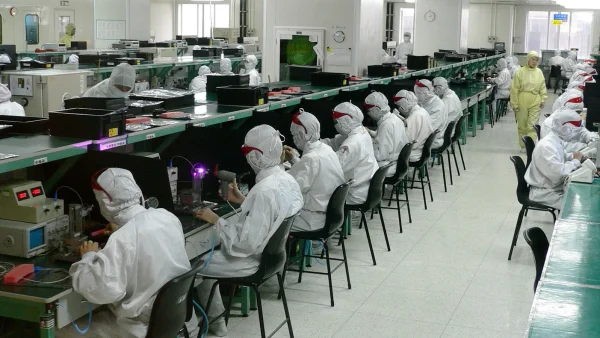
You could say the old playbook is out the window. Now we are putting high-end hardware in front of the world’s most demanding buyers. Union Minister Ashwini Vaishnaw put it this way: we are selling to the US and China. By 2025, he expects to see electronics as the top tier of goods we ship, with the phone being the star of the show. Take 2025: smartphones by themselves will have brought in USD 30 billion in export revenue. It is no mystery what is happening – India is more than an assembler; we are part of value chains where you need to be secure and at scale to be taken seriously.
Why this surge matters
For the minister, it is about climbing the value ladder. You don’t get there without the right kind of design and manufacturing that people put their trust in. There is a security element to it now, something a buyer will look for in anything made in India. Vaishnaw would have you remember what we used to be known for in the way of exports: diesel, then some gems and jewellery, and after that, garments or what he calls ‘engineer clothes’. This is a departure from that. We are moving past commodity growth and into the realm of technology. It is in line with how the government sees the next 20 years for the industry. Vaishnaw’s view is that you want to build something that will last, not just have a blip in production numbers.
From phones to components: new export lines
There is more to it than the end product. We are seeing component making pick up. In fact, India sent some Rs 35,000 crore in parts to China over the last year, which means our suppliers are now embedded in those larger, more complicated networks.
Then you have things like railway propulsion systems we have shipped to France, Germany, Italy and the US. When you can put a critical piece of kit in a market like that, it is a sign of quality, not just a matter of who is cheaper.
That kind of variety is good for your defences. With components and subsystems, you are not putting all your eggs in one basket, and you open up a few more doors in the electronics world.
Semiconductor strategy: from foundations to ISM 2.0
If you go back to 1962, you can see where the drive for semiconductors started. Vaishnaw pointed to the efforts of Nehru, Indira and Rajiv Gandhi, and Manmohan Singh. But he credits the present-day results to the way the programme has been run in the 12 years under PM Narendra Modi.
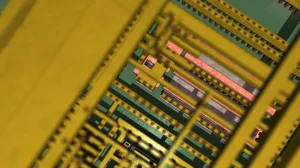
When we were in the first round of the India Semicon Mission, we had around 48 startups on board to put in the work on tech products. In the beginning, it was all about putting in place the kind of foundation the sector needed. But with ISM 2.0 in the works, the government is being more selective. “Design will be our number one priority in this next phase,” Vaishnaw put it, and they are also making a case for equipment makers to come to India. So what is on the table for ISM 2.0? – Put design first – Lure in semiconductor equipment manufacturers – Make complex chemicals and gases here – Put down more fabs and ATMP units – Build on what we have in talent
Building the full stack at home
Then there are the machines. The minister made it clear that after design, the hardware used in manufacturing is the other big concern. The idea is to have the tools designed and built in India so new fabs don’t get held up by outside dependencies. ISM 2.0 is also looking to produce the no-nonsense chemicals and gases you can’t make a chip without. And of course, the plan calls for a good number of additional fabs and ATMPs. Vaishnaw says the headway we’ve made on skills won’t let up; we’ll be expanding capacity while we put in a stronger design ecosystem.
Talent and tools: pipeline accelerates
Take the colleges, for instance. They have the modern tools now, and in Mohali there’s a lab where a student can put a chip he or she has designed and actually see it come to life in silicon. “You don’t find that many places in the world where you can go from design to fabrication like that,” he said. It’s a way of turning what you learn into something the market can use. The numbers back it up: 75,000 students have been put through the ringer for the semiconductor side of things in four years. The 10-year goal was 80,000, but Vaishnaw says we’ll hit that in five.
Competitive landscape and next tests
When you can ship phones and parts to China in volume, you know you can hold your own on price and precision. Picking up work in the US and Europe is another form of proof. What comes next is a matter of depth. Can we localise the tools, the high-mix subsystems and the rest of it? That’s how you tell if you’re running the supply chain or just part of it. There is some strategic value in the fact that buyers have come to trust us on quality and security. In an environment where everyone is watching for concentration risk, that can keep the exports going, even past the smartphone. The writing is on the wall. Electronics were the third-highest goods export in 2025, with mobile phones in the lead. We’ve put the talk of ambition behind us and shown we can deliver. Now we have to do it on a larger scale, right across the board.