The government has put out a new booklet to put a frame on these 12 years as a kind of watershed moment for health in India. Pointing to things like a wider net of insurance, sturdier primary care and a big jump in the capacity for medical training, it was made public on Wednesday, just as Narendra Modi was set to begin his next term. The message is one of broad-based progress on what matters most: access, affordability and the bottom line.
Financial protection for families
If you read the booklet, you’ll see that Ayushman Bharat-Pradhan Mantri Jan Arogya Yojana is now the linchpin for keeping low-income families secure. It’s a way to get up to Rs 5 lakh in free treatment a year and not have to face a financial ruin when a medical bill comes in.
They put the numbers on the table: over 43 crore Ayushman cards are in the hands of people, and 12 crore patients have been through the system. That has put more than Rs 1.25 lakh crore in savings in the pockets of beneficiaries. For this fiscal year alone, the government is putting down over Rs 9,500 crore to see to it that AB-PMJAY is well resourced.
What the booklet makes a point of are these figures:
– 43+ crore Ayushman cards in circulation
– As much as Rs 5 lakh in no-cost treatment for a family each year
– 12 crore plus patients seen under the programme
– Well over Rs 1.25 lakh crore in savings for those who use it
There is also a different way of looking at who is paying for care. The report makes a point of how the government’s share of the tab has gone up to 48 per cent from 29 per cent, which means the average person isn’t having to pay as much out of their own pocket.
Care closer to home and a digital push
You don’t have to go as far for help anymore. The booklet will tell you that with the Ayushman Arogya Mandirs and telemedicine, primary care has been given a lift. We’re talking 42 crore tele-consultations where a patient can be in touch with a doctor without the hassle of a trip. And there have been 60 crore cancer screenings done to catch problems early on.
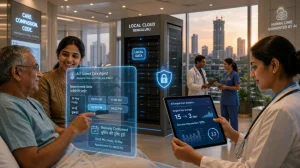
Then there are the digital records. The document says they’ve rolled out 87 crore Ayushman Bharat Health Account IDs so you can have your file in order and pull it up at any facility without a hitch.
Maternal and child health progress
For expectant mothers, the Pradhan Mantri Surakshit Matritva Abhiyan has seen to it that there are over seven crore free antenatal check-ups. The result? The maternal mortality ratio has come down to 88 in 2026 from 130 in 2014 for every one lakh live births – a 32 per cent drop, according to the numbers in the booklet.
When it comes to having a baby in an institution, the figures are 96 per cent in the countryside and 98 per cent in cities. As for immunisation, they say Mission Indradhanush has topped 98 per cent, and the country has put 220 crore COVID-19 shots in arms.
Affordable medicines and critical treatments
And to keep the price of medicine down, the Pradhan Mantri Bhartiya Janaushadhi Pariyojana has been at work opening the door to affordable generics.
You can find over 15 lakh people a day making their way to Jan Aushadhi Kendras for their medicines. According to the booklet, the kind of discounts on drugs, implants and other devices are putting more than Rs 40,000 crore in savings in the hands of consumers.
There is also a strong focus on women’s health. The Suvidha scheme has put over 105 crore sanitary napkins in the market at a token price of Re 1. And in oncology, we have seen the customs duty wiped out on 17 key cancer medicines so that patients don’t have to be priced out of treatment.
Then there are the Amrit Pharmacies, where you can get what you need for serious conditions without the high cost; they have been of use to over seven crore individuals. The Centre wants to see 500 of them up and running in the country. Kidney patients, too, have been taken care of with over four crore no-cost dialysis sessions under the Pradhan Mantri National Dialysis Programme.
Building capacity: colleges, seats and AIIMS
If you look at the numbers in the booklet, you see a lot of room made for medical education and the infrastructure to back it up. We’ve gone from 387 medical colleges in 2014 to well over 800 by 2026. MBBS intake has jumped from 51,348 to 1,28,976, while postgraduate spots have more than doubled to 85,822.
The same is true for tertiary care. AIIMS has almost tripled in number, from eight to 23, in an effort to bring top-tier care and training out of the big cities.
The public purse has opened up as well. The health budget has moved from Rs 35,163 crore in 2014 to over Rs 1,06,000 crore in 2026. Even the AYUSH side of things has seen its share of the pie grow to Rs 4,408 crore.
Disease control and next steps
On the front of communicable diseases, the report is clear: tuberculosis cases have dropped 21 per cent since 2015, which is about twice the world’s average. You can put that down to better screening and follow-through on treatment.
Cancer will be where the attention is in the years ahead. In a bid to make chemo and the like less of an ordeal, the plan is to have day-care cancer units in every district hospital within two years.
Prevention is on the table, too. To guard against cervical cancer, a major killer of women, the government is rolling out a free HPV vaccine for young girls across the country.
Why this matters now
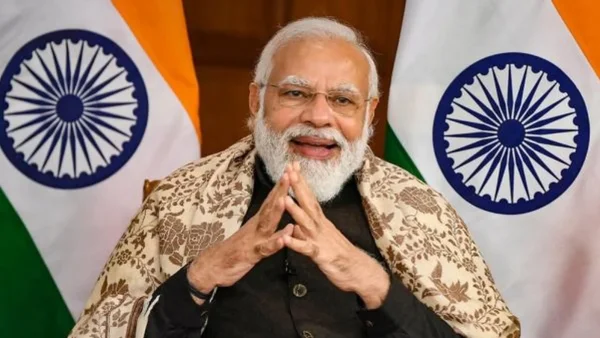
Put in context, these are the results of 12 years of work, coming at a time when Narendra Modi has become India’s longest-serving PM in unbroken terms. The idea is simple: wider reach, easier access and a lower tab at the end of the day.
For the family, it means not having to take on as many loans or drive as far for a check-up. For the system, it is about having the manpower and the digital tools to handle it.
It all comes down to how well it is put into practice. We can measure the success of the new Amrit Pharmacies, the cancer centres and the AB-PMJAY funding. If they hold up, we may well see a move away from paying out of pocket, and some of the financial strain of being sick could be left behind.