With the row over how NEET is run in India only heating up, the embassy has put a fine point on the Gaokao. In two days they cycled through 1.3 crore candidates without a hitch. It is hard not to read the subtext: a country can put its weight behind the world’s biggest test and make it look easy, which is a bit of a dig at our own JEE and NEET situation.
A showcase timed for maximum contrast
In a way, the embassy is holding up the Gaokao as what you get when you combine India’s JEE and NEET but do it in a much shorter time and on a bigger canvas. Yu Jing, their spokesperson, put out a post to that effect, pointing out that 1.3 crore of them made it to the test in 48 hours, with every public service on hand to make sure of it.
They made a point of how the factories in some areas would tone it down and the streets would go still so as not to cause any ripples. It is a message that has a ring to it in India right now, where we are having to look hard at the credibility of our exams and the strain on our students.
What Gaokao decides for students
Then there is the matter of what is on the line. The Gaokao is the gatekeeper for higher education in China; it is what will tell you if you can get into the university or major you want. With provincial quotas and hard cutoffs, one good or bad day can be the difference between an open and a closed door.
You could say it is the end of the road for 12 years of school and endless prep. The scores you put down will determine if you end up at Peking or Tsinghua, and that has a way of dictating your social standing, your career and your earning potential for a long time to come.
How the numbers stack up against India
Put the figures side by side and the difference is plain. Some 13 million were at the Gaokao in 2026. We don’t see those kind of numbers with us: NEET-UG has about 2.3 million a year, and JEE Main is in the 1.5 million range.
To be specific, 2.2 million turned up for NEET-UG in 2026, with more than 22 lakh on the rolls. JEE Main is looking at 15 lakh or so. Add them up and you are still well under the 13 million mark of the Gaokao.
And it is not just the headcount. JEE and NEET are for the most part for engineers and medics. The Gaokao is the way in for all of them, plus law, economics, the humanities, sciences, teaching and pretty much any other undergrad course in the country.
Logistics that reduce friction
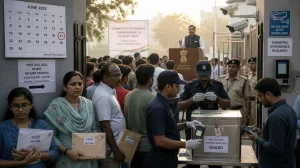
There have been reports of some very hands-on management of late. You had factories in certain parts of the country reining in to be quiet, and traffic plans put in place to cordon off the centres. The idea was to make sure nothing got in a student’s way or broke their focus.
We have our share of that in India, with parents outside the gates and special trains for the lads and lads. But the Chinese put on a show of it on a scale to match their 1.3 crore.
One post that did the rounds put it in the official words: 1.3 crore in 2 days, smooth sailing, with the rest of the country and its industry making room for the students.
What Indian institutions can distil
If you are in charge of a university or an exam board in India, there are a few things to be had from this:
– Get your transport and traffic in order around the centres before the day comes
– Work with local industry to keep the volume down
– Make sure every centre is on the same page with clear, real-time directions
– Have a plan for when things don’t go to script, and make it obvious to the students
When you set the embassy’s line next to the present state of affairs with NEET, you have two different stories about who you can put your trust in. For the student, it is not a matter of national pride but of knowing what to expect on the day of the test.
The takeaway for us is that you can run a big operation if everyone is in step. If that is the way to go for a place like India with its own brand of diversity and a decentralised system, that is for the policymakers to figure out. But they have put the standard right in front of us.
It is not a question of who can outdo whom. It is about putting some faith back in the process and making sure the path to an admission is fair. As the next season comes around, the students will be looking at how we handle it, not at the talk.