India is looking toward a major chipmaking venture through an $11 billion funding plan dedicated to expand the domestic semiconductor foundry manufacturing. This funding will have to offer subsidies for factories, equipment, design projects, and supply chain development so that India may reduce other import dependences within a booming scared global market.
Details and scope of Funding
The above amount in terms of Rs1 trillion would be the total size of the fund; it may be executed in the next 2 to 3 months, possibly extending to a few more months, depending on final arrangements. The intended purpose of its existence is to literally step-wise raise the possibility of further incentives across the entire life-spectrum of semiconductors.
Financial incentives by themselves are expected to bring money out towards manufacturers of fabrication and packaging tools, designers for chips out there and a potentially decent part supporting these design projects. The overall aim is to decrease time of money plant payback and investment risk in the industry so that companies are left with a chance to have cheap financing for each manufacturing project.
Incentives that build on earlier programs
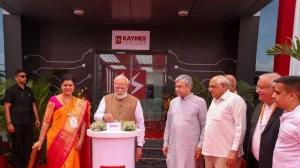
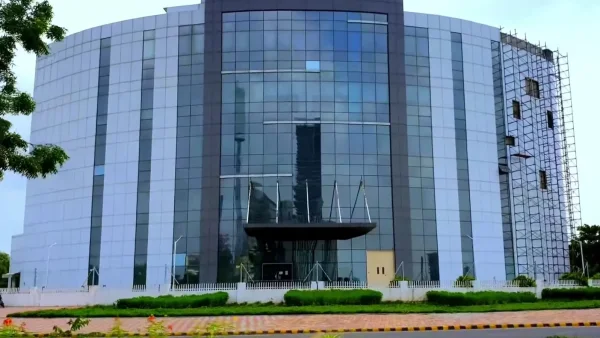
Offering a whopping $10 billion incentive for the first time in 2021, the incentive scheme covers up to half the setup cost for chip projects in India. This program generated a set of announcements for assembly, packaging, and testing units across a number of states.
While expanding these subsidies, the latest round will be tied to a semiconductor scheme; the incentives will be placed as single parts of broader industrial policy for smartphones and components. This is seen by authorities as an approach to increasing exports, employment, and building a better-protected local chip-hardware value chain.
Targeting design talent and the wider ecosystem
New Delhi has pinned hopes to draw in American companies to delve deeply into chips because India’s native capabilities in design and engineering are believed to be capable of such intellect and creativity, instead of mere assembly. The plan emphasizes the design, testing, packaging, and, ultimately, fabrication stages to ascend the value chain.
While subsiding fabs, the proposed effort could also support institutions responsible for chip designs, equipment procurement, and the supplier network, envisaged to knit together the local chip ecosystem. Such an effort is geared to start with an emissary to discussions on intellectual property, software tools, and downstream testing of chips throughout the range of base materials.
Global benchmarks and strategic forces
Its accommodation at a more modest scale than major initiatives in other countries nonetheless concurs with the larger, practically global perception as to the potential of AI, smartphones, car systems, and household goods-while also trying to avoid outright dependence on external technology.
India is set to position itself somewhat as a rival to the deep-pocketed industrialists of Taiwan, South Korea, and the Southwestern United States. The expectation is that with subsides in place and a guaranteed market base for investors, it will perform exceedingly well in producing high-tech endeavors to increase technical skill and domestic production capabilities.
Challenges, timeline, and expected outcomes
The campaign in IC design in India is still in its formative stage with lots of work planned for less-sophisticated digital chips (and packaging). Achieving advancements into state-of-the-art semiconductor fabrication will require a great deal of investment, skilled labor, and impregnable chains of supply over the years.
Political continuity, regulatory stability, and harmonious relationship with the state governments form the essential factors for the project’s success. The high degree of ambition has been made implicit by the official target of enabling competitive chip manufacturing abilities by the early 2030s and establishing a significant global hub by 2030.
It is assumed that the $11 billion fund will encourage and perhaps assure the rapid progress in this regard, provided it attracts big companies to walk into the local supply pool. In case of success, this should give India some abate in its import exposure, lift any export outflow, and earn much for itself in the semiconductor industry. However, this is only possible with adequate execution and careful responses to global market conditions.