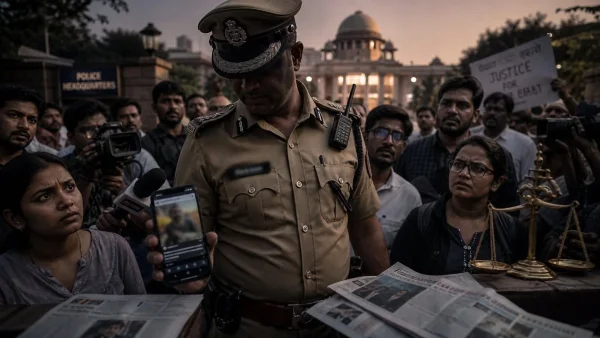
A deeply disturbing case from Rajasthan has once again brought the issue of alleged dowry-related harassment into the national spotlight. A young woman, who had been married on May 1, 2026, has died under circumstances that her family alleges were linked to continuous harassment over dowry.
According to the family, the woman’s father had passed away only days before her wedding. Despite the personal tragedy, the family says he had managed to arrange her marriage before his death. They now allege that after the wedding, she was subjected to repeated demands and harassment because the dowry was considered insufficient.
The police are investigating the allegations. At the time of writing, the in-laws’ version of events has not been made public, and the allegations remain subject to investigation.
A Wedding Meant to Begin a New Life
For every family, a daughter’s wedding is meant to mark the beginning of a new chapter.
In this case, the family says that chapter ended in heartbreak.
According to their allegations:
The young woman was married on May 1, 2026.
Her father had died shortly before the wedding.
After marriage, she was allegedly harassed over dowry.
The family now claims that the harassment ultimately led to her death.
If these allegations are proven, the incident would represent another tragic example of the continuing menace of dowry-related violence.
Dowry: An Illegal Practice That Still Persists
Dowry has been prohibited in India since the enactment of the Dowry Prohibition Act, 1961. The law makes both giving and taking dowry an offence, subject to certain legal exceptions relating to voluntary gifts.
In addition, the Indian legal framework provides provisions to investigate and prosecute cases involving cruelty to a married woman and suspicious deaths connected to alleged dowry demands.
Despite these laws, reports of alleged dowry harassment and dowry deaths continue to surface from different parts of the country.
Why Does Dowry Continue Despite the Law?
Experts say the persistence of dowry is driven by a combination of social and economic factors, including:
Deep-rooted social customs.
Pressure to maintain family status.
Expectations of financial gain.
Fear of social stigma.
Weak enforcement in some cases.
Reluctance of victims to report harassment early.
Changing attitudes often proves more difficult than changing laws.
Should the Government Do More?
Many legal experts and women’s rights advocates argue that stronger implementation is just as important as stronger legislation.
Measures often suggested include:
Faster investigation of dowry-related complaints.
Speedy trials in cases involving suspicious deaths.
Better protection for women reporting harassment.
Public awareness campaigns against dowry.
Community-level efforts to discourage the practice.
Financial and legal support for victims and their families.
At the same time, investigations must remain fair and evidence-based, ensuring due process for all parties.
Is Dowry More Important Than a Life?
This case raises a painful moral question.
No amount of money, jewellery, or household goods can justify cruelty or violence.
Marriage is intended to be a partnership based on respect and dignity—not a financial transaction.
If allegations of dowry harassment are established, they represent not only a violation of the law but also a profound failure of humanity.
A Society Must Ask Itself
Every alleged dowry death forces uncomfortable questions:
Why do illegal dowry demands continue?
Why do some families still view marriage through financial expectations?
Are victims receiving timely help before situations become fatal?
Are existing laws being implemented effectively?
These are questions that extend beyond one case and require collective reflection.
The Bigger Question
The tragedy from Rajasthan is more than a criminal investigation—it is a reminder that despite decades of legal prohibition, dowry remains a social challenge in parts of the country.
Whether the allegations in this case are ultimately proven will be determined through the investigation and judicial process. But if they are substantiated, accountability under the law will be essential.
A father’s final wish is often to see his daughter begin a happy and secure married life. No family should have to mourn that dream because of alleged demands for money or material possessions.
The measure of a society is not the value it places on dowry, but the value it places on human life, dignity, and equality.