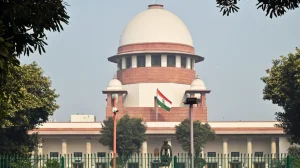
There was no mincing words from the top court as it upheld the verdicts. “Why do boys marry girls and then put them and their families through this?” asked Justice Nagarathna in open court. It was a pointed reminder that a deterrent has to be made to any family still in the habit of making a bride feel small.
What the Supreme Court decided
The bench, with Justices BV Nagarathna and Ujjal Bhuyan, would have none of it when the husband’s side came for relief. They let the trial court’s and the Chhattisgarh High Court’s findings of guilt stand where they were.
Several in the family had been found guilty under Sections 304B, 306 and 498A of the IPC. The appeal was thrown out, and those convictions remain in place.
Why the remarks matter now
You see a lot of financial hardball in some homes, the court said, and the way some are treated has to stop. “Let a message go out,” said Justice Nagarathna, “that they can’t just keep on with the insults to the bride and her kin.”
Then there was Justice Ujjal Bhuyan, who put it down to a disturbing kind of normalcy: “These are educated people.”
The case and the legal presumption
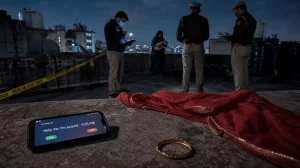
According to the prosecution, the woman was put to it over and over for money and a car by her husband and in-laws. She was found hanging less than three years into the marriage. The medicals showed asphyxia.
The trial court was left with no other option but to rule the death as one of unnatural circumstances, given what the family put forward about the cruelty and demands right before she died. That’s what brings in the statutory presumption of a dowry death.
Allegations placed before the bench
“It is an attempt to wring something out of the bride and her family,” Justice Nagarathna said, looking at the file. She even quoted the bride’s father on how he was made to feel: “They can give you Rs 60k and you call them beggars?”
What the appellant argued, and the court’s reply
The one on the other side of the bar was the younger brother-in-law of the deceased, wanting off the hook for his 498A conviction. His lawyer put forward that the case against him was thin on the ground.
The bench didn’t have time for it. “Be glad it is only 498A and only three years,” was the response from Justice Nagarathna. When the delay in the FIR was brought up, the court put a stop to it: “Let the message go. This is how they are treated.”
Signals the court chose to send
By not softening the stance on these convictions, the court is making a point about being held to account. The judges are after an end to the kind of harassment that starts as a ‘customary’ demand and turns into something criminal.
For the home and for the police, here is what the court is putting across:
– You will be deterred, and we will be consistent about it
– Make a bride feel humiliated and there will be a price to pay
– We will enforce the law’s presumptions
– A late filing won’t cover up a long history of abuse
Broader context beyond one case
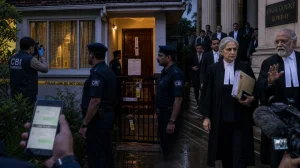
All of this comes as the country is once again looking at dowry harassment, in the wake of Twisha Sharma’s death in Bhopal this month. Her side says she was hounded for dowry by her husband Samarth and his mother, former judge Giribala Singh. They say it isn’t so.
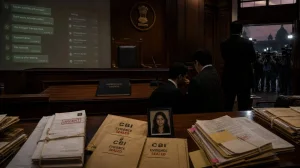
The CBI has stepped in as of Monday to re-open the probe on an FIR the MP Police had put in. Samarth, a lawyer and Singh’s son, is already with the central agency.
What happens next
The appeal is gone, so the lower courts’ view is the final word. For anyone dealing with a like case, the ruling is a nudge: if you have the demands and the cruelty and an odd death in seven years, the law will presume it was a dowry death.
It is what it is. The courts aren’t going to be lenient with those who try to downplay things or put off the reckoning. As the bench put it, the message is meant to be heard in every house where a new wife is being put on the spot for cash or goods.