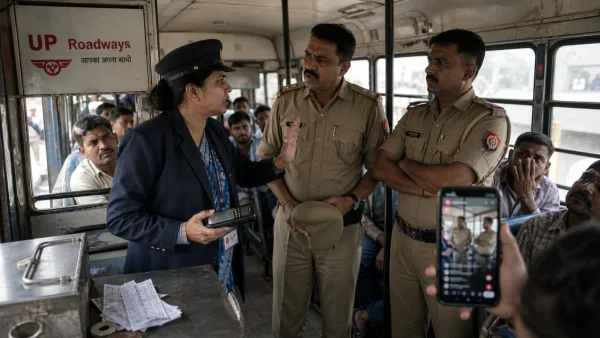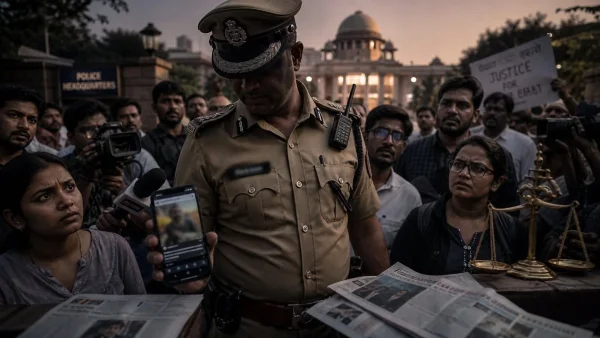
A purported video of Rampur Superintendent of Police (SP) Anil Singh has triggered a political and social debate after remarks attributed to him went viral on social media.
In the clip, the officer is heard allegedly saying, “Har*yon ka ilaaz karna hi mera kaam hai,”
while also reportedly making a distinction between what he described as a “true Muslim” and a “harami Muslim.”
The authenticity of the video and the context in which the remarks were made have not been independently verified. Authorities have not yet released a detailed official statement explaining the circumstances.
Why Has the Video Sparked Debate?
The controversy is not only about the language allegedly used but also about the expectations placed on senior police officers.
Police officers are expected to:
Enforce the law impartially.
Maintain communal harmony.
Treat every citizen with dignity.
Avoid remarks that could be interpreted as offensive or discriminatory.
Even if comments are made in frustration or during field operations, public officials are generally expected to exercise restraint because their words carry institutional authority.
Can Police Officers Use Such Language?
Police personnel often work under stressful and demanding conditions, dealing with crime, violence, and public disorder.
However, professional conduct standards require officers to communicate respectfully, especially while interacting with the public.
If the remarks are authentic and accurately represented, the matter may invite scrutiny under departmental conduct rules, which typically require public servants to maintain decorum and uphold public confidence in the institution.
Whether any rules were violated would depend on an official examination of the incident.
The Importance of Context
Viral videos frequently circulate without the full sequence of events.
Questions that an inquiry may seek to answer include:
Was the video edited or presented out of context?
Who was the officer addressing?
Was the remark directed at a specific individual accused of wrongdoing or was it a broader statement?
What was the situation on the ground when the comments were made?
These details are important before reaching conclusions about the incident.
The Political Dimension
Comments touching on religion often attract immediate political attention in India.
Critics may argue that senior police officers must avoid language that could be perceived as creating distinctions based on religious identity.
Others may contend that if the officer was referring to criminal behaviour rather than religion as a whole, the full context should be examined before drawing conclusions.
These competing interpretations underline the need for a factual inquiry rather than judgments based solely on short video clips.
Should the Government Act?
If the video is verified and the remarks are found to breach service conduct standards, authorities could consider:
Seeking an explanation from the officer.
Conducting a departmental inquiry.
Issuing advisories on professional communication.
Taking disciplinary action if misconduct is established.
The nature of any action would depend on the findings of the inquiry and applicable service rules.
Public Trust Is Built on Neutrality
The police occupy a unique position in society. Citizens expect officers to act without fear or favour, regardless of religion, caste, language, or background.
Public confidence depends not only on fair policing but also on the perception that officers speak and act with impartiality.
For this reason, even informal public remarks by senior officers are often scrutinised closely.
The Bigger Question**
The controversy surrounding the alleged remarks is ultimately about more than a viral video.
It raises broader questions about the standards expected from public officials entrusted with enforcing the law.
Should police officers be held to a higher standard of public communication because of the authority they exercise?
Many would argue the answer is yes.
Professional policing is measured not only by reducing crime but also by maintaining the confidence of every community. That confidence is strengthened when officers are seen to uphold the principles of neutrality, respect, and accountability in both their actions and their words.