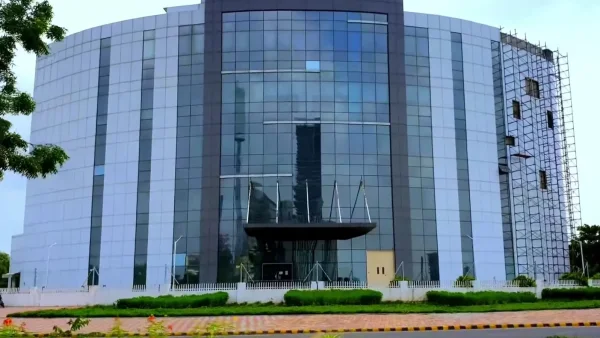
OpenAI is a leader in AI, going further than just inventing new technology; it’s also coming up with new ways to pay for and support those inventions. Sam Altman, the head of OpenAI, believes major technological shifts require new ways to get funding as well as the innovations themselves. He said that unlocking the potential of AI often means really innovative ways of getting the money to do it, while he was at the location of a new data center in Abilene, Texas.
Over the last few years, OpenAI has made unique (and sometimes unusual) financial deals to help it become the main AI company. Money flows in a circle between OpenAI and large companies and even newer companies: Microsoft, for example, gives OpenAI money, and OpenAI then spends that money with Microsoft on things like cloud computing. Experts both admire and are unsure about this method, some thinking it’s clever and others worrying it might contribute to a financial “bubble.” re
A Symbiotic Relationship with Tech Giants
OpenAI’s partnership with Microsoft is a good example of clever financial planning. Since 2019, Microsoft has put over $13 billion into OpenAI, mostly to pay for the cloud computing needed for AI development. Interestingly, a large part of that $13 billion goes right back to Microsoft, because OpenAI buys the computing power from Microsoft. This shows how much technology and money are mixed together.
But when the need for computing power became more than Microsoft could provide, OpenAI started working with other companies. They made deals with Oracle and a smaller company called CoreWeave. This year, OpenAI promised to give CoreWeave over $22 billion for computing power, and also bought $350 million of CoreWeave’s stock (part ownership) – this is a way to reduce the cost of the computing power.
Diversifying Funding Sources
To get even more money, OpenAI looked beyond its usual partners. SoftBank, a Japanese company known for making big, and sometimes risky, investments, put $40 billion into OpenAI. They are providing the money to build new data centers in Texas and Ohio, and while SoftBank’s past investments haven’t always done well, this is a very large amount of capital.
Oracle, a big software and cloud company, is planning to spend $300 billion building data centers in Texas and New Mexico. OpenAI will pay Oracle back over the next few years by using these data centers – this is the same pattern as with Microsoft.
OpenAI also received money from the United Arab Emirates. A company in the UAE called G42 (which is closely connected to the government) is building a $20 billion data center complex for OpenAI in that region.
The Nvidia Connection
Perhaps the most significant financial deal is Nvidia's commitment of $100 billion over several years. Nvidia is doing two things: investing in OpenAI and supplying the essential computer chips AI needs. This means Nvidia will have a guaranteed customer (OpenAI) for a lot of chips, and OpenAI will have a lot of chips.
OpenAI’s work with AMD shows how carefully they’re making deals in the computer chip industry. They have the option to buy up to and including 160 million AMD shares at a very low price. This gives them money and also strengthens their relationship with a key chip maker.
Navigating Financial Risks and Speculation
OpenAI gets most of its money from ChatGPT and its programming tools. But people who know about the company’s finances say they are still spending more than they are earning. Whether these financial plans will work depends on if AI continues to improve at the same rate as the money is being spent. If AI progress slows down, both OpenAI and its partners could lose a lot of money.
For smaller companies like CoreWeave that have borrowed a lot of money to build the computer systems AI needs, the danger is even greater; they could go bankrupt if AI doesn’t grow as quickly as expected.
Nvidia and AMD have ways to reduce their investment if the market changes and things go badly. This is a sensible precaution, because similar technology “bubbles” have broken in the past, leaving companies with too much equipment and too much debt.
Reflecting on Historical Parallels
Industry experts are comparing the current excitement and investment in AI computer systems to the “dot-com” boom of the late 1990s. During that time, companies made similar deals with their suppliers, and many of those companies got into trouble when the expected demand didn’t happen after the bubble burst.
What OpenAI is doing now shows both hope that AI will be as important as previous industrial revolutions, and worry based on what happened in past technology booms when people expected too much.
The Road Ahead for Artificial Intelligence
In the future, the growth of AI will probably continue to be shaped by complicated financial deals and technical advances. Companies are investing huge amounts of money in AI, not just as another area of technology, but as a fundamental system – like roads or railroads – that modern economies are built on.
The basic question is: can today’s investments lead to tomorrow’s breakthroughs without failing because they are too much to handle? For now, leaders in the industry seem determined to move forward, being optimistic but also careful to avoid the mistakes of the past.
In short: there’s a lot of risk in exploring these new areas, and there will likely be surprises and difficulties. But a lot will depend on getting the right balance in the agreements, and having leaders with vision who can deal with the complicated future as it unfolds. We are all watching the evolution of AI in real time, and it will reshape the world in ways we can only begin to imagine.