OpenAI wants a global organization to oversee AI, and is suggesting this to the government as Donald Trump is meeting with Xi Jinping in Beijing. They are saying that the safety of AI and protecting computer systems are connected to the competition between powerful nations, and this is important for both tech companies and governments.
Why OpenAI wants a US-led framework
Chris Lehane from OpenAI says the US has an advantage in really advanced AI, and should use that to help create the global rules for AI before the risks get too far ahead of our ability to control them. He thinks AI needs everyone to cooperate, not just on trade, and even China could be part of common safety measures.
Lehane points to the International Atomic Energy Agency as an example. Common standards and checking things helped manage a very risky technology. He says the plan is to make AI systems safer and able to recover from problems through international cooperation.
Linking institutes into a global spine
One possibility is to connect the Center for AI Standards and Innovation within the US Commerce Department with AI safety groups forming around the world. OpenAI has discussed with people in Washington the possibility of these organizations connecting to speed up the development of standards and safety checks.
Washington’s mixed signals on AI oversight
It’s not known if the Trump administration would be happy with global rules that include China. White House staff have said in the past they would not accept the world as a whole governing AI. The White House hasn’t responded yet to a request for their opinion.
OpenAI also wants the US government’s researchers to test the newest, most advanced AI models in secret. However, the administration is getting ready to release an “executive order” about AI and cybersecurity that would encourage, rather than require, companies to have AI models reviewed for safety before they are used.
Here are the competing policy currents shaping the debate:
– OpenAI backs a US-led global AI body including China
– White House signals preference for voluntary oversight
– Industry urges classified testing of frontier models
– Officials may open a regular AI channel with China
Rivalry, risks and the Trump-Xi backdrop
This call for international rules comes at a time of increasing competition with China. OpenAI and Anthropic, two US AI companies, have said that Chinese companies are using the results from the best US AI models to create their own versions very cheaply, and with fewer protections in place.
The situation became more urgent after Anthropic PBC warned that their Mythos AI model could cause global cybersecurity problems. This has really changed how the White House is making policy on AI, focusing more on checking models before they are released and how to make sure they’re secure across borders.
Beijing visit brings corporate muscle
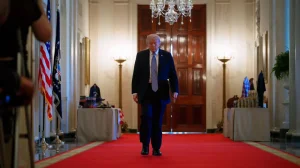
Trump arrived in Beijing on Wednesday (local time) for the first visit by a US President to China in nine years. He is with high-ranking government officials and over a dozen US business leaders, and Nvidia CEO Jensen Huang was added to the trip at the last minute.
Discussions about trade (including China’s buying of US farm goods and “rare earths”) and general global political issues will happen, but AI will also be a major topic. US officials will share their worries and look for a way to have regular talks with China about AI.
What matters for markets and policy
A US-run organization that includes China would mean Washington would be in charge of creating the standards that determine who can use AI, how much it will cost to meet the rules, and how quickly the newest AI can be introduced. For companies building AI, agreeing on testing and safety early on could make things less uncertain when it comes to regulations in different countries.
The next thing to look for is whether other countries and China will agree to link their AI safety organizations, and if the US will officially begin secret evaluations of AI models. If this system works, it could become the standard way to develop AI, even before any official agreements are signed.