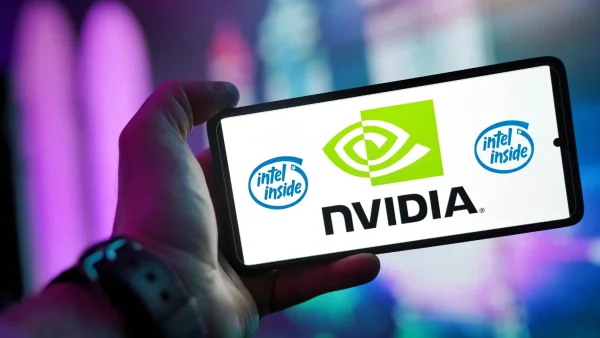
Under an agreement for buying securities, Nvidia paid $23.28 a share, and Intel got the money in cash. Because it was a private placement – a sale straight from Intel to Nvidia – the two companies could agree on the details ahead of time and finish the deal quickly.
How the deal was put together, and what agencies said about it
US authorities who look at whether companies are competing fairly approved the investment; the Federal Trade Commission said it met all the requirements for approval. Getting that approval out of the way meant the companies could go forward without a long fight with the government.
After the details of the deal were filed with the SEC, the stock market didn’t react much: Nvidia’s shares went down a little, by about 1.3 percent, before trading officially began, and Intel’s shares barely moved, reaching around $36.29 in the early hours. The small amount of change in the share prices suggests that investors had already figured the investment into the value of the companies when it was first reported months ago.
Why this is important for Intel
People who follow the industry think this money is a really important help to Intel, as the company has been dealing with the costs of building more factories and making the wrong choices in its business, which hurt its cash and how much profit it made. The $5 billion gives Intel more money to work with and shows that a leading company – one that is very successful in making AI chips – has faith in Intel.
Intel has been doing much better this year. Its shares went up around 80 percent in 2025, after a large drop in 2024. Improvements in how the company runs things helped: the gross profit – the money left after subtracting the costs of making things – was $5.45 billion in the third quarter of the year, up from $2.39 billion in the same quarter last year; and the operating margin – the percentage of revenue that is profit – went to about 40 percent from 18 percent.
What the companies hope to do, and how they will work together
The investment is part of a bigger plan for working together. In September, Nvidia promised to work with Intel to create new data center and PC technologies, with the goal of making progress in artificial intelligence. This could speed up the companies’ plans for new products and make their chip design and software work together more easily.
It’s worth noting that Nvidia is buying a share in a company that makes chips that compete with its own. This makes sure that the two companies will work well together on the systems that do computing, and could let AI work better on Intel’s hardware. Intel gets technology partnerships and a show of confidence, which can help it get back the trust of the market.
Intel might buy another company
There are also reports that Intel is close to buying SambaNova Systems, a startup that makes AI chips, for about $1.6 billion, including its debts. If this happens, it would give Intel even more AI hardware and work with the money and teamwork that Nvidia is already giving. However, the details and timing of the deal could still change.
What the deal means for the whole industry
The deal shows how the semiconductor industry is changing, with companies both competing and working together. The large investments between companies, the approval from regulators, and the attempts to combine companies show how important it is to be able to do the computing needed for AI. Companies are combining money and technology to be sure they will be competitive in a market that is changing very quickly.
What investors need to remember
Investors should remember that the private placement and the approval from regulators lowered the risk of the deal happening right away, but what happens in the long run depends on whether the companies can carry out their joint projects and whether Intel can turn the new money into lasting increases in profit. Before making investment decisions, be sure to get advice from financial experts who are certified.