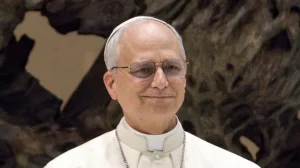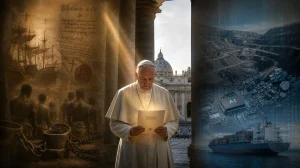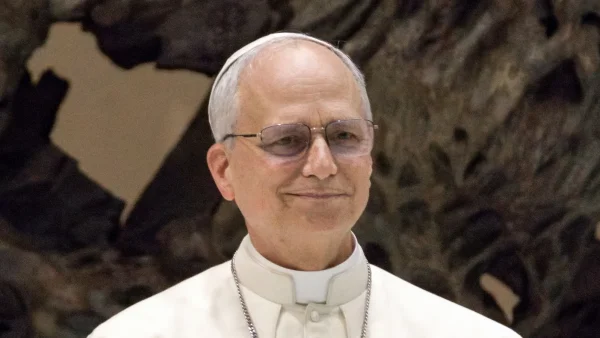
Pope Leo XIV has said he has no plans for a public debate with Donald Trump, and that what he’s saying comes from his religious commitment to peace, not from trying to start trouble in politics. On the plane while traveling, he described his message as being a shepherd to people and applicable to everyone.
Pope Declines a Political Confrontation
The Pope told the press that debating a politician isn’t be a good use of his time or part of his job. He’s meant to share the message of the Gospel about being good to each other, and making peace, and not to get involved in arguments between different political groups. He said what he said very directly in order to calm down a rapidly growing argument in public.
He also responded to those who said his comments were directed at one person. Leo said his words should be understood as part of a larger, more spiritual teaching on peace and respecting all people. He wants to make sure his responsibilities as a leader of the church are separate from the competition of politics.
Timing and Context of the Remarks
Leo explained the speech where he criticized a “few tyrants” was actually written before Donald Trump made any public statements. He says the timing of the speech has been misunderstood and that afterwards, people have added their own political ideas to his religious message. He’s sorry about those misinterpretations.
The Pope pointed out he was in Bamenda, Cameroon, when he made his comments, and Bamenda has been suffering for a long time from a conflict with people trying to break away. He said his mentions of being taken advantage of and war were about what he actually saw and felt while he was there, and a spiritual reflection, and not a criticism of anyone’s politics.
Trump’s Response and Social Media Exchange
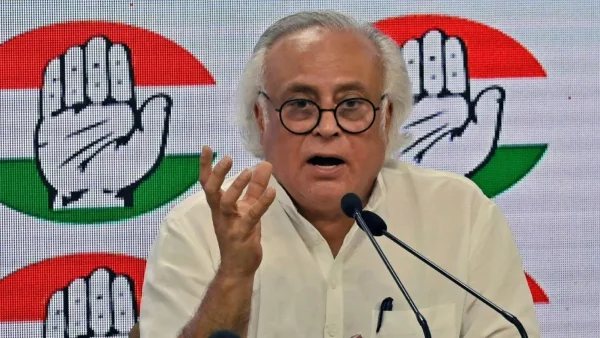
The former president criticized the Pope on the social media site he uses with his supporters, saying the Pope isn’t strong enough on safety and didn’t like his plans for dealing with other countries. He claimed the Pope is politically biased and made comments about how well-respected the Pope is. These posts made people pay even more attention to the Pope’s previous speech.
People at the Vatican and the Pope himself have been careful to avoid turning this exchange into a long argument. By refusing to debate, Leo is trying to stop the situation from getting worse and to make it clear that being a spiritual leader is different than being a political opponent. This shows how carefully the Vatican manages its public image in a time when things spread quickly on social media.
Peace Message and Pastoral Priorities in Africa
During his trip to Africa, Leo emphasized that he is primarily there to support Catholic communities in the area. He brought up ideas from church services about being brothers and sisters, being fair, and making peace, and said these will be central to what he does throughout the continent. This focus on caring for people shows what the Pope thinks is most important.
The Vatican repeated that appeals for peace are for everyone, and aren’t about just one conflict. Leo has criticized people who use religion as an excuse for fighting wars. He said threats to entire cultures are unacceptable and again said that speaking in a way that makes people seem less than human is wrong.
Wider Implications for Church Diplomacy and Public Perception
This situation shows how easily statements by the Pope can be reinterpreted when politics are very divided. Religious leaders who talk about what is right and wrong run the risk of people quickly looking at it through the lens of their political party. The Vatican seems to want to remain morally clear and avoid getting mixed up in election politics.
People who follow the Vatican say it’s hard for the Holy See to both say what’s wrong with the world and be careful in its diplomacy. By not having a public debate, Leo has left room for the Church to ask for conversation and concern for people in need, without becoming a show for political sides. This approach may determine how future statements are received by the world.