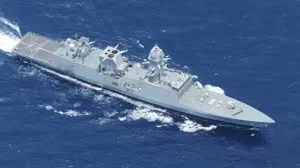
Because of increasing tensions in the region and around the world, India is improving its ability to have missiles and defend against them. INS Dhruv specifically makes it better to get telemetry and track things over large areas of ocean where missiles are tested. Having it in use makes sure tests are valid and allows for faster detection and responses to missile attacks.
INS Dhruv’s role in missile tracking
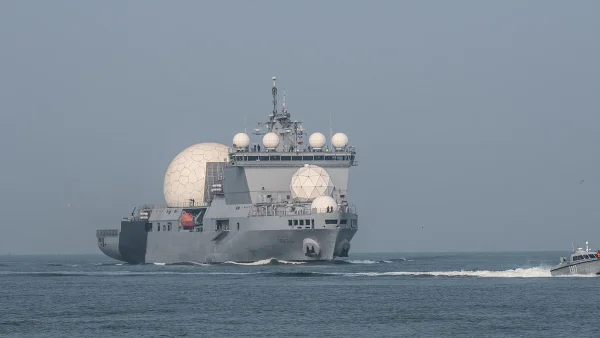
INS Dhruh has long-distance radar and systems for collecting electronic information. These are designed to pick up when a missile is launched and chart its flight over the ocean. The ship can follow missiles that go incredibly fast, even faster than sound, and it extends how far surveillance can reach beyond what land-based radar can do.
The ship acts as a platform that can move and collect detailed information about how a missile flies for later analysis. People who design and study missiles use this information to make improvements to the missile’s steering, engine, and how it finds its target for both long-range and more immediate use.
Integration with India’s missile testing architecture
India does most of its long-range missile tests from the Integrated Test Range on Abdul Kalam Island, over the Bay of Bengal and the Indian Ocean. Radars on land are the main tracking network, but INS Dhruv fills in the missing pieces over the sea routes missiles will travel and further down the range.
When data from the ship and from land is combined, test teams can check the telemetry, confirm the missile is performing as it should, and see how it acts when it comes back into the atmosphere. So, INS Dhruv is a very important part of experiments that measure a missile’s distance, accuracy, and how well its warhead is delivered.
Telemetry validation and anti-ballistic missile testing
The telemetry from INS Dhruv helps scientists to verify how the missile moves through the air and to keep an eye on the sensors on the missile during testing. Good telemetry is essential for figuring out what went wrong if something doesn’t work and to make sure improvements work after the missile is redesigned.
The ship also assists with tests of anti-ballistic missiles (missiles designed to destroy other missiles) by providing early information and tracking. This gives interceptor missiles more time to react and makes a defense that has multiple levels against medium and long-range missiles stronger.
Satellite tracking and space situational awareness
INS Dhruh can track satellites in Low Earth Orbit, the ones used for communications and gathering information. Tracking from the sea adds to tracking done by ground and space sensors, giving the country a better understanding of what is happening in the sea and in space.
This ability is important because some countries have shown they can destroy satellites, and satellites are becoming more and more important in modern conflict. By tracking satellites that might belong to an enemy, India can assess the threat and protect its own satellites.
Global parallels and strategic standing
Several nations have ships specifically for tracking missiles to support their test programs and to monitor space. Ships used by China, Pakistan, the United States, and France do similar jobs at sea as INS Dhruv, gathering telemetry, tracking, and providing communications.
Because India now has INS Dhruh, it’s one of a small number of countries that can track things from a ship. This allows India to independently verify its weapons tests and helps to keep a balance of power in the region.
Implications for deterrence and future upgrades
INS Dhruh increases India’s ability to discourage attacks by making its information about how missiles work and how well its defenses are ready much more reliable. When tracking and telemetry are dependable, there are fewer unknowns when it comes to using weapons and leaders can have more confidence in their choices.
In the future, it’s likely the ship will be even more useful if it’s linked to sensors in the air, in space, and in the digital world. If the radar, communications, and electronic intelligence systems are upgraded, INS Dhruh will continue to be effective against newer and changing missile and space threats.