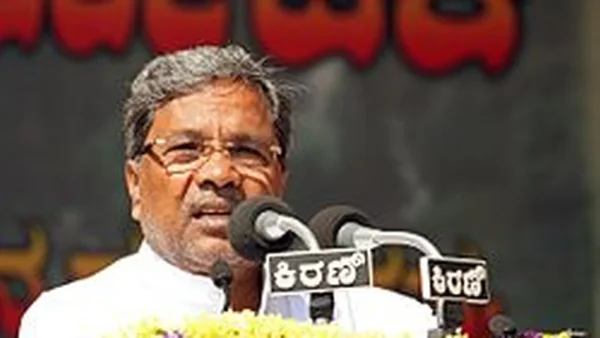
At a conference of judges in the state, Siddaramaiah again requested a Supreme Court branch for the South. He explained that currently people have to travel all the way to Delhi for Supreme Court cases, and a southern location would ease that difficulty. Making things easier to access, quicker, and cheaper would strengthen the public’s confidence in the justice system and ensure quicker judgements.
He said that a southern branch would help with the huge number of cases currently waiting to be heard and give people in the South better access to the highest court. To actually create this branch would require a change to the Constitution or a decision from the Supreme Court itself. and he believes this is important.
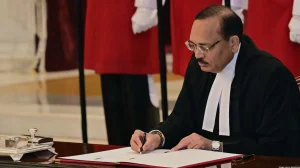
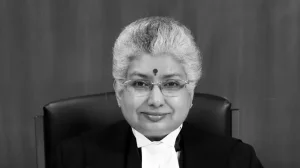
Many important people were at the event, including the Chief Justice of India Surya Kant, Supreme Court judges B V Nagarathna and Aravind Kumar, and the Chief Justice of the Karnataka High Court Vibhu Bakhru. Their attendance shows how important this discussion is and how urgently the current problems with the system need to be solved.
Case Pendency and the Push for Systemic Reforms
Siddaramaiah first pointed out the biggest problem with the system: the number of cases that are waiting to be heard. He says that when cases take a long time, people lose faith in the courts and it financially impacts both people and businesses. He thinks quicker and fairer judgements are vital for Karnataka and the country.
To get through the backlog of cases, he wants changes to the system alongside new technology. Court buildings need improving, more judges are needed, and the way things are done must be modernized, and all of this has to happen at the same time as using digital tools. He feels a southern branch of the Supreme Court and improvements to the lower courts would take the strain off the entire court system.
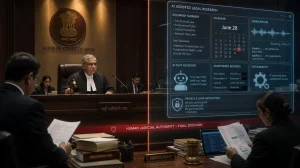
He mentioned ‘intelligent’ systems for managing cases which could make lists of cases more streamlined, do simple tasks automatically, and improve the timetable for hearings. Blockchain could make court records secure and prevent them being changed, and putting things into a digital format would speed up filing things. However, he warned that getting things done efficiently should not happen if it means being less fair.
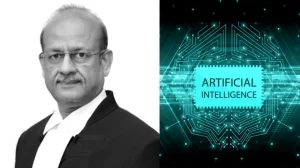
AI in the Courts: Promise and Peril
Siddaramaiah thinks AI will completely change how we look at evidence and make judgements. AI could quickly find relevant past cases, make judgements more consistent, and help to get through the backlog by giving judges and their staff better information and analysis.
But there are dangers. AI can have biases built into its design, which could make existing inequalities worse and go against the idea that everyone is treated equally in the eyes of the law. If the way an AI reaches a decision isn’t clear, it can undermine the principle of giving reasons for decisions. Without being open, easy to understand and being tested, AI could confuse rather than clarify the facts and the law.
He said AI needs to be adopted carefully, with a focus on being correct, being able to be held responsible and being open to challenge. These systems should be checked for bias, proven to be reliable, and designed so that a human judge is still in control. In essence, AI should help the judges, and not replace their judgement or ability to decide.
Safeguarding Judicial Independence and Evidence Integrity
Siddaramaiah was very clear: “A judge’s authority must never be less than the authority of a computer program.” He said the independence of judges must be protected not only from political or social influence, but also from being too reliant on technology which could affect the outcome.
He also mentioned new challenges relating to evidence from deepfakes, fake data and content created by machines. This means we need to be clearer about when these things can be used as evidence, who has to prove something is true, and how to confirm something is genuine. Courts will have to decide more often what counts as trustworthy evidence in the digital world.
His solution is that things should be able to be verified and have integrity. Using AI and how it’s controlled must be guided by fair process, fairness in relation to the situation, and the right to privacy. The court system isn’t just using the technology; it will be the moral guide that sets limits for AI in public life.
Building Capacity and Infrastructure in Karnataka
The Karnataka government is committed to having strong court buildings and using digital technology to improve how things are done from the lower courts upwards. Investing in smart courtrooms, internet access and safe data systems will support quicker hearings and clearer records.
He called for continued training. Judges and court staff need to understand digital tools, how to use data and the basics of AI so they can assess new types of evidence and new types of risk. Combining technical skills with legal knowledge will improve how facts are discovered and judgements are reasoned.
However, he was clear about the importance of human judgement. He said no computer program can replace understanding, experience of life, or moral principles. Technology can help, but it cannot take the place of a person’s conscience when it comes to justice. This principle should be at the heart of all digital improvements.
The Road Ahead for Access to Justice
Siddaramaiah thinks a branch of the Supreme Court in South India is both a useful and symbolic step towards fairness in access to justice. It would lessen the burden of travel, lower expenses, and make the highest court more in tune with the real lives of people in the southern states.
He says that the Supreme Court, the national government, state governments and lawyers all need to work together on making changes to the system, setting digital standards and providing training. If it is carefully designed, technology can speed up decisions while also keeping things fair and open.
The theme of the Bengaluru conference, “rethinking the court system in the age of AI”, reflects this shift. The goal is to combine new technology with the protections in the Constitution, reduce the backlog of cases without harming rights, and make access easier without reducing careful examination. He said achieving this balance is what truly shows progress.
As the debate about a southern branch continues, Siddaramaiah’s message was clear: access to justice and trust in the system go up and down together. By combining access in the South with the responsible use of AI, Karnataka hopes to show how courts can modernize while keeping human judgement as the most important thing.