The Election Commission of India has scheduled this regular voting for 37 Rajya Sabha seats on March t6, with the counting of votes also on that day. These spots are open because the terms of 37 members will end in April. The voting will happen in ten states, and in those states the members of the state legislatures (MLAs) will be choosing the new members of the Rajya Sabha.
Election schedule and voting method
The Election Commission has a schedule for everything, starting February 26th and going until March 20th. People must be nominated for the positions by March 5th, those nominations will be checked on March 6th, and candidates can withdraw their names until March 9th. The voting itself will be between 9am and 4pm on March 16th.
Rajya Sabha members are chosen by the state legislatures using a system of proportional representation with a “single transferable vote”. MLAs list the candidates in their order of preference, and votes are moved from one candidate to another until all the seats are filled. The Election Commission says to use the purple pens they provide to show your choices, and they will have people observing the voting to make sure it’s fair.
Notable retiring members this cycle
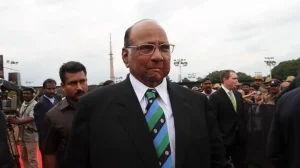
Several well-known politicians are retiring in April, creating opportunities for parties to plan. Sharad Pawar, Abhishek Manu Singhvi, Ramdas Athawale, M. Thambidurai and Tiruchi Siva are all leaving the Rajya Sabha. Other retiring members of Parliament come from both smaller, regional parties and larger national parties, and are spread throughout the ten states where votes are happening.
These retirements represent lots of different groups and come from people with all kinds of political histories, from long-time leaders in their own states to important figures in the national parties. Because of who is leaving, parties will have to decide on their candidates, make deals with each other, and plan how to vote in the state legislatures before March 16th.
State-wise seats and current party distribution
The 37 open seats are in Maharashtra, Tamil Nadu, West Bengal, Bihar, Odisha, Assam, Telangana, Chhattisgarh, Haryana and Himachal Pradesh. Maharashtra has the most with seven, Tamil Nadu has six, and Bihar and West Bengal both have five. Odisha will have four vacancies, Assam will have three, and Telangana, Chhattisgarh and Haryana will each have two; Himachal Pradesh will have one.
The number of seats the different parties have among the people leaving the Rajya Sabha changes depending on the state. The BJP and its allies already have a strong number of seats in states where the BJP is in power or works with the state government. Parties in the opposition are still strong in Tamil Nadu, Telangana and West Bengal.
Maharashtra, Tamil Nadu and West Bengal details
In Maharashtra, seven seats are becoming available. The BJP and NCP-SP each have two of the people leaving, while Congress, Shiv Sena UBT and RPI (Athawale) each have one. Sharad Pawar is one of those leaving, and if the NDA (the party in power) stays as strong as it is in the legislature, it’s likely to win a majority.
In Tamil Nadu, things are expected to stay much the same: the DMK will have four of the six seats, the AIADMK will have one, and TMC-M will have one. This means the INDIA bloc (an alliance of opposition parties) will continue to be ahead in that state. In West Bengal, four of the people leaving are from the TMC and one is from the CPI-M; it’s thought that the BJP might win a seat from the Left parties.
Projections and implications for the Rajya Sabha balance
Based on how many members each party has in the state legislatures, the NDA might get about six more seats, possibly raising their total from this round of voting to 21. The INDIA bloc might lose around four seats and get roughly 15. The BJP will become more powerful in the Rajya Sabha in the six of the ten states where it is in power or working with the government.
These possible gains are important for the numbers in the Rajya Sabha, because big laws often need support from parties that aren’t in the government. Even a small change can affect the government’s ability to get important laws passed. Parties will be looking closely at the results on March 16th, because they will show the power of the different groups in each state and how well the parties are sticking together in the coming weeks.