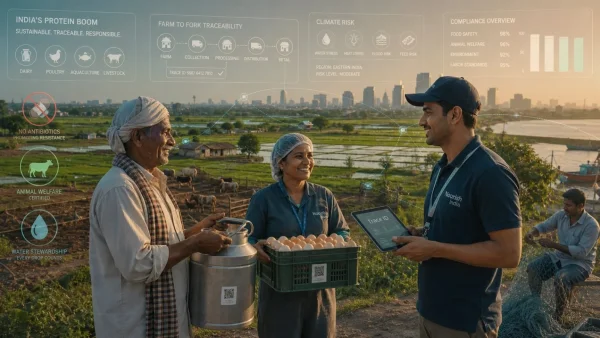
More and more wealth and people moving to cities in India are quickly increasing the demand for eggs, milk, fish and meat. This growth is definitely happening, but comes with dangers. For company leaders and those who invest in them, finding protein responsibly isn’t just something to say, it’s now a critical part of how well a company does, how safe it is, and if it will still have a market for its products.
Demand surge with higher stakes
There’s a definite shortage of protein in India. If children are to develop properly, mothers to be healthy, and the workforce to be productive, this shortage needs to be filled. However, simply greatly increasing the amount of protein from animals could make the problems of climate change, how land is used, resistance to antibiotics, and illnesses in animals worse throughout the entire food system.
The places where the food comes from are very broken up. Millions of small dairy farmers, people who raise chickens, fishermen, and informal suppliers are the foundation of the market. Because so many different people are involved, it’s harder to track where food comes from, to improve animal treatment, and to use antibiotics responsibly, and so every decision a large buyer makes has bigger consequences.
Large food companies are at the point where food is made and food is bought. What they expect, what they say in their contracts, and what they reward influences how things are done on the farms. Because of this, getting protein in a way that doesn’t harm the environment becomes central to making sure things run smoothly, keeping the brand’s good name, and doing well for a long time.
Benchmark signals gaps for major buyers
Hindustan Unilever, Tata Consumer Products, Nestle India and Westlife Foodworld are leading the way for the industry. The choices they make can speed up better methods or continue the current risks. Recent studies show they are improving in some ways, but still have important weaknesses.
The Asia Protein Buyers 100 benchmark (which looks at the biggest food companies in Asia, including 13 large Indian food buyers) says Indian companies have gotten better at having rules for their suppliers and tracing where food comes from. Their reporting is about average for Asia. However, they still have big problems with climate plans, controlling antibiotic use, and animal welfare.
It’s a familiar situation: companies have said what they will do, but don’t have many actual numbers to show they’re doing it. More than half of those 13 companies haven’t even started to report on things relating to climate change. Most don’t have rules, standards or goals for animal welfare. Very few mention getting protein from animals treated more kindly (like not being tied up or kept in cages) and few can show they’re making progress.
Operational, public health and climate risks
These weaknesses aren’t just about “ESG” (environmental, social and governance) issues. They directly affect how a business runs, what rules it has to follow, and how easy it is to get money, and can change how much a company can charge and if it can continue to get supplies. Stricter rules will make these problems even worse.
Problems with public health are happening right now. India already has some of the highest rates of AMR (antimicrobial resistance) in the world. This is because of lots of animals in a small space and chickens and other poultry where antibiotics are used frequently, even for animals that aren’t sick. Not controlling antibiotic use invites the government to step in and hurts the company’s reputation.
Climate change makes the situation even harder. India is one of the countries most likely to be harmed by climate change and protein supply chains are likely to suffer from heat, diseases spreading, and the price of animal feed changing. Increasing production without ways to lessen the effects of climate change and to recover from them makes the whole system more risky and threatens farmers’ ability to make a living.
As the world’s standards for sustainability become stricter, the cost of following those standards will more and more reach the farm level. Without a fair adjustment, small farmers who are dealing with prices going up and down and climate change will end up with most of the burden, which will damage both society and the long-term supply of protein.
A protein transition tailored for India
A change in how India gets its protein doesn’t mean getting rid of protein from animals. It means finding a balance: raising animals in a responsible way along with a wider variety of protein sources, better standards for how animals are treated, less antibiotic use, better tracking of where food comes from, and getting protein in a way that fits with dealing with climate change.
And importantly, India’s main goal is to have enough protein, not to have less. The goal is to get protein in a smarter way that improves nutrition while lessening the effects on the environment and people’s health. For this to happen, buyers need to clearly say what they expect and invest in helping suppliers improve, not just making contracts stricter to shift the risk to them.
This isn’t just a side issue about ESG. For India’s big food companies, it’s a fundamental business issue. Having clear rules about how antibiotics are misused, animal health, cleanliness and tracking where food comes from will affect food safety, what consumers think, how much is produced, and the ability of a sector that feeds hundreds of millions of people every day to continue.
What leading buyers should prioritise now
For companies looking to lock in growth while de-risking supply, the immediate priorities are practical and measurable. The following actions will determine whether India’s protein boom compounds risk or compounds advantage:
– Publish time-bound climate plans for protein sourcing
– Establish antibiotic stewardship with strict non-medical bans
– Set and track animal welfare standards and outcomes
– Strengthen traceability and supplier data transparency
– Fund supplier support and a just transition for smallholders
Getting money to make these changes is part of being able to compete. As sustainability standards become more alike, buyers with standards that people can believe and partnerships with suppliers will be able to get more consistent amounts of food, better quality, and less price changes. Those without will have to spend more to fix problems, have their supplies interrupted, and get more attention from those who provide money.
The main point is how things are managed. Company leaders who include climate risk, controlling AMR, and animal welfare in what they buy will have fewer unexpected problems and protect the value of their brand. They will also be able to get to customers and markets that now expect proof, not just promises.
India’s protein boom is already changing what people want. Whether it becomes a solid source of growth or a collection of risks will be decided in company boardrooms now. The companies that act first to get protein in a sustainable way will set the standards that others will be forced to follow.