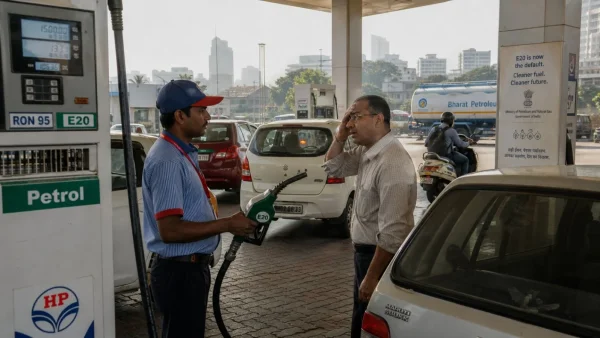
E20 is now the norm at Indian fuel bays, and it’s put a question in the minds of many car owners: can my car take 20% ethanol? For a lot of us with older vehicles, there are worries to be had over how this will affect the way we drive, the upkeep and the bottom line.
What changes at the pump today
It’s all by order of the government. Oil firms have been told to put out petrol with as much as 20% ethanol and a 95 Research Octane Number (RON) or better, come April 1, 2026. A notice in February made it clear that quality has to be in line with Bureau of Indian Standards.
You get some benefits from the higher octane – it keeps knocking down and eases the strain on important bits of the engine. Ethanol is about 108 RON on its own, so you can hit that 95 mark with E20 and have a more stable burn.
If your vehicle is older
But if you’re in a pre-2023 model, expect to see your mileage go down. The fine print puts the loss in efficiency at 3 to 7 per cent. There’s also the matter of rubber and plastic parts wearing out a bit faster, and you might find it a touch harder to get going in the cold.
The numbers back it up. We put a few thousand petrol owners to the test in an early 2026 LocalCircles poll and found that half of those with cars from before 2022 were getting less out of their tank on E20. Another 30 per cent noticed odd wear and tear in the engine, fuel lines and the like.
How many vehicles are truly E20-ready
Yet for all the policy talk, the reality on the ground is different. If you look at Vahan data from 2025, not even 30 per cent of the new petrol cars and two-wheelers on the road are up to code. That’s 0.9 million of 3.36 million passenger vehicles, and 5.2 million of 13.76 million bikes.
Cast your eye over the past 15 years and you’ll see that only 3% of what’s still being driven is ethanol-compliant. Some say the uptick you see after 2023 is just RTOs re-categorising things after the BS6 Phase 2 in April, not a sales boom.
Quick checks to protect your engine
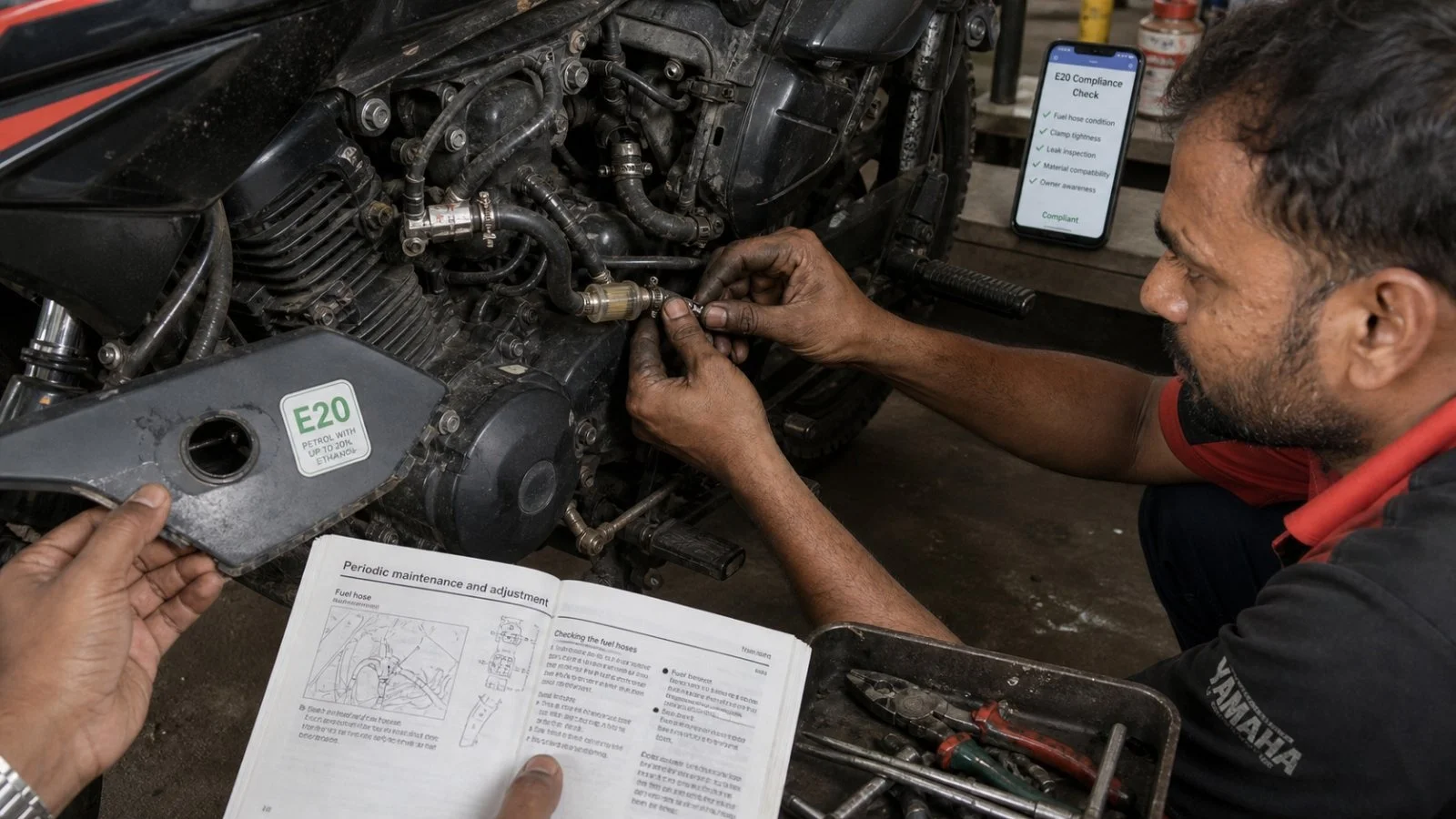
If you own an older vehicle, a few simple habits can help manage E20 risks:
– Check for an E20 sticker near the fuel cap.
– Inspect fuel lines and gaskets every 20,000-30,000 kms.
– Use a fuel-system cleaner every 1,000 km.
– Avoid letting E20 sit in the tank for months.
Why the switch matters now
Then you have the oil market to consider. With Brent crude hovering around $106 and India having to import 90 per cent of its supply – much of it from West Asia – every bit of ethanol in the mix is a step toward energy security.
The idea is to lower emissions and give farmers an outlet for extra sugar and grain. But we don’t have the same leeway as in Brazil. “There are systems in place in other countries, like the high rate of flex-fuel use in Brazil, that we don’t have here,” says Shifali Goyal of the Centre for Social and Economic Progress.
What to expect next
As for the wallet, most haven’t seen any price relief from the blending yet, and that makes some wary. The authorities have intimated they may make some allowances where it makes sense. In the meantime, if your vehicle is of a certain age, have a read of the manual, stick to the recommended RON 95 E20 and be on top of your maintenance.