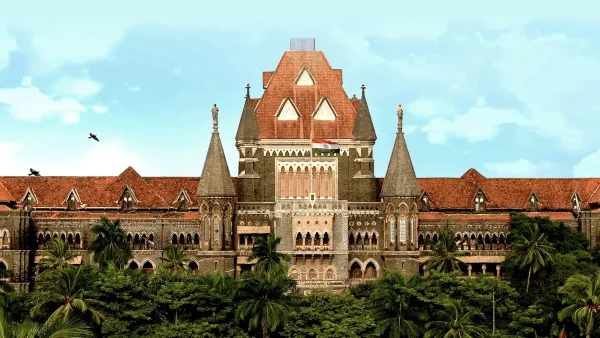
What was a 15-year tussle over due process in Indian aviation has come to a head with a stinging rebuke of the regulator. The Bombay High Court not only reinstated a pilot’s Airline Transport Pilot License but also declared the DGCA’s 2011 order to suspend it as both illegal and untenable. The upshot? The authority was found to have denied a hearing, which is an affront to natural justice.
A division bench laid down the law on Monday, righting the scales between public safety and what is procedurally right. They have put the license back where it belongs but are sending the case back to the Directorate General of Civil Aviation to be handled properly before any new calls are made.
Why this has weight in the world of aviation oversight
It comes down to how the DGCA enforces rules on the country’s most hard-earned credentials without taking shortcuts. The court pointed out that the Aircraft Rules are plain: if you are to disqualify someone from a license, they must be given a say in the matter first.
The bench was firm on the point that to leave this out is to violate basic fairness. You may have had an FIR in 2011 and a chargesheet, but as the court observed, no charge has actually been put to the pilot yet. That makes for all the more reason to be meticulous about procedure.
The case in question
Then there is Jeetendra Krishna Varma, 61, the man at the centre of it. His ATPL was put on hold on March 12, 2011, on the strength of an FIR in Delhi claiming he had used fakes to get it. Back then, at 46, he put up a fight in the high court under the Aircraft Rules.
Varma has been in the cockpit for a long time. He was issued a Commercial Pilot License in 1988, kept it in good standing, and put in his time with Air India. By 2010 he had the qualifications for an ATPL, passed the test and was handed the license.
After the 2011 complaint, he was in and out of custody, bailed in the same month. The DGCA moved to suspend his license and let him go. He contested the firing as well; in 2019 the high court put an end to that.
What the court came to
Justices Manish Pitale and Shreeram Shirsat saw a void in the way the DGCA went about its business. There was no show-cause notice, no personal audience with Varma. “We feel that definitely prejudice has been caused to the petitioner,” the bench said.
“We deem it fit to set aside the order and remit the matter back to the respondent to give an opportunity to the petitioner, which will be in consonance with the principles of natural justice.” They were also at pains to note the order was simply not sustainable and had to be quashed.
As for the ATPL, the court has restored it. But they left no room for doubt: the DGCA is at liberty to open an inquiry, let the petitioner have his say and then make a ruling. “In the present case, there is complete infraction of the rules,” they said.
You don’t have to read between the lines for the court’s instructions:
– A show-cause notice and a personal hearing are in order
– Do your inquiring before you act punitively
– Put down a reasoned order after you’ve heard them
– Be consistent with the Aircraft Rules
Where the DGCA stands now
The regulator’s line was that Varma’s ATPL was built on forgeries and that suspending him was for the good of the public. The court didn’t wade into whether or not that was true. It was the way he was suspended they had a problem with.
The ball is in the DGCA’s court. They can go ahead and run an inquiry that is up to code, let Varma put forward his side and then make a call. For now, the license is his unless and until it is lawfully taken away.
What it means for the rest of the industry
This is a reminder that you can have strong enforcement and still be fair. A pilot’s job shouldn’t be put at risk without a proper hearing. For the airlines, it takes some of the guesswork out of when a career is in the balance over some opaque action.
And for safety’s sake, you want some predictability. An order that is transparent and well-reasoned is easier to stand by and less likely to end up in a drawn-out legal battle. What we have on Monday is a model the DGCA will have to live with in like cases.
If you are watching for compliance, these are the points to file away:
– When it comes to a license, natural justice is a must
– Let the evidence be put to the test in a hearing
– Your reasons for an outcome should be on paper and in black and white
The court has not made a final call on the allegation itself. It is making sure the process does. That kind of fairness, without any let-up on safety, is what may well change the way we look at aviation credentials going forward.