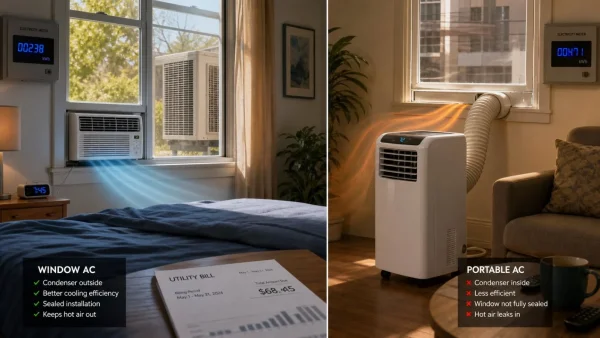
With the kind of heat we’re seeing in India, the unit you put in now is going to set the tone for your June comfort – and your bill. In a nutshell: window ACs are the ones that cool off a room in less time and are cheaper on the meter. Portables are for those who can’t be tied down. Make a wrong call and you’ll be paying for it all summer.
What really drives the bill: the design difference
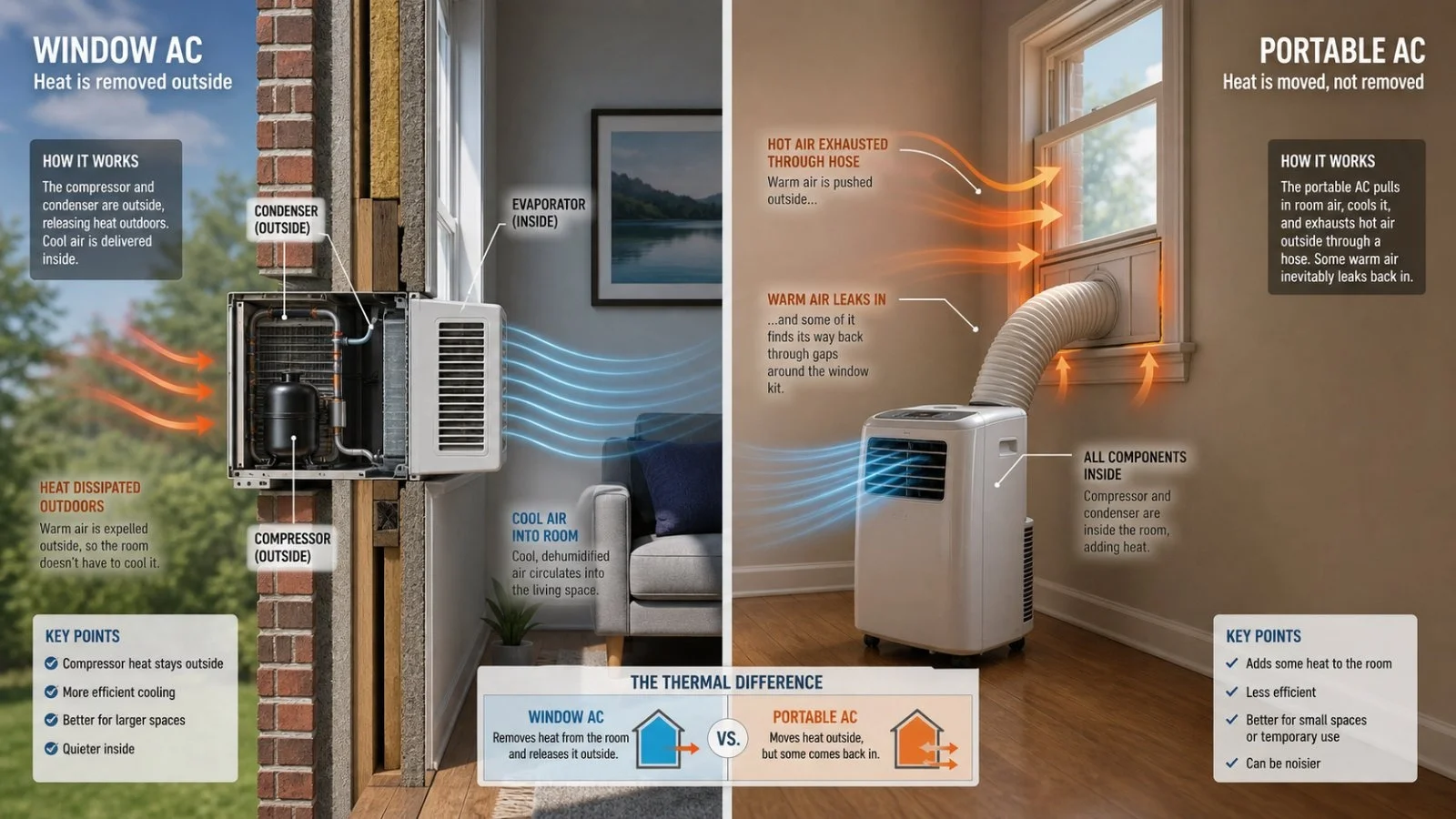
You don’t see as much energy wasted with a window AC since part of the compressor and condenser is out of the room. The heat is put outside right at the source, so there’s not as much loss in the process.
It’s something you can see when the meter turns. For a 1.5-ton window unit, you’re looking at 1.2 to 1.4 units an hour or so, give or take, based on its star rating and how hard you put it to work.
Portables are a different story because the whole apparatus is in your space. They have to vent hot air through a hose, and in doing so, they let some of the warm air in from around the doors and windows. The unit has to compensate. Most people who have used them will tell you they add up over time.
Cooling results you actually feel
When it’s a sweltering afternoon, a window AC will bring the temperature down in a way you can tell and keep it there. There aren’t as many hiccups in performance because the system isn’t at odds with the heat in the room.
A portable does fine in a small to mid-sized room. But if you have a bigger area or the day is particularly hot, you’ll find it has a hard time staying cool without running for long, power-sapping stints.
And don’t expect either to be silent. A window AC has the noise of the compressor to put up with. With a portable, there’s a hum in the background that can be a bit of a nuisance after dark.
Upfront cost and installation limits
A window AC will typically run you between Rs 30,000 and 40,000. Put one in if you have the right opening in the wall or window, which is why you still see them in most houses.
You’ll find portables in the same kind of price range, though with a bit more of a spread.
In India, you can find these for anywhere between Rs 22,000 and Rs 55,000. The price will vary with the brand and how much it can do; Voltas, Godrej and Blue Star are some of the more well-known options out there.
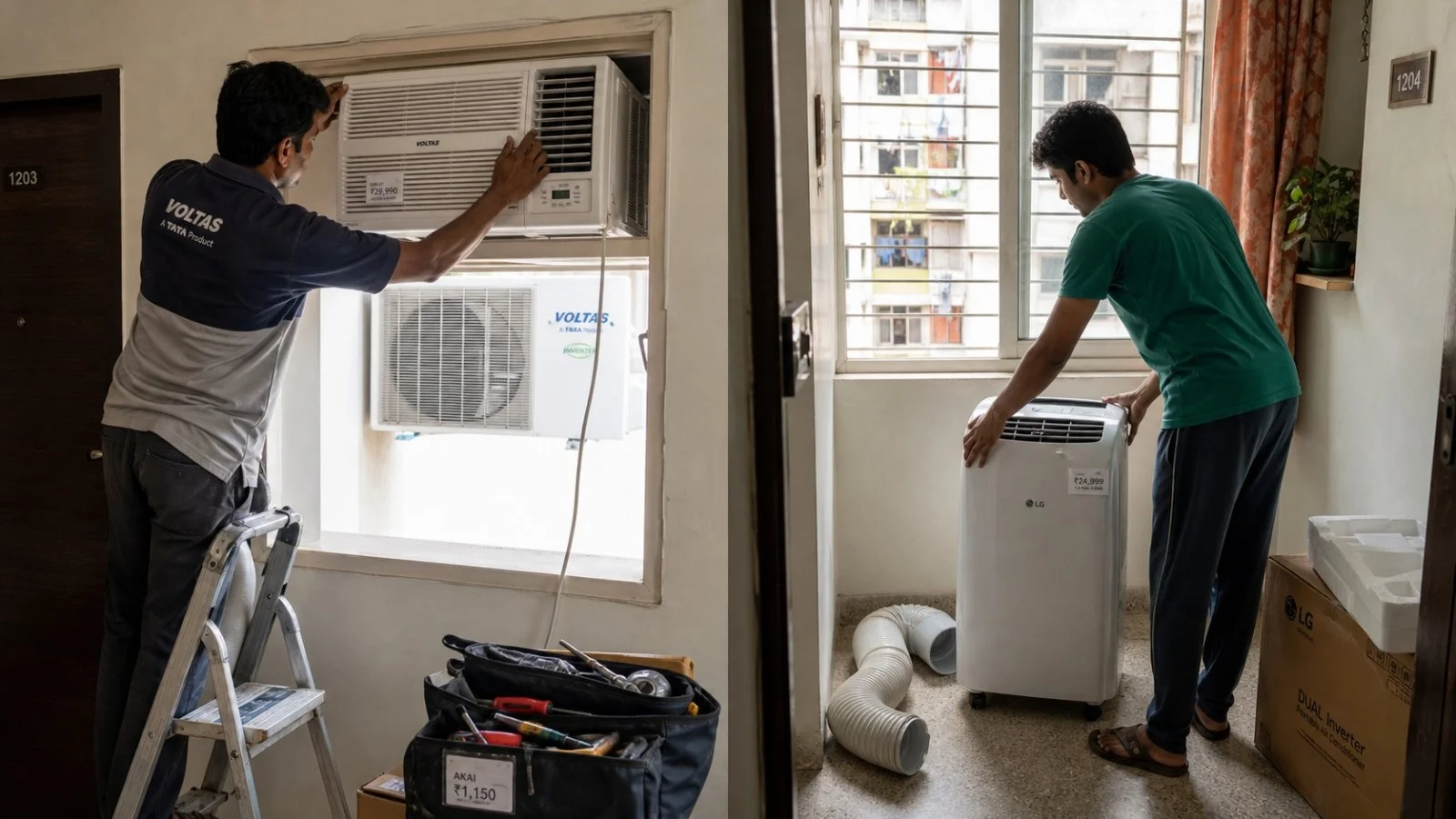
The idea is straightforward: put in no permanent fixtures, don’t have to drill, and you can move the thing from one room to another. But don’t be fooled into thinking they are as easy as a plug-and-play. You still have to make sure the exhaust hose is properly put up to a window or vent, otherwise you won’t get the kind of cooling you want.
Where you get your money’s worth in an average room
If you have a room in the 100 to 180 sq ft range, a 1-ton 5-star window AC from the likes of LG, Voltas or Blue Star will set you back around Rs 28,000 to 38,000. In most cases, you’ll see lower running costs with that setup than with a portable of the same tonnage.
Then there are the BEE star ratings, which are a good way to put a number on your annual power use ahead of time. Window units put those efficiency numbers to better use since the parts that put off heat are on the other side of the wall.
You may see a portable with the same sticker price, but not the same kind of energy profile. Since the intake and the hot air coming out are in the same room, you end up paying for the convenience at the meter.
Let your situation, not the brand, be the guide
How and where you plan to run the AC is what should drive the decision, not the name on the front. It comes down to: can you put in a fixed one, and how many hours a day is it going to be on?
A simple rule of thumb to make a call you won’t look back on:
– You own the place and have a spot for it: go with a window AC
– You need it on for six to eight hours or more: window is the way to go
– The landlord says no, or there’s no opening: you’ll want a portable
– Want to cool off in a few different rooms here and there: portable has the edge
For a room you’re in every day, the longer you have it running, the more the difference in efficiency shows. An eight-hour day with a portable will add up on your bill compared to a window unit. If you can do the installation, the value is on the side of the window model.
But if you are in a rental, the rules of the game are different. Your landlord might not be keen on holes in the wall, or the windows just aren’t right for it. A portable is a handy, no-argument way to get by without any trouble over deposits.
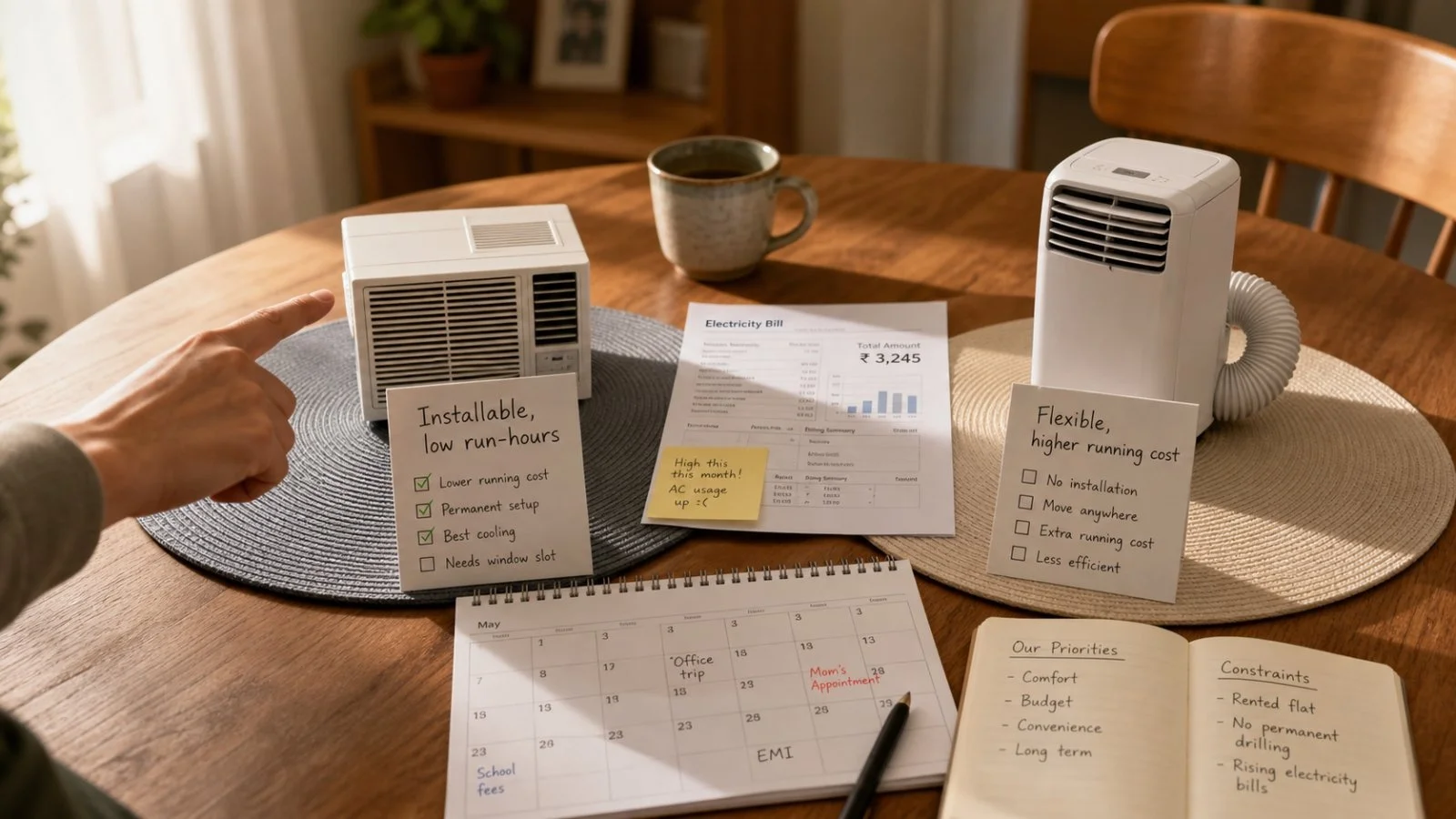
It’s not about a clear-cut winner, but what suits you. If you can install one, a window AC is the more reliable choice for hard-hitting cooling and keeping costs in check.
On the other hand, if you’re in a rented place, on the move, or can’t put a unit on the wall, a portable gives you some leeway. You give up a bit of efficiency for the ability to be flexible, and for some, that is worth more than a few rupees on the bill.