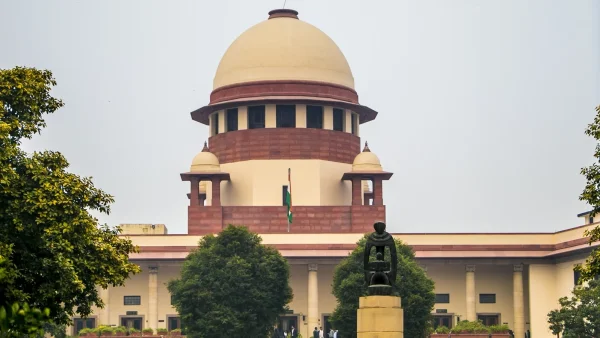
The highest court in India got involved when a trial court used AI-created – or ‘synthetic’ – judgements which didn’t exist, to make a decision in a disagreement. The Supreme Court, in a strong statement, said that using such things wasn’t just a mistake, but was wrongdoing which would have legal results. The court also hinted at a full look at artificial intelligence in making judgements.
Supreme Court Notices AI-Made False Judgements
Justices P.S. Narasimha and Alok Aradhe, on the court, noticed the trial court using AI-made ‘false or synthetic’ judgements. They gave a notice to the Attorney General, R. Venkataramani, the Solicitor General, Tushar Mehta, and the Bar Council of India, saying that the issue goes to the heart of how fairly cases are decided.
The court asked senior lawyer Shyam Divan to help as amicus. In its order of February 27, 2026, the court said that judgements based on judgements which don’t exist aren’t a mistake in deciding a case; they are wrongdoing, and someone must be held to account.
Background to the Case and What Happened When
The issue came up while the court was hearing a challenge to a January order by the Andhra Pradesh High Court in a civil case asking for an injunction. During the case, the trial court put an advocate-commissioner in place to write down the physical details of the land which was being fought over.
Those who were making the claim objected to the commissioner’s report. In August 2025, the trial court turned down these objections, using case law that the people making the claim later said was made up and AI-created. This was raised at the High Court on review.
The High Court said the judgements weren’t real, and warned against using such things, but still went on to decide the case on its own terms. It supported the trial court’s decision, causing the people making the claim to go to the Supreme Court. The highest court said it would hear the claim, and gave a notice.
Orders to Protect the Honesty of the Courts
While the special leave petition is being looked at, the Supreme Court has said that the trial court must not go on using the advocate-commissioner’s report. The case is now set for a hearing on March 10, 2026.
The court stressed that the things it was worried about were to do with the way cases are decided – not with the facts of the land disagreement – but with the process of deciding cases. The court’s action puts the honesty of the courts, legal accountability, and how reliable sources are, at the centre of the investigation.
More and More Worry About AI Use in Legal Papers
This comes after a separate hearing on February 17, 2026, where a court led by Chief Justice Surya Kant pointed to a growing habit of petitions being written with AI tools, which mention cases which don’t exist – including one called ‘Mercy vs Mankind’. This was in a public interest claim about political speeches.
Taken together, these signals from the highest court show a stricter view of artificial intelligence in courts. The message is clear: AI can help with research and writing, but it cannot take the place of checked legal authority, and it cannot excuse made-up references.
What This Means for Lawyers, Judges, and Those in Court
By giving a notice to the Attorney General, the Solicitor General, and the Bar Council of India, the Supreme Court has made this an issue for the whole legal system. The fact that the Bar Council is involved points to possible problems with how lawyers behave, and rules for punishing lawyers who depend on false judgements.
For judges, the order makes it more important to check sources and be careful when mentioning authorities. Trial courts may face new rules for making sure references are real, including having to check against official reports or allowed digital databases before depending on precedents.
What Happens Next and Possible Changes
The court’s looking at this could cause rules about using AI in court in a responsible way. Likely steps include lists for checking references, proof of truth from lawyers, and results for putting in made-up authorities. Training programmes on AI knowledge for judges and lawyers could also follow.
Courts may also look at technical safety, from tools to check references to safe links to official stores. Clear rules would help make a difference between AI-helped writing which is allowed, and unethical practice which harms the honesty of the courts.
While AI will go on to affect legal work, the Supreme Court’s action sets a clear line: artificial intelligence cannot be a way into false judgements. The coming hearings will shape how India balances new ideas in legal practice with the basic needs of correctness, ethics, and trust in the rule of law.