Zero-waste is no longer some fringe idea; it’s where we’re headed. And when you look for a blueprint, you’ll keep coming back to the same thing: the coconut. It’s a fruit that makes a circular economy work by converting one part into food, another into fuel, and so on, all while putting money in the pockets of the farmers and small-time operators in the tropics.
How the coconut sets the zero-waste standard
They don’t call it the tree of life for nothing. The reason the coconut is so hard to beat is that there is very little of any consequence left over for the dump. The industry has a way of making something of just about everything, and that is what has made it a staple in homes, on farms and in old ways of doing things.
There is a logic to it. A coconut product will go from your kitchen to a craft project to the compost with ease. You have biodegradability and a host of uses, plus the fact it is processed locally. Not many fruits can do all that without a lot of overhead or a tangle of waste to deal with.
Edible uses that cut waste at source
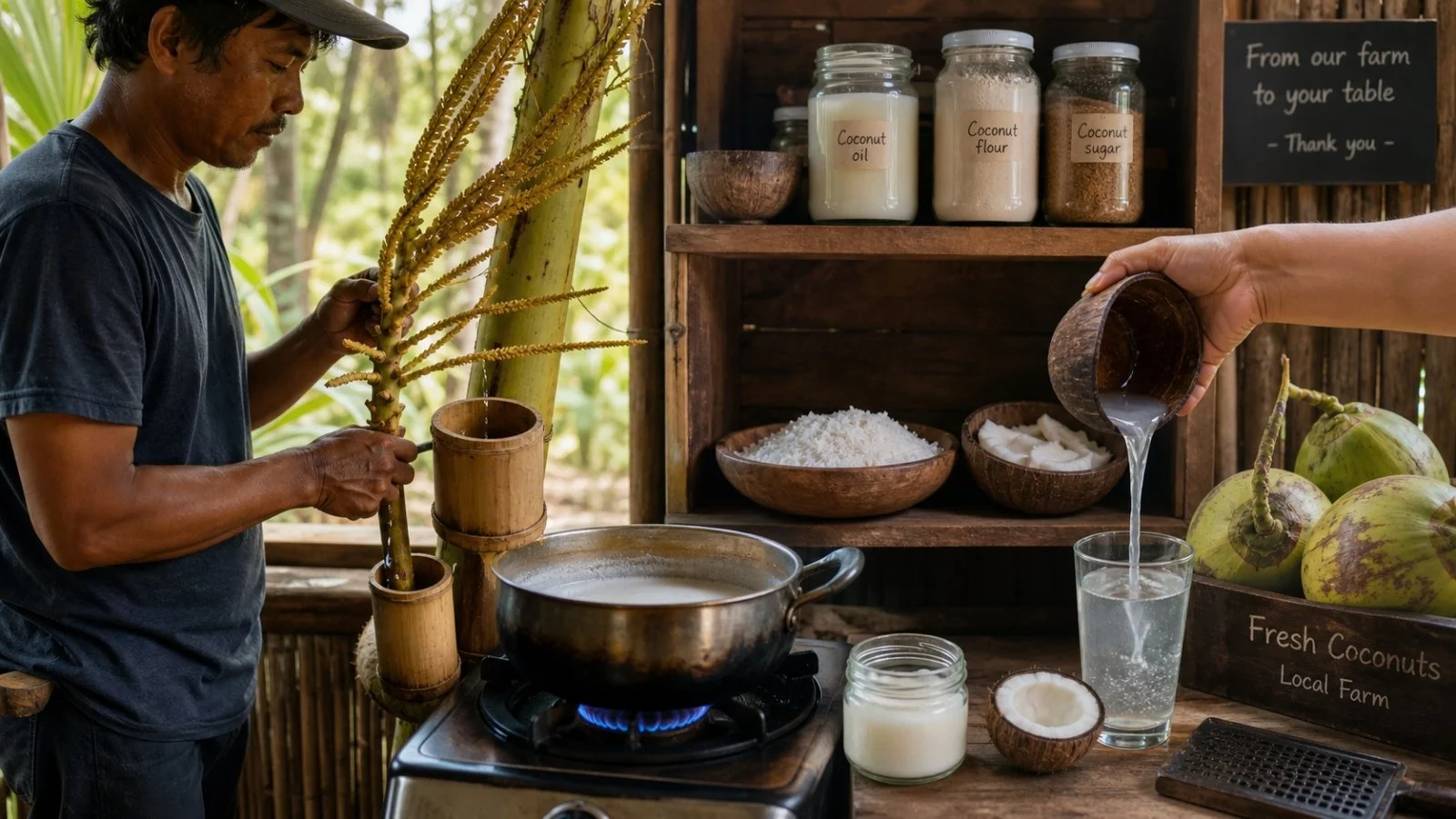
Then there is the matter of staying hydrated. The water in a young coconut is a natural well of electrolytes – potassium, sodium, magnesium. People have been drinking it to cool off or after a workout for as long as anyone can remember, and it makes a fine substitute for anything in a bottle.
The meat of the fruit is even more of a workhorse. Have it as it is, or put it through its paces to get milk, cream, oil, flour or desiccated coconut. It is in your sweet and savoury recipes for the fats, fibre and minerals it brings. In short, it means you can put more of the fruit to use before it goes bad.
Some farmers will also harvest the sap from the flower stalks. Out of that you can make sugar, syrup, vinegar or a tipple of some kind. Coconut sugar is having a moment as a nice, natural way to sweeten things, and it does so without adding to the waste pile.
If you want to see the food side of things in a nutshell:
– A single fruit gives you a drink and a larder full of options
– You can have it in a number of forms to last you
– When it is made locally, the value stays put
Natural materials to put in place of plastics and fossil fuels
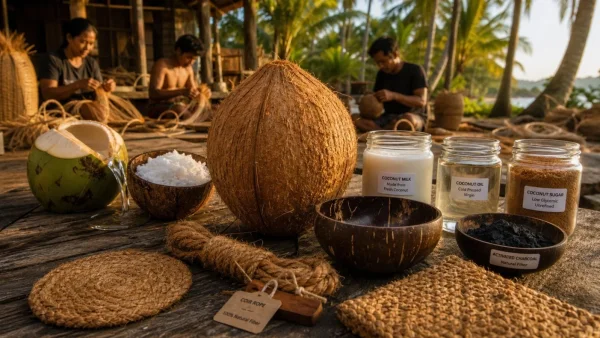
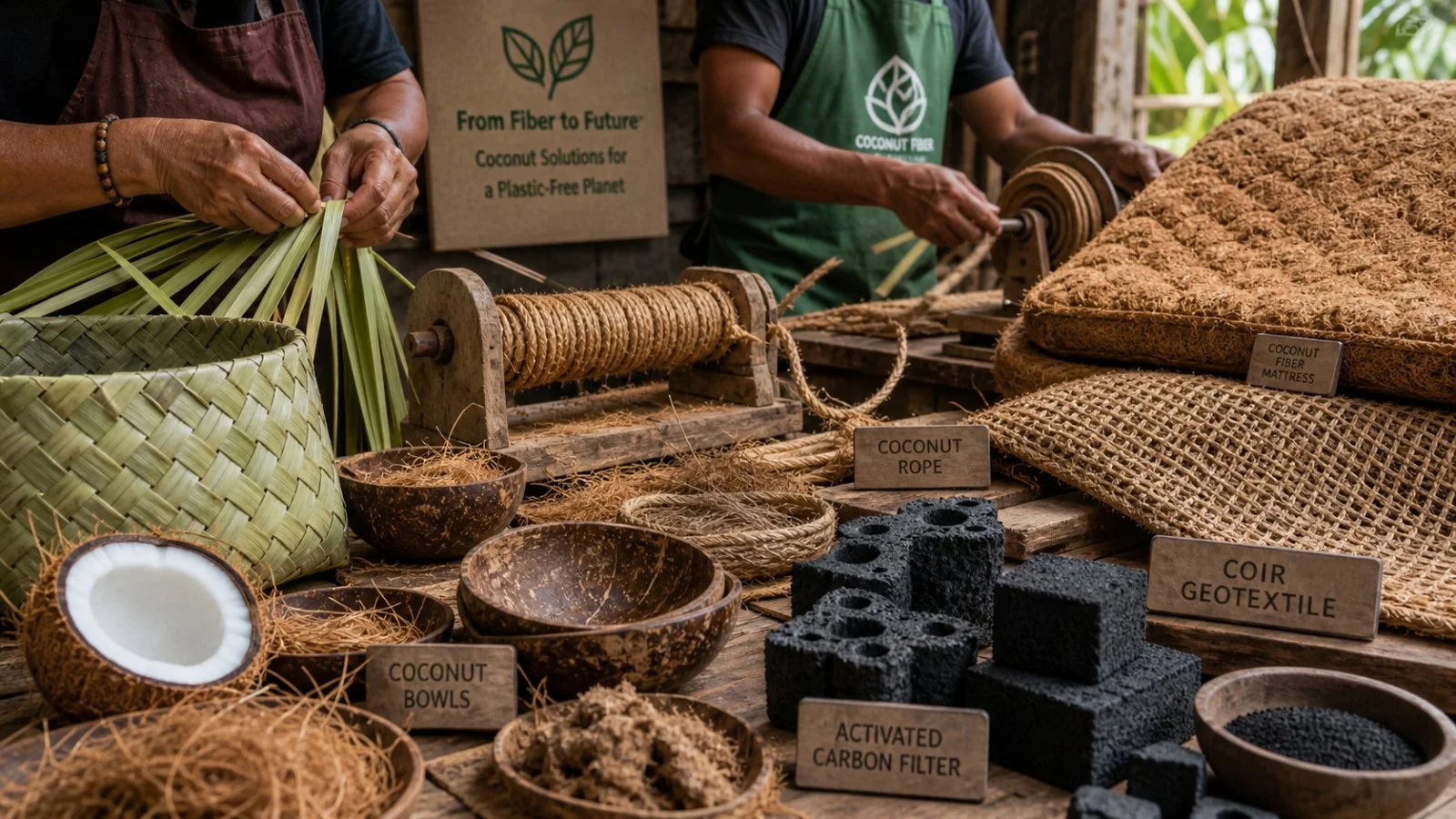
You don’t just throw away the shell. It can be made into a bowl, a spoon, a piece of decor, or even activated charcoal. We see it in our water filters and on the grill as a kind of second act for the shell, one that makes short work of synthetics and fossil fuels.
And the husk? That is where you get coir, a tough, biodegradable fibre. It is in your ropes, your brushes, your garden supplies. It is a sensible, non-toxic way to meet your needs with something that will break down when you are done with it.
Don’t forget the leaves. Up in the tropics they are made into baskets, thatch, mats and the like for a festival. They can be a fence or a quick shelter out in the country. Even a dried husk can be a cooking fire, with a smoky note that is hard to put past for roasting.
Design lessons from coconut-based materials
– Make a function of the fibre, then let it rot
– Let the shell be a utensil, a filter, or fuel
– Use the leaves for what you need and leave no trace
A tree that keeps giving, even at end of life
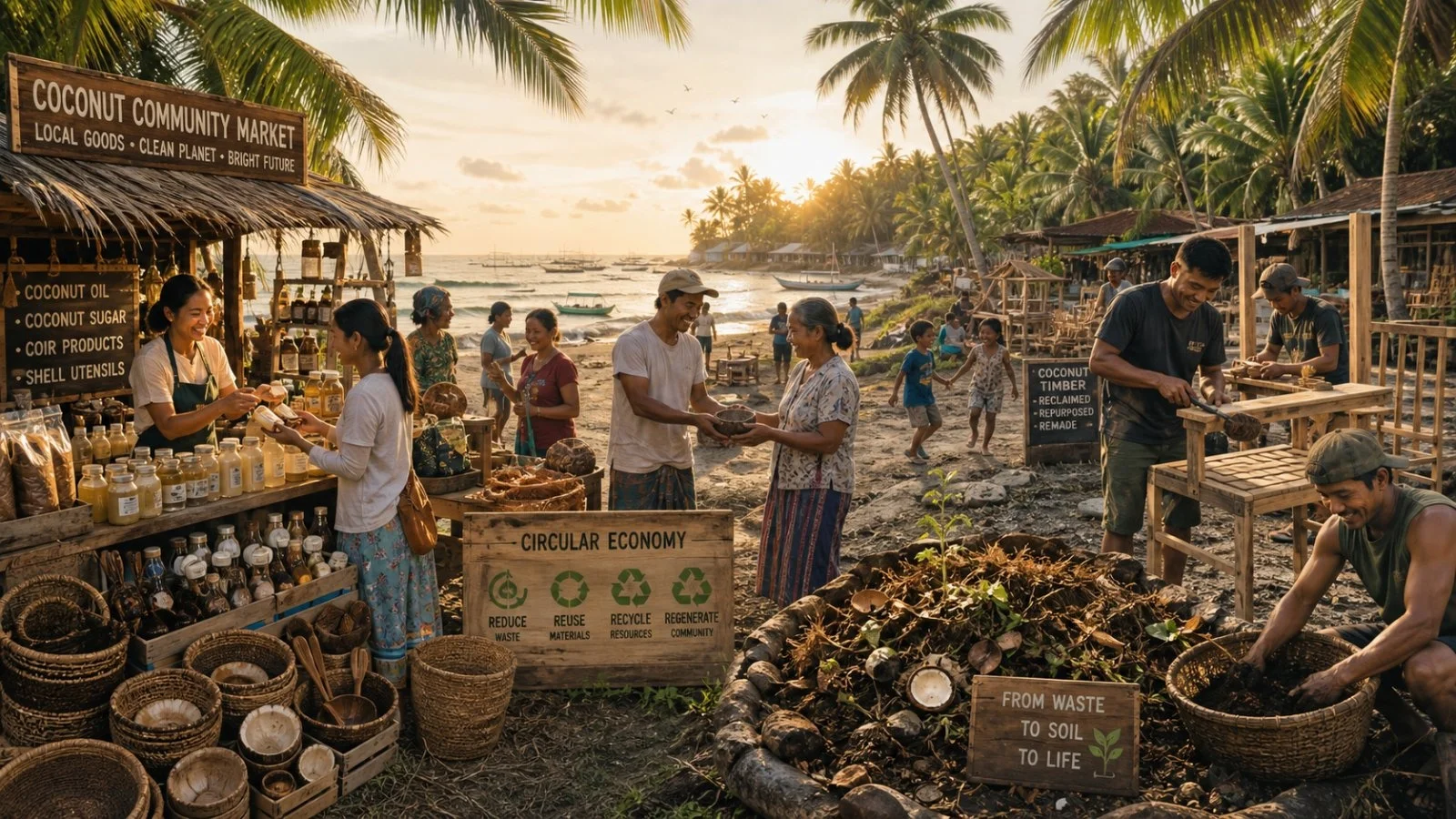
Once a tree has run its course, the trunk is not for the scrap heap. You can build with it – furniture, a floor, a bridge. It is a renewable option that takes some of the pressure off to go and get fresh timber from somewhere else.
It is also good for a fire. Trunk wood is what you put under a traditional stove or in an oven for some outdoor cooking. The tree has given you food and goods for years, and now it is time for it to be energy.
Why it matters now, and what comes next
The coconut is proof of how a circular system can play out. One crop and you have your drinks, your home wares, your textiles and your fuel. It is a way to live well and make do without a lot of fancy infrastructure.
There is no mystery to it. You feed people, you make a product, you don’t make a mess of it. The coconut is as close as you are going to get to a perfect example of zero-waste, and for that it is well worth the praise.