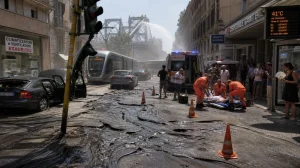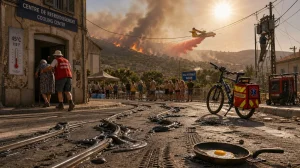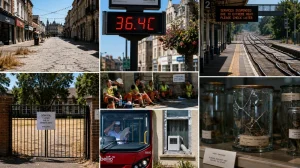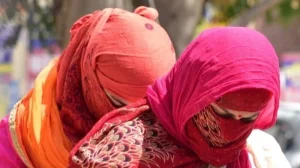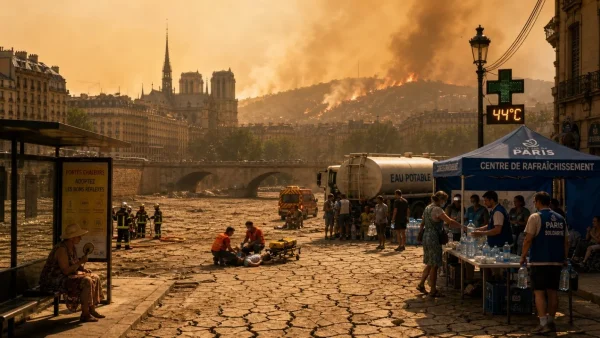
The record-setting heat in Europe is only just beginning to let up, but the consequences are mounting. You have 1,029 excess deaths in Spain in June alone, and you have countries like Hungary, Slovakia, Croatia and Austria where the records have been left in the dust. With over 95 million people set to see 35C or more in the coming days, it’s a matter of how fast Europe can adjust, not if.
Records fall as heat strain turns deadly
MoMo, the monitoring arm of Spain’s Health Ministry, has put 1,029 excess deaths down to the extreme heat in June – the most for a June since 2015. The AEMET weather service says the month was 3.2C hotter than it should be, putting it in second place for the hottest June in the books, right after 2025.
All over Central and Eastern Europe, old numbers were made to look small. In Szecseny, Hungary hit 42C to top its 2007 mark of 41.9C; in Budapest it was 41C. Slovakia put in 41C in Turna nad Bodvou one day and 41.3C in Kamenica nad Hronom the next. And in Split, Croatia, 39.5C was good enough for a new city high.
Austria had the longest June heatwave it has ever had. According to the national agency, the country was 1.4C above its usual self, with 66 stations making history and the mountains some 5C warmer than they have been of late. Sunday in Vienna was 40C, a fitting end to a sweltering few days.
Systems under pressure: water, power, and health
Since June 21, the WHO has tallied over 1,300 excess deaths in Europe. One post that did the rounds online put a fine point on the warning: while officials are dealing with blackouts, low water and transport hiccups, the cost in human lives is hard to ignore, as is the strain on everything from hospitals to funeral homes.
Hungary has put the squeeze on water use in 120-odd towns as reservoirs take a hit. Prime Minister Peter Magyar has called on people to do without – don’t wash the car, don’t water the grass. He’s also had his government work from home when they can and moved outdoor jobs to times of day when it’s less of an exposure.
Then there’s the energy side of things. In Ukraine, 35C to 38C has meant some hard-nosed emergency cuts for both homes and industry. “We’re at the limit of what we can do,” said Sergii Kovalenko, noting the grid is in poor shape and will be for the rest of the summer as they make repairs.
Why scientists say this is different
You won’t find any doubt from the World Weather Attribution team: this is the worst of it and it wouldn’t have happened in June if we hadn’t been fiddling with the climate. The numbers are still out there. After 190 million on Sunday and 130 million on Monday, another 95 million are in for 35C on Tuesday.
In Spain, the 23rd of June put some 35.7 million – 73 percent of the country – in the line of fire. Some 38 percent of them in the high-risk category. Officials will tell you that hundreds of local records have gone by the wayside in June, a sign that the bad heat is coming in early.
For close to two in five of us in Europe, it’s going to be over 30C as the hot spot moves around. But you can’t just cool down. Cities in Europe have their rules about noise and looks, and there’s a worry that if everyone cranks up the air con, we’re in for a permanent spike in energy needs.
Heat sparks cascading emergencies
When the grid gets pushed, you feel it on the other side of the border.
With record heat in the early part of the season, Poland has had to step in to keep its supply lines secure. PSE, the grid operator, has told producers to put out as much power as they can during the evening rush. It’s been a tight squeeze on reserves with the wind not being much help and air-conditioners running hard. On top of that, 17 people have drowned this past Sunday alone, according to officials.
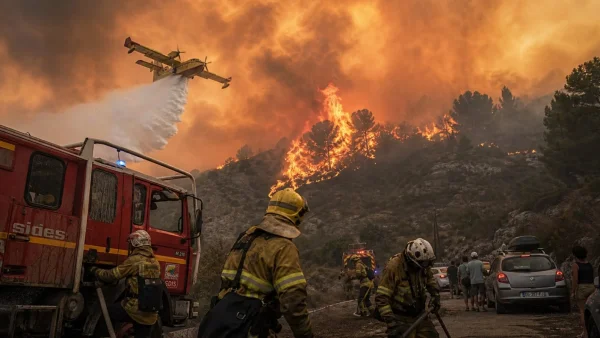
Over in the Balkans, the threat of wildfires is up with the mercury close to 40C. Belgrade hit 38.9C, making for the warmest June day in the city’s history. Firefighters in Bosnia and Herzegovina have been put to work on some blazes, and the rest of the region is on edge for more of the same as the dry, hot weather holds on.
Portugal is in crisis mode, with red alerts in force for Lisbon and Setubal. We’re looking at 44C in places like Leiria and Coimbra later in the week, and even the nights are unseasonably warm along some of the coast. The word from those in charge is that it won’t be over for at least a week.
How people and governments are responding
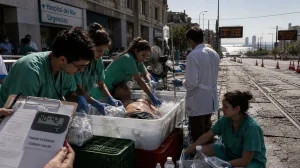
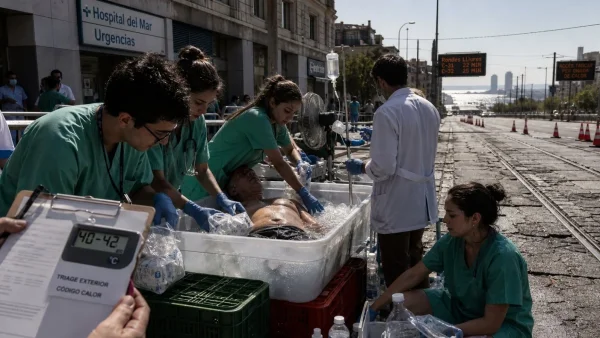
You’ll find folks in the hard-hit areas staying in out of the way when it’s at its worst. Where they can, towns have put up cooling centres. Outdoor jobs are being rescheduled, and while hospitals get ready for an influx of heat cases, health authorities are on the case with the usual advice: stay in the shade and drink up.
France is no exception. Public health numbers show over 1,000 extra deaths since the 20th of June, and the funeral homes in Paris can barely keep up. There were also blackouts in a few thousand homes in and around the capital. The Green Party is set to bring in a motion of no confidence against Prime Minister Sebastien Lecornu on the matter of how we were prepared.
The government has called it what it is: politics. And while the heat has let up for a moment, you can bet there’s another one on the horizon. One thing after another makes it hard for emergency crews to plan and recover; they don’t have time to catch their breath before the next wave.
When heat breaks, storms hit
Romania has seen some of the harshest weather. After days of 40C-plus, the night brought down some serious storms. In Bucharest, a tree came down on a car and a man was killed. All in all, there were 2,200 calls to emergency services, some 500 cars written off and 1,000 or so trees down. Rain left 20 counties under water.
Slovakia and the area around it have been in a bind with water. Some towns have put curbs on usage and in Nitra, you need a tanker to get your drinking water. With the kind of temperatures we’ve had, it’s an hour-to-hour job to make sure you have what you need.
All in all, the heatwave across Europe might be winding down a bit, but the effects are still piling up. The power is only as good as it looks, and our water is in short order. You have the firefighters and medics to deal with whatever the weather throws at them.
Travel shifts and what to watch next
People are still going on holiday, but in a different way. Rikant Pittie of EaseMyTrip says the heat is altering the manner of travel if not the fact of it. Some 15-20% of those coming in from abroad are heading to cooler climes to get out of the midday sun.
The shoulder months in Europe are having a moment. April through May and August to November are in vogue for the milder temps and to avoid the hordes. It’s the same sort of thinking we should have at home: we need to make our cities a bit greener and put up better defences.
For now, the experts are on the lookout for any new trouble. Whether it’s the long stretch of hot in Austria or the 44C we could see in parts of Portugal, the risks are back in a flash. The summer is only getting started, so they say to be on guard.