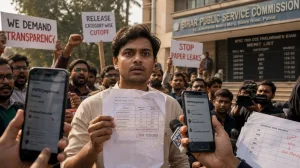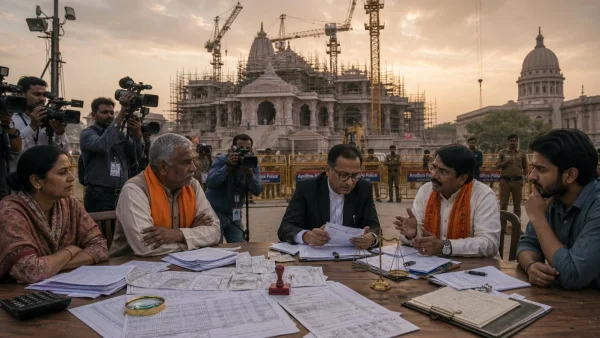
The construction of the Ram Mandir in Ayodhya, one of India’s most significant religious and cultural projects, has once again become the subject of public debate following allegations circulating on social media regarding its finances.
Posts online claim that documents submitted by an individual associated with the temple’s accounts raise questions about the project’s expenditure. Some posts further allege that the total spending was substantially higher than the actual construction cost and suggest financial irregularities.
At the time of writing, these allegations have not been established by any court or official investigative finding, and they should not be treated as proven facts.
What Is Being Claimed?
Social media posts and political commentary have alleged that:
The total expenditure on the project exceeded the estimated construction cost.
Questions should be asked about how donations were utilized.
Financial records deserve greater public scrutiny.
These claims have generated considerable online discussion. However, the figures and conclusions being circulated have not been independently verified through an official audit or judicial process.
Construction Cost vs. Project Cost
One important distinction often lost in online discussions is the difference between construction cost and overall project expenditure.
Large public or religious infrastructure projects may include costs beyond the main building itself, such as:
Land acquisition.
Site development.
Security infrastructure.
Roads and access improvements.
Utilities and drainage.
Landscaping.
Pilgrim facilities.
Administrative buildings.
Museums and cultural complexes.
Contingency and project management expenses.
As a result, comparing only the cost of the main structure with the total expenditure can produce a misleading picture unless the underlying financial records are examined in detail.
Why Transparency Matters
Projects funded through public donations inevitably attract close public attention.
Many governance experts argue that transparency helps build trust by making available:
Audited financial statements.
Annual reports.
Details of contracts and procurement processes.
Expenditure categories.
Independent audit findings.
Transparent disclosure allows legitimate questions to be answered with evidence rather than speculation.
Allegations Require Evidence
Accusations of fraud, kickbacks, or misappropriation are serious. Under the rule of law, such allegations require credible evidence and, where appropriate, investigation by the competent authorities.
Until verified by an official inquiry or judicial finding, they remain allegations—not established facts.
Equally, if concerns are raised by whistleblowers or individuals connected with a project, those claims should be examined through appropriate legal and institutional processes rather than accepted or rejected solely on the basis of social media posts.
The Bigger Issue
The controversy highlights a broader principle that extends beyond any single project.
Whether the project is a temple, mosque, church, hospital, university, or public infrastructure, organizations handling large sums of donated or public money are often expected to maintain high standards of financial accountability.
Public confidence is strengthened when questions about expenditure are answered through transparent records, independent audits, and lawful investigation where necessary.
The Bottom Line
The Ram Mandir is a project of immense religious significance for millions of devotees. Precisely because of its importance and the scale of donations involved, any questions about its finances deserve to be examined carefully, fairly, and on the basis of verifiable evidence.
Public debate plays an important role in a democracy, but so do due process and factual accuracy. Distinguishing between allegations, verified findings, and speculation is essential to ensuring that accountability is pursued without compromising fairness.