India’s aspiration to become a $5 trillion economy is back in the spotlight after Finance Minister Nirmala Sitharaman reportedly said the country is on course to achieve the milestone by 2029.
For many observers, however, the announcement has revived an old question rather than answered a new one.
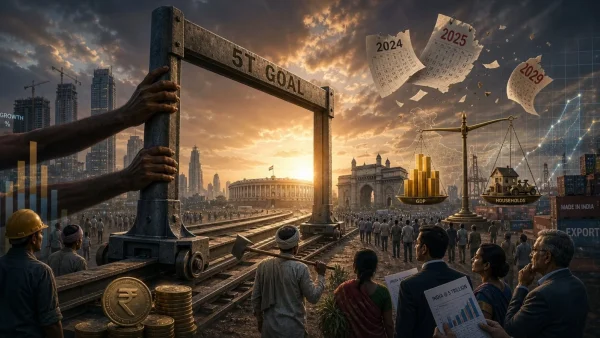
This is because the $5 trillion target has been associated with multiple timelines over the past several years. Initially projected around 2024-25, the goal has gradually shifted as economic realities evolved, including the impact of the COVID-19 pandemic, global inflation, geopolitical tensions, and slower-than-expected global growth.
The controversy today is not about whether India can become a $5 trillion economy. Most economists believe it eventually will. The debate is about when, how, and whether repeatedly revising timelines weakens public confidence in long-term economic promises.
A Timeline That Keeps Moving
The ambition itself is not new.
Over the years, policymakers have repeatedly described the $5 trillion economy as a major national objective.
However, several developments altered the economic landscape:
The COVID-19 pandemic caused one of India’s sharpest economic contractions in decades.
Global supply-chain disruptions affected manufacturing and exports.
Russia-Ukraine conflict contributed to inflation and higher energy prices.
Slower global demand impacted trade and investment.
Each of these events made the original timeline more difficult to achieve.
Supporters argue that revising targets in response to extraordinary global events is practical policymaking.
Critics counter that ambitious deadlines should be accompanied by transparent explanations when they are missed.
The Debate: Target or Goalpost?
The renewed announcement has reignited a familiar political argument.
Critics ask:
If a target is repeatedly postponed, does it remain a target?
Should governments publicly explain why previous timelines were not achieved?
How should success be measured—by announcements or outcomes?
Supporters respond that economic planning is dynamic and that long-term national goals inevitably evolve in response to changing domestic and global conditions.
They argue that the destination remains unchanged even if the route takes longer than expected.
What Does a $5 Trillion Economy Actually Mean?
The phrase has become a popular political slogan, but it simply refers to the size of India’s Gross Domestic Product (GDP) measured in US dollars.
Reaching the milestone would place India among the world’s largest economies.
However, economists point out that headline GDP tells only part of the story.
Equally important indicators include:
Per capita income.
Employment generation.
Manufacturing growth.
Productivity.
Inflation.
Household purchasing power.
Income inequality.
A larger economy does not automatically translate into improved living standards for every citizen.
Growth Story Versus Everyday Reality
India remains one of the world’s fastest-growing major economies.
The government points to:
Strong infrastructure investment.
Expanding digital economy.
Growth in manufacturing.
Rising exports in several sectors.
Record tax collections.
Increased foreign investment in key industries.
At the same time, critics argue that challenges remain, including unemployment, rural distress, uneven consumption, and the need for higher private investment.
Both perspectives can coexist: an economy may grow rapidly while still facing structural challenges.
The Accountability Question
Large national targets are designed to inspire confidence and guide policy.
But they also invite scrutiny.
When milestones are revised, many economists argue that governments should explain:
Why earlier timelines were missed.
What assumptions changed.
What policy adjustments are being made.
Whether the revised timeline is based on updated economic projections.
Transparent communication helps maintain credibility, especially for long-term economic planning.
A Little Economic Irony
The $5 trillion goal has become something of a recurring headline in Indian public discourse.
Each new target date generates optimism.
Each missed deadline generates debate.
And each revised timeline raises the inevitable question:
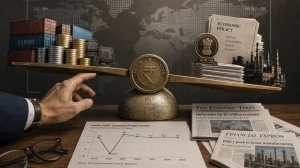
Is the economy chasing the target—or is the target running just ahead of the economy?
The answer depends on perspective.
For supporters, the changing timeline reflects resilience in the face of extraordinary global disruptions.
For critics, it reflects the need for greater accountability in public promises.
The Bigger Picture
Whether India reaches the $5 trillion mark in 2029 or later, the larger question extends beyond a single number.
Economic success will ultimately be judged not only by GDP rankings but by whether growth creates better jobs, higher incomes, stronger public services, and improved quality of life.
Targets matter because they provide direction.
But in a democracy, progress is measured not just by setting ambitious milestones—it is also measured by openly evaluating why they are achieved, delayed, or revised.
That conversation is likely to remain just as important as the $5 trillion figure itself.