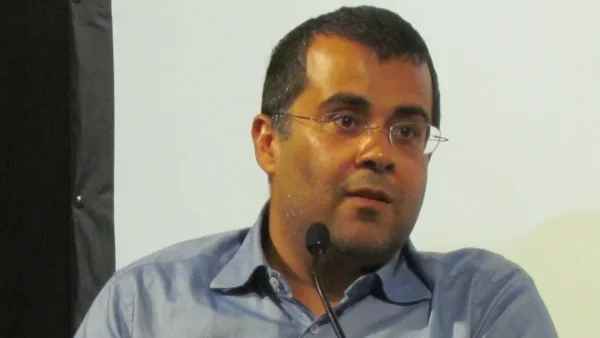
“We didn’t even spare Ram.” That was the powerful message in author Chetan Bhagat’s recent column, where he reflected on allegations of irregularities involving donations at the Ayodhya Ram Temple. His point was simple yet unsettling: when people begin to believe that corruption can enter even the holiest of places, the problem is no longer just about money—it is about the erosion of trust.
The Ayodhya Ram Temple is not an ordinary place of worship.
For millions of Hindus, it represents faith, sacrifice, history, and the fulfillment of a decades-long movement. The temple was built with contributions from countless devotees who donated not for profit or politics, but out of devotion.
That is why any allegation involving temple donations becomes more than a criminal investigation. It becomes a test of public faith.
Faith Is Sacred. Administration Must Be Accountable.
Let’s be clear.
If an individual has stolen from the temple, that person should face the law.
If the allegations are false, they should be disproved through a transparent investigation.
Either way, the truth should emerge through evidence—not political slogans.
The biggest danger is not the allegation itself.
The biggest danger is allowing people to believe that even God cannot protect offerings made in His name.
Is the Government Responsible?
Opposition parties have questioned whether there was adequate oversight of one of the country’s most important religious institutions. They have demanded transparency, independent scrutiny, and answers about how such alleged irregularities could occur.
The ruling establishment, on the other hand, has maintained that wrongdoing—if established—should be dealt with through investigation and legal action, while cautioning against using the controversy to undermine the significance of the Ram Temple itself.
At present, there is no public evidence that the government itself was involved in any alleged theft.
However, governments are responsible for ensuring that institutions handling public donations operate with transparency and accountability.
When a temple receives contributions from millions of citizens, oversight is not an attack on faith—it is a way of protecting it.
Stolen in the Name of God?
History offers uncomfortable reminders that thefts and financial irregularities have occurred at religious institutions across India, irrespective of religion.
Temple donation boxes have been looted.
Ancient idols have been stolen and smuggled abroad.
Gold ornaments have disappeared.
Land disputes have emerged.
These incidents reveal an unfortunate reality:
Criminals do not distinguish between sacred and ordinary property.
Money donated in the name of God can become a target if governance is weak.
That is why transparency matters.
Who Really Loses?
Some people may have illegally gained financially if the allegations are ultimately proven.
But the biggest loser is neither the government nor the opposition.
It is the ordinary devotee.
The elderly woman who quietly donated ₹51.
The farmer who contributed despite financial hardship.
The family that believed every rupee would serve a sacred purpose.
When trust is shaken, everyone loses.
Politics Will Inevitably Follow
The Ram Temple has long been one of the BJP’s most powerful political and cultural symbols.
Any controversy surrounding its administration naturally becomes political.
The opposition is likely to argue that institutions celebrated as symbols of good governance must also meet the highest standards of accountability.
The ruling party is likely to emphasize that allegations against individuals should not be used to question either the temple or the faith of millions of devotees.
Both narratives will compete in the public sphere.
Ultimately, voters will decide which they find more convincing.
Will It Matter in the Uttar Pradesh Election?
It could.
But probably not because of the allegations alone.
Its political impact will depend on how the issue is handled.
If investigations are transparent, facts are made public, and anyone found guilty is punished, the controversy may gradually fade.
If the matter appears opaque or politically influenced, it could become a talking point in future campaigns.
In politics, perception often travels faster than proof.
What Should Happen Now?
This controversy should become an opportunity to improve governance at all major religious institutions.
Why not introduce:
Independent annual financial audits.
Public disclosure of donation income and expenditure.
Digital tracking of major donations.
Stronger internal controls.
Regular public reporting.
Such measures would strengthen public confidence, not weaken religious institutions.
The Internet, As Always, Had Something to Say
“People donated to Lord Ram. They didn’t donate to someone’s retirement plan.”
“Even donation boxes now need CCTV, accountants, and perhaps a chartered devotee.”
“Lord Ram defeated Ravana. Today’s challenge is defeating corruption.”
“Faith is priceless. Accountability shouldn’t be optional.”
“The temple doesn’t need politics. It needs proper bookkeeping.”
Humour reflects public frustration—but behind the jokes lies a serious concern.
The Bigger Question
The issue before India is larger than one investigation.
Can institutions built on faith also become models of transparency?
Can governments ensure accountability without politicizing religion?
Can opposition parties demand answers without turning faith into an election slogan?
The Ram Temple belongs to millions of devotees, not to any one political party, government, or opposition.
Its sanctity should be protected not only by prayers and rituals, but also by honesty, transparency, and accountability.
Because stealing money is a crime.
But stealing public trust is a far greater loss.
And if even a temple dedicated to Lord Ram raises questions about governance, then perhaps the real audit India needs is not just of accounts—but of the systems entrusted with protecting them.