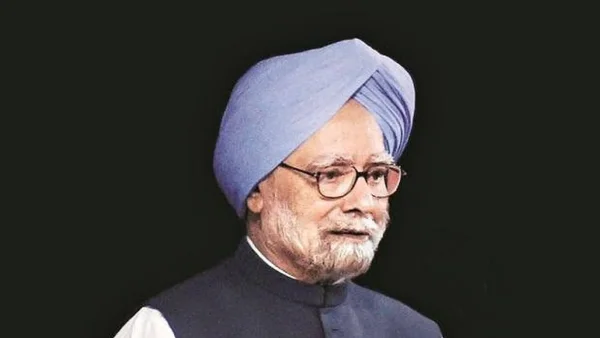
A 2012 press conference featuring then Prime Minister Dr. Manmohan Singh has resurfaced on social media, reigniting a debate over political accountability and how India’s top leaders respond to allegations while in office.
During the interaction, a journalist asked Dr. Singh about allegations related to the coal block allocation controversy, commonly referred to as the “coal scam.”
Responding to the question, the then Prime Minister said:
“I am not above the law, and if the CBI or anyone wants to ask me, I have nothing to hide at all.”
The clip has gone viral once again, with many users praising the statement as an example of a Prime Minister directly responding to questions on a major political controversy.
The Coal Allocation Controversy
The coal block allocation issue was among the most politically contentious controversies during the UPA government’s tenure.
The opposition at the time accused the government of irregularities in the allocation process, while the UPA defended its decisions and rejected allegations of wrongdoing.
The controversy eventually led to investigations, judicial scrutiny, and intense political debate, becoming one of the defining issues of that period.
Why the Video Is Trending Again
The renewed circulation of the video has less to do with the coal allocation controversy itself and more with the broader question of public accountability.
Many social media users argue that the clip reflects a willingness to face difficult questions directly rather than avoiding them.
Supporters describe the moment as an example of democratic transparency, while critics note that responding to questions is only one aspect of accountability and that governments should ultimately be judged by institutional outcomes.
Accountability or Political Nostalgia?
The viral clip has also triggered comparisons between political communication styles across different governments.
Facing Questions vs Managing Narratives
Political analysts say democracies function best when leaders engage with the media, answer uncomfortable questions, and allow institutions to investigate allegations independently.
Whether such exchanges are common enough today has become part of the online debate.
As one constitutional expert observed:
“Accountability is measured not by the absence of allegations, but by the willingness of institutions—and leaders—to answer questions.”
Social Media Reactions
The resurfaced video has generated thousands of comments.
One user wrote:
“Agree or disagree with his politics, but he didn’t dodge the question.”
Another commented:
“A press conference where journalists asked tough questions without reading from cue cards—that itself has become a topic of discussion.”
One political observer remarked:
“The statement doesn’t decide guilt or innocence, but it does show confidence in due process.”
Sarcasm and Online Humour
As often happens with political videos, social media also responded with satire.
One viral comment read:
“Back then, the headline was the answer. Today, sometimes the headline is whether there’s a press conference.”
Another user joked:
“Question asked. Question answered. Sounds simple—apparently, that’s what made it trend.”
A third wrote:
“Archive videos are becoming the new opposition.”
These comments reflect opinions and humour shared online and should not be interpreted as factual assessments of any current or former government.
The Larger Debate
The resurfacing of the 2012 clip has reopened an enduring political discussion: What does accountability from elected leaders look like?
For some, it means appearing before the media and answering difficult questions directly.
For others, accountability extends beyond press conferences to include transparent investigations, parliamentary scrutiny, judicial oversight, and public disclosure.
Regardless of political affiliation, the debate underscores a broader democratic principle—that citizens expect their leaders to be answerable when serious questions are raised.
As the video continues to circulate, it is prompting not only memories of a past controversy but also fresh conversations about the standards of accountability expected from those in public office.