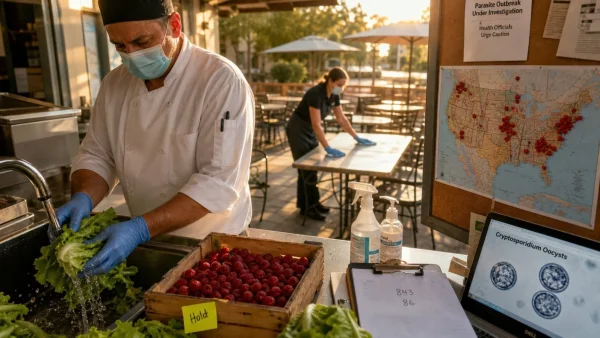
It is the kind of thing that can put a damper on summer dining: a parasite responsible for what some call ‘explosive diarrhoea’ is making its way across the country. Michigan has been the worst of it, with businesses in a hurry to be more careful with food safety. According to those in the know, cyclosporiasis has made an appearance in 31 states and put 86 in the hospital, and the numbers could go up as they verify hundreds of other reports.
The national picture: confirmed cases and a growing backlog
From 1 May to 9 July, the CDC has 843 cases of cyclosporiasis on the books. On top of that, there are 1,500 or so illnesses in the pipeline for review before they can be called confirmed.
We have not seen any deaths to date. For the time being, officials are looking into whether a single type of food is to blame for the infections.
Where cases are climbing
In a span of two weeks, Michigan has seen more than 1,000 diagnoses, putting it at the top of the list. New York is next with close to 300, per state health data from 8 July.
Then you have Ohio with 177. In Illinois, public health put the number at 141 on 7 July and would call it above average for the state.
Why Michigan is on high alert
Faced with the uptick, the health department in Michigan is telling restaurants and commercial kitchens to be more rigorous with their produce. The word is to give leafy greens a good wash, strip down the outer leaves of lettuce and green onions, and cook them if one can.
They will be the first to tell you there is no medical proof these actions will do away with the parasite, but they are a way to lower the odds while they look into it.
How the parasite spreads and what it does
At its core, cyclosporiasis is an intestinal problem brought on by a microbe called Cyclospora cayetanensis. You get it from ingesting something – food or water – that has been compromised. The CDC says it is not as prevalent as E. coli or salmonella and is not typically a matter of life and death.
It is not one of those bugs that goes around from one person to another. Some don’t even get sick. For others, it means a lot of running to the bathroom; the CDC has described the bowel movements as frequent and at times explosive.
You might also deal with a fever, nausea, a loss of appetite or weight, and general weariness. Left to its own devices, it can run its course for a few days or well over a month, with the possibility of a relapse.
What you can do now
There is no point in waiting for the source to be found. Health agencies are suggesting some straightforward precautions for the home and the workplace. They won’t guarantee anything, but they help:
– A thorough wash for all your fruits and veg
– Stick to safe, clean drinking water
– Be strict with hygiene in the kitchen
– Make sure fresh items are properly prepped in any restaurant or kitchen
Should the diarrhoea not let up, or come with a side of fatigue and weight loss, it is best to see a doctor. Getting in early can make for a shorter ordeal and stave off dehydration.
Why this matters for summer dining
When you are in the mood for a warm-weather meal, you are likely to have some fresh produce on the plate, which means more risk if there is any taint in it. With 31 states involved and 1,500+ cases in the works, being a bit particular about how you handle your greens is only sensible.
The bottom line for now: 843 confirmed, 86 in the hospital, zero dead. Public health is on the case to put a stop to a parasite that has made a normal dinner a worry for many.