May 4th is the final day of this election period as counting begins for these five elections which have the potential to completely change the political situation, even outside of the states themselves. With the votes locked away and security increased, and parties making their last statements, the outcome in West Bengal, Tamil Nadu, Assam, Kerala, and Puducherry will show what people think of those in power and the general feeling of the country.
What is at stake on May 4
This busy election period comes down to a single day of results. After a record number of people voting and a lot of heated arguments during the campaign, the outcome will decide not just who runs the states, but also what people will be saying in the coming months.
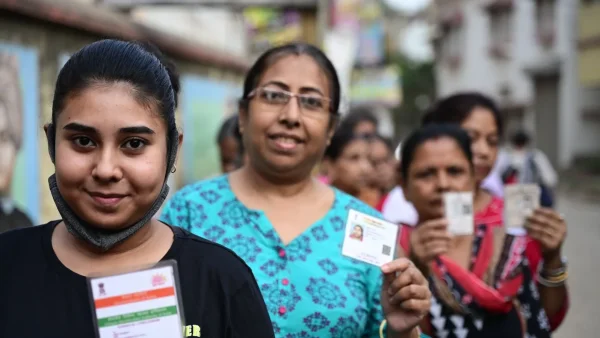
All the parties have said that people are voting to give their opinion on how the government is doing, how stable things are, and what people feel their identity is. The results will be looked at to see what they say about how many women voted, how people feel about the current government (are they against them), and how much people are being influenced by groups of parties working together locally.
Security, systems and scrutiny
The electronic voting machines (EVMs) are in strongly secured rooms, and election officials say the process is still very safe. The Election Commission says all the machines are ‘safe and secure,’ although the opposing sides claim things haven’t been done correctly.
Tamil Nadu is using a three-layer security system and QR codes to check who people are at the counting centres for the first time. In Kolkata, important officials from the CRPF checked the strong rooms at Netaji Indoor Stadium as party workers gathered outside the counting centres to ‘protect’ the EVMs.
Using technology like broadcasting the count live on the internet and using QR codes to get into places shows the process is changing. However, claims and counter-claims continue to make people question how much they can trust the people in charge of the count.
Allies and rivals set expectations
The final hours before counting brought a flood of claims and counter-claims. Here is where key players stand:
– BJP leaders forecast wins in Assam and Puducherry
– Congress leaders predict a decisive mandate against incumbents
– Regional leaders defend their turf and unity
Piyush Goyal, a minister in the national government, said that the BJP will definitely win in Assam and Puducherry. Pawan Khera, from the Congress party, said they are totally sure people will clearly vote against the current, and (he says) unfair, governments.
State-by-state dynamics
Tamil Nadu
Most people think the DMK-led alliance will stay in power. Thol. Thirumavalavan, the leader of Viduthalai Chiruthaigal Katchi, said the DMK-led alliance will win a clear victory and form the government with a large majority. He said there are no problems within the alliance and that its members are united.
The preparation for the counting has been very careful. In Ranipet, the EVMs were sorted by which area they came from at Arignar Anna Government Women’s Arts College, and who is allowed to enter was checked. A high number of voters has increased the idea that things are going well for the current ruling group.
Assam
The BJP wants to be in power for another term and are saying this vote is about continuing in the same way and protecting the culture of the government of Himanta Biswa Sarma. Leaders of the opposing parties say that problems with the government and claims of corruption could make people vote for them.
Aminul Islam, an MLA, said they are hopeful that the Congress will win by a large amount…people have rejected corruption and are trusting a clear leader. More women than men went to the polling stations, and parties are watching this trend carefully.
Kerala
Kerala's election is historically important. The Left Democratic Front are trying to be in power for two terms in a row, which hasn’t happened in a state that usually alternates between governments. The results of the exit polls are divided, and both sides are nervous.
Opposition leaders have said that the BJP won’t be successful. Imran Pratapgarhi said that the BJP won’t be forming a government in any of these five states. A high number of voters, especially women, shows that people are very involved in the election.
Puducherry
Puducherry, a smaller territory, is strategically very important. It’s had one of the highest numbers of people voting, and the competition between the BJP-led NDA and the Congress-DMK alliance is being watched to see what it says about how the alliances are working.
Both sides are trying to get more support. The BJP wants to become more widespread, and the Opposition wants to get back ground through working together in their campaigns and forming local alliances.
West Bengal
The most heated competition has kept its most controversial part for the day before the count. The Election Commission has ordered a recount in all 285 voting areas of the Falta area, because of ‘very serious problems with the election and the breaking down of the democratic process.’
This decision has caused a lot of strong reactions. Abhishek Banerjee of the TMC has asked for someone to be held responsible. BJP leaders have said that the criticism from the Opposition is based on their own ego. Imran Pratapgarhi, a Congress MP, asked, ‘If, even with over 250,000 security forces from the centre, a recount has to happen, what could be more embarrassing for the Election Commission?’
The TMC think they will easily get back into power. Kunal Ghosh, a party leader, said Mamata Banerjee will come back with more than 200 seats, and criticized the poor facilities for the people watching the count. The BJP has connected with people on a spiritual and political level. Suvendu Adhikari said he prayed at the Lakshmi Narayan Temple. He believes God is on their side. A government that protects the interests of Sanatan Dharma (a religious tradition) will be in power.
Conflicting claims, converging timelines
Both sides have very high hopes. Sanjay Seth, a minister in the national government, said the lotus (the BJP’s symbol) is growing all over the country and is spreading even faster. Opposition leaders say that people being against the current government and the strength of the alliance will be successful.
The Election Commission, which is being watched closely, has said the count will be ‘free and fair’. We will have to see if that is true, based on what happens on the ground and how sensitive areas are handled.
What to watch as counting begins
Several signals will shape the day’s narrative as results arrive seat by seat:
– Repolling impact in 285 Falta booths
– Security frictions around strong rooms
– Women’s turnout influencing margins
– Exit poll alignment or divergence
The count will show if a large number of people voting means things will stay the same or change. In West Bengal, watching the early results will set the tone for the day. In Tamil Nadu and Assam, how many votes each side gets will prove whether the claims of the government are correct.
Kerala’s pattern of alternating governments is being put to the test. The outcome of Puducherry will show how well the alliances are holding together. Each part of the results will add to the larger story: are the areas becoming more separated or coming together around clearer ideas?
The road after the verdict
The governments that are formed from this vote won’t have much time to settle in. Continuing the administration, how the budget is spent, and managing the alliance will be the next things to fight over once the numbers are final.
For the national parties, how things go on May 4th will be important for these states and for the future. Whether the result is clear or confusing will influence their plans, what they say, and which parties they work with in the political calendar to come.
By the end of the counting day, the tension in these areas will be over and we will have answers. Whether the current governments stay in power or people vote for a change, the effects will be felt far beyond the state capitals.