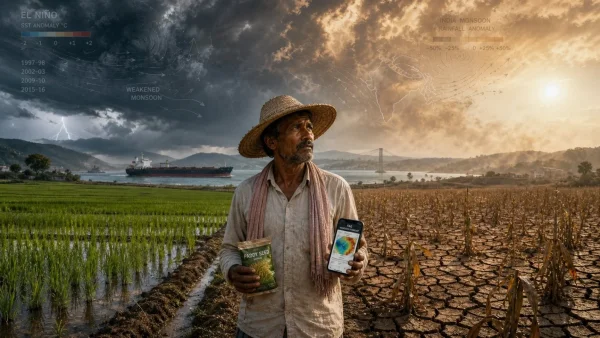
It’s a fresh kind of weather risk. With the FAO sounding the alarm that El Nino could dampen the monsoon, you have to wonder how it will hold up during the kharif window. If the rains don’t come through, it’s not just the fields that feel it – there are spillover risks for prices and imports, and for those who make their living from the land.
Why this El Nino warning is top of mind
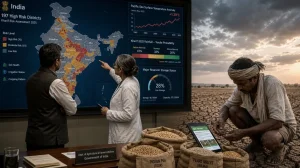
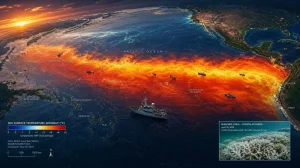
We’re in a new phase of El Nino, and the FAO sees it as a force that can blunt the summer monsoon over a good part of India. You end up with less rain and drier ground right when paddy and maize need it.
And the agency doesn’t see this as an isolated problem. In Asia at least, the ripples can be felt in trade and the world’s food supply.
India’s monsoon: the facts behind the forecast
To put some numbers to it, the FAO has been looking at 41 years of satellite data to see where a hard El Nino has led to agricultural drought before. They say what happens in India is worth a close look.
The record is a bit of a downer. Back in 2015-16, India saw its maize take a 4 per cent hit and rice 1 per cent. Over in Southeast Asia, they were out 15 million tonnes of rice or so, which put pressure on importers and sent prices up.
Then you have the World Meteorological Organization calling for a more robust monsoon. For anyone making policy or tilling the soil, that kind of mixed messaging is why you have to plan for the unexpected.
A broader swath of dry land in Asia
According to the FAO, the drought danger is anything but local. It runs from Pakistan and India, through Myanmar, Thailand, Cambodia and Vietnam, all the way to the Philippines and Indonesia. Tens of millions in South and Southeast Asia could find their means of support and access to food under strain.
You’ll see the steepest impact where people are least able to absorb it. The FAO puts it at 80 per cent of the damage going to low- and middle-income nations.
Lessons from past El Ninos
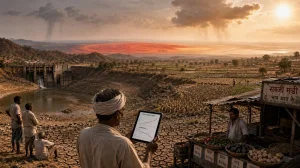
If the rain is thin, the farm is where you’ll see it. Jorge Alvar-Beltran of the FAO will tell you a farmer can be left with nothing – first the crop, then the animals, and with them, his livelihood.
He’s also quick to point out this isn’t your run-of-the-mill El Nino. With the planet running hot and conflict in the background, some of these places are more vulnerable than they used to be.
Sowing comes with a higher price tag
There’s another thing to factor in. Shipping snarls in the Strait of Hormuz are making energy and fertiliser more expensive at the very moment farmers are getting ready. Even if the showers do show up, the cost of doing business can eat into your yield.
In the rainfed parts of India, you can’t sit around for a crystal ball on sowing and credit. You have to make a move.
Pre-emptive steps make a difference
The FAO’s view is that if you act before the trouble is upon you, you get somewhere. Take Southern Africa in 2023-24: they put almost USD 31 million to work in seven countries for two million odd people, with everything from seeds to early warnings.
As they put it, an early warning is only as good as the action you take on it.
Case in point, here is what was in the FAO’s playbook for the pre-season:
– Put some seeds in hand
– Back the livestock side of things
– Have the early warning systems in place
What’s on the horizon
Decisions on kharif sowing will have to be made on the fly, with an eye on the monsoon and the market. The FAO is pointing to drought, the WMO to a stronger monsoon. Planners in India and the supply lines that feed them will have to be ready for either.
For the average household, it’s simple: you want the rain and the costs to be in line for an affordable meal. But if El Nino does its thing and the margin for error shrinks, you’re going to need some help to make ends meet.