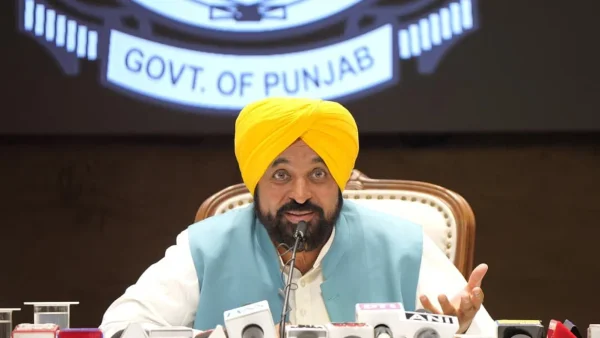
This Centre of Excellence has been agreed upon during his current trip, and will get Punjab’s Basmati rice farming up to the standards of other countries. LT Foods has said they’ll work with the government on this after discussions at their Rotterdam place of business, according to an official statement.
Along with the Centre of Excellence opening, there will be a small-scale test of guaranteeing to buy the rice and farming it in a way that uses very little pesticide. The goal is to get a better quality of crop, use less of everything that goes into growing it, and increase Punjab’s share of the world’s Basmati rice trade.
Focus areas at a glance
The government has said what the Centre will do first: encourage farmers to use fewer pesticides, make the rice more consistently good in quality, make sure the rice is produced to international standards, test out the guaranteed purchase system for farmers, and increase Basmati’s place in the world market.
Why it matters for Punjab farmers
Mann explained that Punjab’s farmers have used the land and water too much to provide food for the whole country, and so they need to move away from just wheat and rice. He believes a variety of crops, with advice from around the world, is essential to get nature back in balance and to genuinely improve how much money farmers make.
He said that farmers are facing financial difficulties, and their profits are getting smaller and farming isn’t a safe way to make a living for many. He added that the improvements in how much food is grown from the current methods are almost as good as they’re going to get, and we need fresh ideas and new ways of doing things.
Global practices and partnerships reviewed
During his time in Rotterdam, LT Foods explained that they sell to over 80 countries and are connected to more than 100,000 farmers. They talked about farming in a sustainable way, being able to track where the rice comes from, and ways to make Punjab’s Basmati rice sell well when it is sent to other countries.
Mann also went to the flower auction market at Aalsmeer to look at the Dutch auction system and how well the growing, moving, and selling of flowers are linked together. Punjab would like to use similar systems to make the chain of value in farming stronger and to increase farmer’s income.
Technology and trade agenda
When he met with important people from the Netherlands’ agriculture department, Mann asked for their help with farming that uses less water, changing to a variety of crops and farming with extreme accuracy. Punjab is very interested in using the newest systems, including automatic processes, artificial intelligence, drones, using information from data to manage crops, and greenhouses for expensive crops.
Expanding institutional linkages
He suggested a closer relationship between Punjab Agricultural University and leading places in the Netherlands like Wageningen University and Research, for research that is used in practice, new ideas and sharing of knowledge. Mann also called for planned work with Dutch companies, using industry organizations, to keep the partnership going.
Mann specifically mentioned these areas for working together: farming that uses less water and restores the land, precise farming for more food being grown, using automatic processes and artificial intelligence on the farm, using drones to check on and apply things to the crops, using data to manage the crop and the way it gets to the customer, and new developments in greenhouses for certain crops.
At the same time, he said there will be chances coming from the changing trade agreement between India and the European Union. He said both sides could benefit from IT and IT-supported services, milk products, processing food, and the value chain in agriculture, including growing potatoes.
Mann wants Dutch multinational companies and Punjab Agricultural University to work together faster to speed up research that is done in the real world and solutions that can be expanded. He said, as the statement said, that he wants tests to be done in practice that can turn knowledge from the lab into more money for farmers.
He also met the Indian Ambassador to Finland in Helsinki to discuss how to create a system for Punjab’s young people that is prepared for the future by using Finland’s skills. The plan, as he explained, is to connect skills, technology and starting businesses with what the state wants to achieve.
What comes next
Now that the Centre of Excellence is confirmed, the government intends to start the trial of the guaranteed purchase scheme and introduce sustainable ways of growing Basmati rice. At first they will focus on lowering the amount of pesticide left in the rice, improving quality, and meeting what buyers in countries where they export to require.
Mann has asked investors from around the world to take part in the upcoming events for agri-tech and industry. He pointed out Punjab’s support for businesses, including the Industrial and Business Development Policy 2026 and the FastTrack Punjab Portal for quick and clear approvals.
Repeating his main idea, the Chief Minister said Punjab is dedicated to an economy for farming and industry which is based on technology, is environmentally friendly and connected to the world. He said the Basmati centre will help to genuinely increase income, and at the same time protect the soil and water.