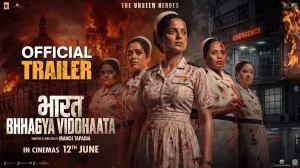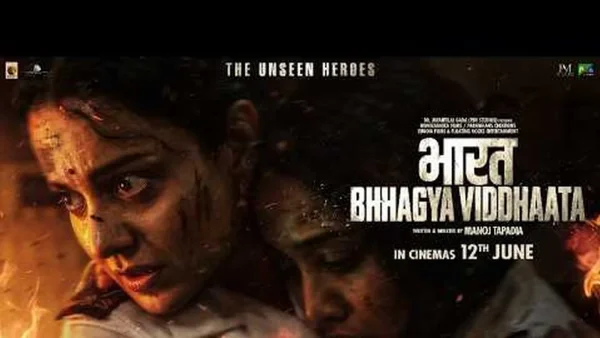
You could say she’s stirred up some controversy with her views on hospital culture. She has no problem with calling out nursing as “the most sexualised profession” and has some hard words for the British-style uniform that, in her eyes, makes a nurse look like a foreigner. All this comes as she gets ready to put out Bharat Bhhagya Viddhaata, a drama about the nurses who were there on 26/11.
Kangana’s sharp take on nursing respect
As an actor and a politician, she makes the case that nurses are the ones holding up the hospital when things get rough, and for what? They’re underpaid and over it. It’s a vital job, yet they don’t get the dignity that goes with it. She wants you to put aside your preconceived notions and have a good hard think about it.
What does she want from the movie? In her words, if it changes the way you see things for even a little while, that’s a win. She points to the kind of work that doesn’t always get noticed – mopping up, making sure everything runs on time – and wonders why we don’t give it more credit in society.
Uniform debate and ‘foreign look’ comment
It’s not just about the money or the hours, though. Kangana has a bone to pick with the dress code, too. Doctors can be a bit more at ease with how they put themselves together; for nurses, the rules are still very much set by the British. Her line is simple: let the weather or your figure be what they are, it shouldn’t be a matter of respect.
She calls the way nurses are made to dress a “foreign look”, a kind of afterthought that has no place in India. On set, they made a point of having the uniform be about the job, not for show. It was a question of integrity, of what is right for the body and the task at hand.
Some of the things she has put on the table:
– Nursing is the most sexualised profession
– You can’t put a price on what nurses put in, and they don’t get paid for it
– We are still following British-era rules for our uniforms
– Time for a change in how we treat them
A 26/11 lens that centres hospital staff
You won’t find any commandos or politicians in the foreground of Bharat Bhhagya Viddhaata. The story is about the people at Mumbai’s Cama Hospital on 26/11. The nurses, the ward boys, the rest of the support team – they are the unsung heroes here.
Kangana is in the role of a staff nurse, and she is not alone. You will also see Girija Oak, Smita Tambe, Amrutha Namdev, Esha Dey, Priya Berde, Asha Shelar, Suhita Thatte, Rasika Aghase, Aditya Mishra and Zahid Khan. The idea is to show that you don’t need a cape to be a hero; sometimes you just put on a pair of scrubs.
Title, credits and release plan
When it comes to the name, Kangana says it’s a nod to the Prime Minister’s use of ‘Bharat Bhagya Vidhata’ back in 2025 for some of his rebranding of schemes like Divyangjan and Vishwakarma. They wanted to pay homage to the kind of work that holds a nation together.
Release date and distribution
Jayantilal Gada of Pen Studios is behind the presentation, with production coming from him, Manikarnika Films and Paramhans Creations. Eunoia Films and Floating Rocks are also in the mix. Manoj Tapadia has put pen to paper and called the shots as director, and Pen Marudhar will be the one to put it in front of you.
Mark your calendars for June 12, 2026. The word on the street is to see the nurse as the main event in public health, not some side character. The talk will likely spill out of the theatre and into the wards.
Why is she making such a fuss? Because you don’t get respect from a number on a payslip. It’s in the way you are treated, in the policies and in what we accept as normal. Kangana is putting a mirror up to all of it, starting with the uniform.
There is an appetite for this kind of story right now, one with some plain-spoken courage. By going back to 26/11 with the caregivers in mind, the film is moving away from the theatrics and towards the service, and giving some well-earned kudos.
You may or may not like the way she puts it, but the questions are meant to ruffle some feathers. Is the way a nurse is supposed to look for hygiene or is it an old-timey notion of how to be proper? And who is it that wins when the hard work of others is left in the shadows?
What we have is a film that is unapologetically about life on the hospital floor. If it does its job, it might just alter the way India looks at a nurse for the next time she comes in the room.